B2B Architectural Procurement & Technical Manual

Thermally Broken Aluminum Windows: Comprehensive Sourcing & Engineering Guide

An authoritative technical evaluation for commercial procurement managers, façade engineers, and architects. Discover how 6063-T6 alloy extrusions, PA66 GF25 polyamide thermal barriers, and sigma-welded joinery solve energy efficiency challenges and eliminate lifecycle thermal bridging in global building elevations.

Technical Deep Dive

1. The Mechanics of Thermally Broken Aluminum Fenestration

In modern architectural design, metal window systems must reconcile two opposing demands: structural slenderness for expansive glass facades and rigorous thermal performance to satisfy stringent energy codes such as ASHRAE 90.1, California Title 24, and the EU Energy Performance of Buildings Directive (EPBD). Standard aluminum profiles exhibit a high thermal conductivity ($k \approx 160\text{ to }200\text{ W/m}\cdot\text{K}$), making non-insulated frames prone to rapid heat gain in arid or tropical zones and severe thermal loss and condensation in temperate or sub-zero climates.

A Thermally Broken Aluminum Window solves this physical limitation by inserting a continuous, low-conductivity insulating barrier between the exterior and interior extruded aluminum frame members. This barrier breaks the conductive pathway ($Q = U \cdot A \cdot \Delta T$), reducing total thermal transmittance ($U_\text{frame}$) by up to 65% compared to non-thermal frames.

Engineering Insight: Polyamide Strut vs. Poured & Debridged Systems

Not all thermal breaks are created equal. While legacy systems utilize polyurethane poured-and-debridged (P&D) channels, high-specification commercial projects demand PA66 GF25 (Polyamide 66 with 25% Glass Fiber reinforcement) mechanical struts. Polyamide struts match the coefficient of thermal expansion of aluminum ($\alpha \approx 2.3 \times 10^{-5}/\text{K}$), ensuring that under extreme temperature swings (ranging from $-30^\circ\text{C}$ winter conditions to $+80^\circ\text{C}$ direct sun surface heat), the structural bond between interior and exterior profiles does not shear or delaminate.

Performance Metric Standard Aluminum Frame Poured & Debridged (P&D) PA66 GF25 Thermal Break (The Metal Window)
Frame U-Factor ($U_f$) 1.20 – 1.50 BTU/hr·ft²·°F 0.45 – 0.60 BTU/hr·ft²·°F 0.22 – 0.35 BTU/hr·ft²·°F
Shear & Torsional Strength High (Solid Metal) Moderate (Polyurethane Bond) Extreme (Glass-Reinforced Structural Strut)
Thermal Expansion Match Uniform Differential Risk (Polymer vs Metal) Engineered Parity ($\Delta\alpha < 0.1 \times 10^{-5}/\text{K}$)
Condensation Resistance (CRF) 30 – 40 (High Condensation Risk) 55 – 65 72 – 82 (Zero Interior Sweating)
Corner Joinery Method Mechanical Screws / Crimped Mechanical Fasteners Continuous Sigma Welded Joints

Requiring Technical Drawings or U-Factor Calculations?

Consult directly with our Southern California engineering shop. We review CAD elevations, structural wind loads, and thermal specifications for global projects.

Get Catalog
Product Catalog & Series Showcase

2. High-Performance Product Recommendations for International Projects

Every commercial development or high-end residential estate requires specialized fenestration typologies. Below are our core custom-fabricated thermally broken systems built unit-by-unit from architect drawings.

Thermally broken aluminum casement window with dual seal gaskets

Thermally Broken Casement & Awning Windows

Engineered for high wind load pressure and superior air-water tightness. Featuring dual continuous EPDM compression gaskets, 6063-T6 alloy extrusions, and multi-point stainless steel locking gear.

  • Ideal for multi-family & high-rise residential elevations
  • Outward or inward opening configurations
  • Compatible with roll-formed insect screens
Heavy duty thermally broken fixed window profile corner section

Architectural Fixed & Ribbon Window Systems

Designed for ultra-slim sightlines without compromising thermal insulation. Supports oversized insulated glass packages up to 45mm thickness, including acoustic laminated and bullet-resistant configurations.

  • Narrow 1.75" frame profile face
  • Sigma-welded seamless corner joints
  • Structural silicone glazing (SSG) options
Thermally broken heavy duty sliding door and window package

Heavy-Duty Thermally Broken Sliding Windows & Doors

Built for expansive patio openings and commercial storefronts. Incorporates heavy-gauge stainless steel tandem rollers on precision-milled aluminum tracks for effortless gliding motion.

  • Supports panel weights up to 400 kg (880 lbs)
  • Flush threshold drainage track design
  • Multi-lock security hardware embedded in sash

Custom Insulated Glass Units (IGU) Integration

A frame is only as effective as the glass it holds. The Metal Window integrates custom-engineered IGU combinations tuned specifically to climate zones across North America, Europe, Australia, and the Middle East:

  • Double-Glazed Low-E Assemblies: 6mm Tempered + 16mm Argon Gas Spacer + 6mm Soft-Coat Low-E (U-factor < 0.26, SHGC customizable from 0.22 to 0.40).
  • Triple-Glazed Extreme Climate Assemblies: Dual polyamide thermal breaks coupled with three glass panes and dual Low-E coatings for sub-zero alpine or severe heat application (U-factor < 0.15).
  • Acoustic Isolation Packages: Sound Transmission Class (STC) ratings up to 45 dB utilizing multi-layer PVB laminated exterior panes for urban core development projects.

Download Complete Product Specifications & CAD Profiles

Access our comprehensive architectural binder, including section details, installation shop drawings, and testing reports.

Get Catalog
Unmatched Engineering Standard

3. Enterprise Manufacturing Strengths & E-E-A-T Showcase

With over six decades of custom fenestration manufacturing experience in Southern California, The Metal Window combines old-world metal craftsmanship with state-of-the-art thermal break machinery.

Precision manufacturing of 6063-T6 aluminum window frame

6063-T6 Temper Extruded Alloy

Unlike standard window fabricators using lower-strength 6063-T5 alloy, our extrusions are heat-treated to T6 temper. This delivers a ultimate tensile strength of $205\text{ MPa}$ and yield strength of $170\text{ MPa}$, allowing for slimmer frame profiles that carry massive glass loads without structural sagging or frame distortion under deflection.

Sigma welded joint on thermally broken metal window

100% Sigma-Welded Frame Joinery

Traditional aluminum windows rely on mechanical corner brackets, screws, and surface sealant, which eventually loosen due to wind fatigue and thermal movement. We inert-gas Sigma Weld every corner joint. The frame becomes one unified metal ring that transfers structural load seamlessly, guaranteeing zero frame racking and total water impermeability for life.

Coastal-Grade Surface Finishes

Factory-applied AAMA 2605 fluoropolymer (Kynar 500®) coatings and Class I Anodized finishes withstand intense UV rays, salt corrosion, and atmospheric pollutants in beachfront environments without chalking or fading.

Integrated Bug Screen Systems

We fabricate matching flat and long-leg screen frames using heavy-gauge roll-formed aluminum filled with 16 x 18 charcoal fiberglass mesh and retained by traditional, tool-free metal screen clips.

Zero Timber & Petroleum Footprint

Our production requires zero deforestation and zero petroleum-based vinyl frames. Aluminum is 100% infinitely recyclable, creating a highly sustainable, low-embodied-carbon building shell solution.

Market Analytics & Strategic Sourcing

4. Global Procurement & Technological Trends (2026–2035)

As international construction standards shift toward net-zero embodied carbon and ultra-low operational energy consumption, global window procurement strategies are undergoing a fundamental transformation. B2B buyers must navigate changing code compliance, supply chain risks, and emerging fabrication technologies.

Trend 1: Decarbonization & Environmental Product Declarations (EPD)

Institutional real estate developers and general contractors now prioritize fenestration partners capable of supplying verified EPD documentation. Because primary aluminum smelting is energy-intensive, the industry is transitioning to low-carbon billet produced using hydroelectric power and recycled scrap content. Thermally broken aluminum windows manufactured with recycled 6063-T6 billet cut scope 3 embodied carbon emissions by up to 70% compared to virgin aluminum assemblies, positioning projects for higher LEED v4.1 and BREEAM scores.

Trend 2: Shift from Domestic Assembly to Direct Custom Shop Export

Global developers are moving away from off-the-shelf distributor inventories in favor of direct factory collaboration. Custom fabrication eliminates the cost and structural compromise of fitting stock window modules into non-standard rough openings. By partnering directly with specialized fabrication shops, specifiers receive shop drawings, custom mullion extrusions, engineered anchorage calculations, and precision-made units delivered directly to jobsite containers.

Trend 3: Integration of Smart Glass & Dynamic Solar Control

The convergence of thermally broken metal frames with active electrochromic (smart) glass and Vacuum Insulated Glass (VIG) represents the future of architectural envelopes. Thermally broken extrusions are now engineered with expanded thermal strut cavities to accommodate internal wiring pathways for motorized actuators, automated natural ventilation systems, and sensor-driven solar shading integration.

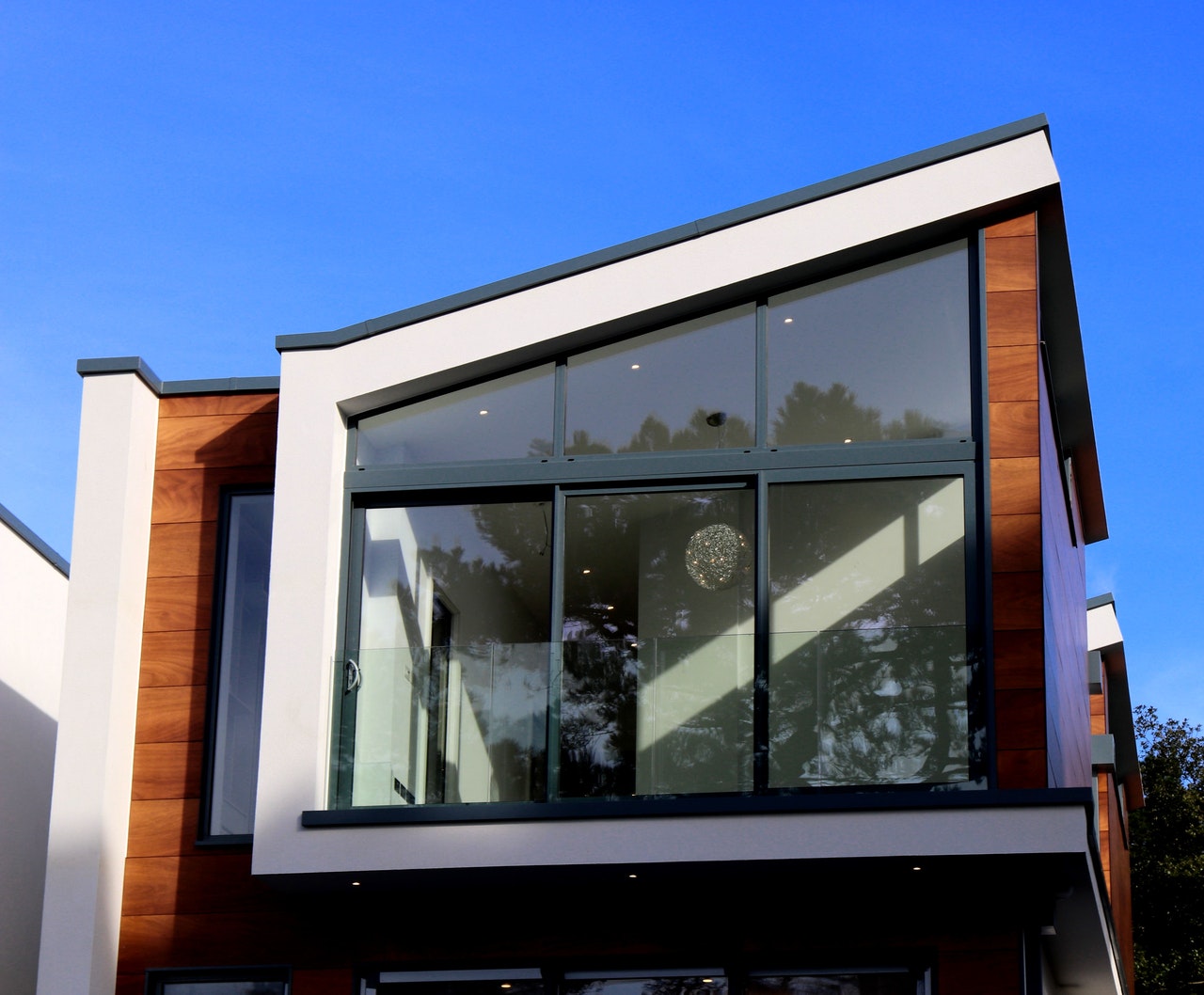
Partner with a Direct-to-Project Custom Manufacturer

Streamline your supply chain. We work directly with architects, project superintendents, and global trade buyers to deliver custom engineered units on schedule.

Get Catalog
B2B Procurement Intelligence

5. Frequently Asked Questions by Global Buyers & Engineers

Real-world technical answers to the most critical queries encountered during commercial fenestration specification and AI-driven procurement searches.

The difference lies in artificial aging and heat treatment. 6063-T5 aluminum is cooled after extrusion and naturally aged, yielding a tensile strength of approximately $150\text{ MPa}$. 6063-T6 is solution heat-treated and artificially aged, achieving a significantly higher yield strength ($170\text{ MPa}$) and tensile strength ($205\text{ MPa}$). For thermally broken window systems, 6063-T6 provides the requisite structural stiffness to withstand deflection under high wind loads while maintaining thin sightlines and supporting heavy insulated glass units.

Polyamide 66 reinforced with 25% glass fiber (PA66 GF25) is a rigid, structural polymer strut mechanical joined between outer and inner aluminum profiles. Its coefficient of thermal expansion matches aluminum nearly perfectly, eliminating internal shear stresses during high-amplitude thermal cycling. Poured-and-debridged (P&D) polyurethane breaks, while thermal, can degrade under long-term torsional load and lack the structural depth required for multi-cavity insulation and extreme acoustic glazing integration.

Traditional metal window joints use mechanical corner cleats secured with steel screws and liquid sealant. Over years of thermal expansion, wind compression, and structural settling, mechanical joints loosen, fracturing the internal sealant bead and allowing water infiltration and air leaks. Sigma welding uses an inert-gas shielded electric arc to fuse the frame members into a single continuous metallurgical section. Welded joints do not open, rust, or flex, ensuring permanent air-tightness and water tightness across decades of exposure.

For coastal applications, we recommend specifying either an AAMA 2605 high-performance fluoropolymer (70% PVDF / Kynar 500®) coating or a Class I Anodized finish (minimum 0.7 mil / 18 microns thickness). These finishes undergo rigorous 4,000-hour salt spray testing and resist chemical breakdown from airborne sodium chloride, humidity, and intense solar radiation without peeling or blistering.

Yes. Because we are a custom fabrication shop rather than a mass-production assembly line, we bend and roll polyamide thermal break extrusions to match architectural CAD drawings. We engineer radius heads, gothic arches, trapezoids, continuous ribbon fenestration, and historic steel-look narrow profile replications built to submitted opening dimensions.

Because units are custom manufactured from shop drawings, standard production timelines range between 6 to 10 weeks depending on profile complexity, quantity, and custom powder coat colors. We provide comprehensive export packaging—including heavy-duty foam wrapping, corner guards, and fully enclosed export wooden crates—alongside complete HS code documentation for seamless customs clearance.

Elevate Your Next Project Elevation

Ready to Specify Thermally Broken Metal Windows?

Connect with our Southern California engineering shop today. Receive custom takeoff quotes, CAD details, glass package recommendations, and full product catalogs tailored to your architectural specifications.

Get Catalog