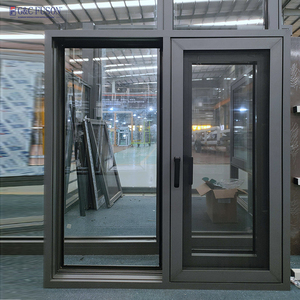
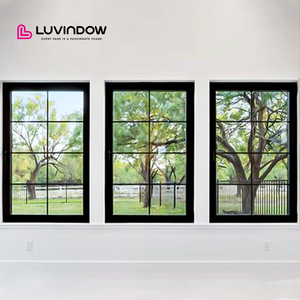

Istanbul represents one of the most demanding geopolitical and meteorological building environments in Southern Europe and Eurasia. Spanning the Bosphorus Strait, the megalopolis experiences severe environmental dynamics: sharp thermal fluctuations between summer highs and freezing winters, persistent high-salinity maritime humidity from both the Black Sea and the Sea of Marmara, and fierce wind-driven pressure loads (notably during Poyraz northern gales and Lodos southern windstorms). Building envelope failure in Istanbul is overwhelmingly traced back to inadequate window flashing systems, poor perimeter sealing, and non-continuous air/water barriers at the rough opening threshold.
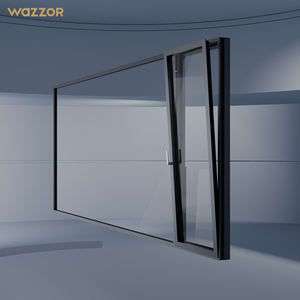
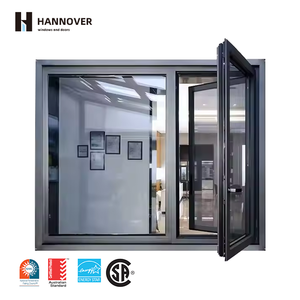
When specifying structural fenestration for Istanbul high-rises in Maslak or Ataşehir, coastal luxury residences along the Bosphorus, or dense urban retrofits in Kadıköy, engineering teams must look beyond standard off-the-shelf membranes. Window flashing must act as a multi-stage defense system designed to mitigate capillary action, differential air pressures, and continuous thermal bridging. As leading window flashing suppliers and direct export manufacturers, our structural aluminum casement, tilt-and-turn, and sliding systems are manufactured to interface directly with custom extruded sill pans, EPDM membranes, and self-adhered butyl flashing assemblies tailored for Turkish masonry and modern curtain-wall structures.
Water intrusion across a window framing interface is governed by three physical phenomena: kinetic energy from wind-driven rain, capillary pressure across micro-gaps, and pressure differentials between the building exterior and interior HVAC zone. During intense Lodos storms, ambient pressure drops rapidly outside while wind forces rain water upward along facade slopes at velocities exceeding 90 km/h. Standard surface caulking quickly suffers from shear fatigue due to building movement, seismic micro-settling, and UV degradation.
Our engineered window systems incorporate high-performance sub-sill pan flashings featuring continuous uplift rear dams and end-dams. By establishing a drained cavity principle (pressure-equalized rainscreen system), water penetrating the primary exterior seal is harmlessly intercepted by the heavy-gauge 6063-T6 aluminum or flexible butyl membrane flashing layer and routed back out through calibrated weep channels. This prevents structural rot, interior wallboard saturation, and mold proliferation within AAC (Gasbeton) blocks or reinforced concrete infill frames common in Turkish construction.
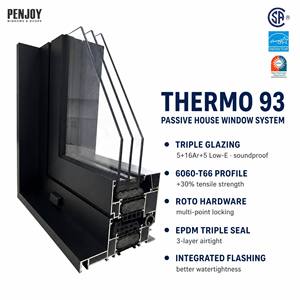
At the core of every high-performance window flashing and window system exported to Turkey is our material specification. Unlike standard residential window extrusions fabricated from secondary scrap aluminum or low-temper alloys, our framing utilizes structural grade 6063-T6 aluminum extrusion. This temper delivers exceptional yield strength, structural rigidity under extreme wind loads, and long-term resistance to coastal salt-fog pitting.
Every sash and frame corner is full-depth sigma welded rather than mechanically screwed or crimped. A welded corner creates a monolithic, non-porous structural bond that cannot loosen over decades or open a path for water leakage during seismic activity.
Featuring reinforced polyamide thermal breaks that structurally separate inner and outer aluminum extrusions. This stops thermal bridging, preventing interior frame "sweating" during cold Istanbul winter nights.
Fabricated strictly to architectural shop drawings. Every unit arrives at the Istanbul job site ready for direct integration with specified perimeter self-adhering butyl flashing tapes and EPDM boots.
Mechanical joints relying solely on gaskets and corner cleats are prone to structural racking during transport, installation, and seasonal thermal expansion. Over time, micro-gaps form at the upper head and lower sill miters, allowing rainwater to bypass flashing planes completely. By combining sigma welding with integrated flashing flanges, our export window series eliminates frame corner leaks entirely, guaranteeing long-term building envelope integrity.
To provide clear value and information gain for structural engineers, facade consultants, and procurement heads operating in Turkey, the matrix below details the mechanical and thermal performance differences between generic market solutions and our export-grade integrated window flashing systems.
| Performance Vector | Generic Field-Applied Flashing & Vinyl Windows | Our Export-Grade 6063-T6 Integrated Flashing Systems |
|---|---|---|
| Structural Material & Temper | Recycled vinyl / Un-tempered thin aluminum profile | Solid 6063-T6 Extruded Architectural Aluminum Alloy |
| Corner Joinery Method | Screwed cleats or friction crimped corners with sealant gel | Sigma Welded 100% monolithic joint (Dressed smooth) |
| Water Tightness Rating | 300 Pa - 450 Pa (Standard residential) | Up to 1050 Pa (EN 12208 Class E1050 / ASTM E331) |
| Coastal Corrosion Resistance | Rapid surface oxidation & fastener galvanic corrosion | Qualicoat Class 2 / High-performance coastal anodized finish |
| Thermal Bridge Mitigation | Basic non-insulated cavity or low-density foam | Polyamide structural thermal break with insulated cavity barriers |
| Sub-Sill Water Management | Flat sill dependency on surface sealant beads | Sloped extruded sub-sill pan with end-dams & direct flashing lap |
| Seismic Movement Tolerance | Brittle sealant failure causes perimeter leaks | Elastomeric perimeter EPDM membrane integration with shear movement accommodation |
Istanbul's urban topography varies wildly from seaside historical sites along the Golden Horn to ultra-modern vertical towers in Levent and expansive luxury residential estates in Zekeriyaköy and Göktürk. Each application context presents distinct envelope engineering constraints:
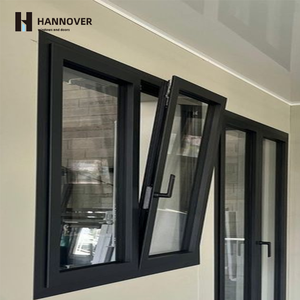
High-altitude structural fenestration requires maximum air-tightness and structural deflection resistance. Wind velocity increases exponentially with elevation, creating massive negative suction forces on window sashes. Our NFRC-certified tilt-and-turn aluminum windows with integrated perimeter head and jamb flashing assemblies are engineered to withstand extreme wind pressures while allowing inward opening for safe glass cleaning in high-rise apartments.
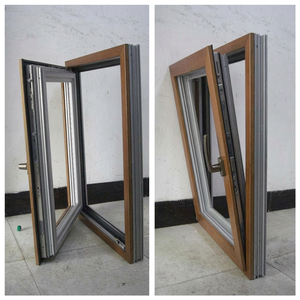
Structures located in Bebek, Arnavutköy, or Kandilli face relentless saline spray and high humidity. Steel windows rust rapidly, while wood frames rot and swell under continuous dampness. Our custom aluminum clad wood and ultra-thin profile aluminum casement series feature coastal-grade anodized and PVDF powder-coated finishes. Paired with self-adhered bituminous flashing membranes wrapped around the rough opening, these units offer timeless aesthetics without the maintenance liabilities.
Retrofitting older Turkish apartment blocks constructed with solid red brick or lightweight gasbeton (AAC) requires special attention to rough opening prep. Our custom export window packages come with custom-bent aluminum sub-frame flashings and sill adaptors, bridging the gap between uneven historical masonry masonry layers and modern double or triple-glazed high-efficiency insulating glass units.
Below are technical answers to common questions raised by Turkish architects, facade contractors, and real estate developers seeking import supply solutions for high-performance window flashing systems and custom aluminum fenestration.
Whether you are designing a high-rise tower in Levent, restoring a coastal Bosphorus residence, or supplying a commercial development in Istanbul, our structural 6063-T6 aluminum window and integrated flashing systems deliver uncompromising weatherproofing and thermal performance.