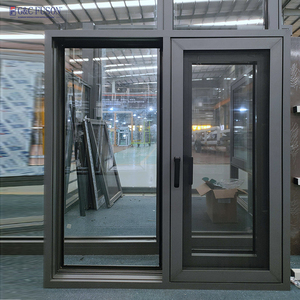
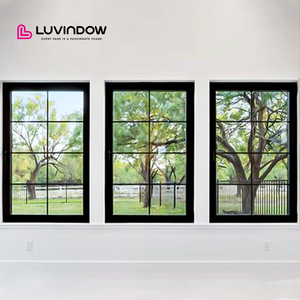
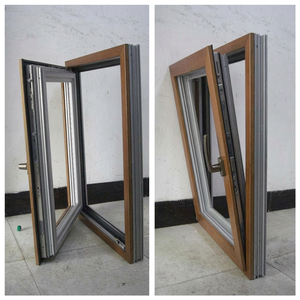
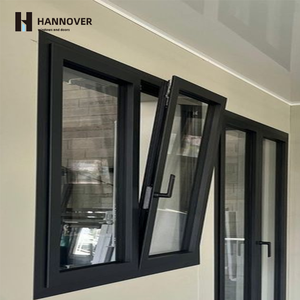
Exporting architectural aluminum glazing profiles to Chile requires a rigorous understanding of the country's extreme bio-climatic zones—from the hyper-arid, high-UV Atacama Desert in the north to the intense coastal winds of Valparaíso and the sub-polar thermal shifts of Patagonia.
Chile is located along the Pacific Ring of Fire. Structural glazing profiles must absorb lateral inter-story drift without frame deformation or glass displacement. Our structural profiles utilize high-tensile 6063-T6 aluminum alloys and reinforced internal wall thicknesses (1.8mm to 3.0mm), fully compliant with Chilean Seismic Code NCh433 and structural design standard NCh3171.
Chile's General Regulations for Urban Planning and Construction (OGUC) divide the territory into 7 thermal zones. To achieve compliance in Central Santiago (Zone 3) and Southern Puerto Montt (Zone 6), our profile systems incorporate PA66GF25 polyamide thermal barriers, yielding overall window frame U-values below 1.4 W/m²K.
Projects along the Chilean coastline (Antofagasta, Viña del Mar, Iquique) face aggressive marine air and extreme solar radiation. We apply advanced Qualicoat Class 2 fluorocarbon (PVDF) three-coat finishes and anodic oxidation layers (≥25 microns) to prevent surface chalking, pitting, and salt-mist corrosion over decades.
Technical benchmarks for architectural submittals, real estate developers, and commercial glazing contractors in Santiago, Concepción, and Valparaíso.
Extruded exclusively from 100% primary 6063-T6 aluminum billets. Tensile strength ≥ 205 MPa, yield strength ≥ 170 MPa. Eliminates structural deflection in high-rise curtain walls and large-span patio sliders.
Featuring continuous Sigma Welded structural jointing and hydraulic crimping with dual-component cold polyurethane adhesives. Prevents water ingress under driven Chilean rain conditions (NCh3171 pressure testing).
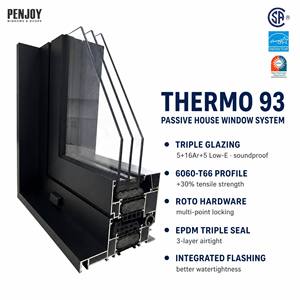
Integrated multi-cavity chamber design paired with continuous EPDM triple-sealing gaskets. Achieves sound reduction ratings up to Rw = 44 dB, vital for urban residential towers along high-density transit corridors in Santiago.
Supports double-glazing (5mm+12Ar+5mm) and high-performance triple-glazing packages up to 48mm thickness, incorporating Low-E soft coatings and Warm-Edge spacer bars for optimal solar heat gain coefficient (SHGC) control.
Leveraging over 60 years of metallurgy experience, precision fabrication, and direct logistics pathways to major Chilean ports (Valparaíso & San Antonio).
Our in-house facade engineering team prepares complete shop drawings, structural wind-load calculation reports, and DWG/BIM elevation models for Chilean architects and structural reviewers before metal cutting begins.
Under the China-Chile Free Trade Agreement, we supply official Certificate of Origin Form F, enabling Chilean importers to claim 0% preferential customs tariffs, drastically lowering total landed landed cost.
Every extruded profile undergoes strict dimension verification (±0.15mm), coating thickness testing, and structural squareness checks. Zero-distortion guarantees mean fast on-site installation with zero field modification.
Key information for window fabricators, real estate developers, and hardware distributors importing aluminum profile systems into Chile.
Our thermally broken aluminum glazing profiles incorporate high-density technoform polyamide strips (PA66GF25). When combined with double or triple insulated glass units (IGUs) containing Argon gas and Low-E coatings, our systems easily achieve frame U-values ranging between 1.1 W/m²K and 1.8 W/m²K. This guarantees full thermal compliance across all Chilean climate zones, from Zone 1 (Northern Coast) down to Zone 7 (Extreme South / Magallanes).
Yes. All profiles are extruded using high-grade 6063-T6 aluminum alloy, offering superior yield strength (≥170 MPa) and high ductility. Our window frame corner joints are engineered with continuous sigma welding or heavy-duty hydraulic cleat crimping. This structural elasticity allows the frames to accommodate inter-story seismic drift without cracking frame joints, damaging perimeter flashings, or shattering the glass panes during seismic events governed by NCh433.
For coastal applications exposed to high salinity (C4/C5 corrosion environments) and intense solar UV radiation, we specify either PVDF (fluorocarbon) 3-coat spray finishes or Qualicoat-certified architectural powder coatings (≥60 microns thick). Alternatively, we offer anodized finishes up to 25 microns thick. These treatments prevent salt mist pitting, color fading, and oxidation for over 20–25 years of outdoor exposure.
Thanks to the China-Chile Free Trade Agreement (Tratado de Libre Comercio China-Chile), architectural aluminum profiles classified under HS Code 7604 or 7610 enter Chile at a 0% ad-valorem customs duty tariff when accompanied by a valid Certificate of Origin (Form F). Our logistics team provides certified Form F documentation with every export shipment to ensure smooth customs clearance at Valparaíso or San Antonio ports.
Absolutely. If your commercial building or residential development project requires proprietary sightlines, specialized thermal breaks, or unique hardware grooves, our engineering team can design, cut, and test custom aluminum extrusion dies within 12 to 15 days. We deliver full CAD shop drawings and physical profile samples for client sign-off prior to mass extrusion.
Standard fabrication lead time for extruded, powder-coated, and corner-assembled profiles is approximately 20 to 25 days. Direct container sea shipping from Ningbo/Shanghai to the Chilean ports of Valparaíso or San Antonio takes roughly 30 to 35 ocean transit days. We supply full protective timber crating and plastic film wrapping to eliminate surface friction damage inside the shipping container.
Contact our technical engineering team today for CAD submittals, profile sample kits, and direct factory pricing for the Chilean market.