Precision-engineered profiles customized for architectural specifications, residential developments, and commercial high-rises across Brazil.
The civil construction sector in Brazil demands architectural materials capable of enduring diverse climatic extremes—ranging from intense UV radiation and coastal salt spray in cities like Rio de Janeiro and Salvador, to high humidity in Amazonian regions and temperate moisture variations in southern states like Santa Catarina and Rio Grande do Sul. As Brazilian real estate developers, commercial contractors, and architectural importers seek structural reliability without inflating material budgets, China has cemented its position as the premier manufacturing origin for high-performance door frame profile systems.
Modern door frames have evolved beyond simple structural surrounds. In contemporary Brazilian architecture, the frame system is a critical component of building physics. It governs structural integrity, thermal barrier efficiency, acoustic isolation standards under ABNT NBR 15575 (Edificações Habitacionais — Desempenho), water tightness against driving tropical rains, and long-term fire safety compliance. Sourcing customized aluminum extrusions, engineered Wood-Plastic Composites (WPC), primed pine jambs, and heavy-duty steel frames directly from elite Chinese manufacturers offers Brazilian procurement managers an optimal intersection of structural longevity, architectural flexibility, and landed cost efficiency.
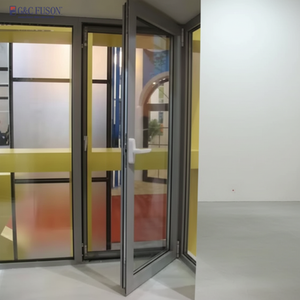
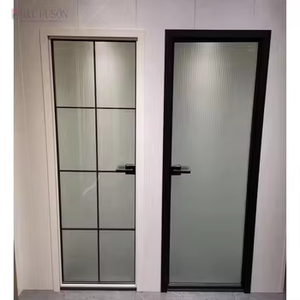
Extruded from virgin 6063-T6 billet aluminum, providing superior tensile strength, structural elasticity, and crisp architectural sightlines that resist sagging under heavy double-glazed door loads.
Frame miters and joint assemblies utilize full sigma-welding techniques. Unlike mechanically screwed frames that loosen during transpacific shipping or structural shifting, welded joints form an unbroken metal seal.
Coated with 60+ micron qualicoat-certified powder or anodized surface treatments engineered to withstand 2,000+ hours of salt spray exposure without pitting, blistering, or surface oxidation.
Achieving structural consistency across thousands of door openings in multi-family tower developments requires industrialized manufacturing controls. Precision door frame manufacturing begins at the metallurgical level and extends through automated CNC machining, joint reinforcement, structural sealing, and protective packaging designed for ocean container transit.
Unlike standard off-the-shelf profile distributors, leading Chinese export partners operate as direct custom fabricators. Every unit is manufactured directly to architectural submittal drawings, accommodating non-standard rough openings, wall thickness variations (from 100mm to 300mm drywall or brick masonry wall systems common in Brazil), and specific hardware pocket preparations for mortise locks, concealed European hinges, and drop-down acoustic bottom seals.
| Frame Material Type | Core Physical Properties | Moisture & Salt Resistance | Fire Rating Capabilities | Ideal Brazilian Application |
|---|---|---|---|---|
| 6063-T6 Aluminum Alloy | High structural rigidity, narrow sightline flex strength | Exceptional (Anodized / Qualicoat Powder) | Up to 60 Min (Insulated Cores) | Coastal High-Rises, Luxury French Casements, Commercial Glass Walls |
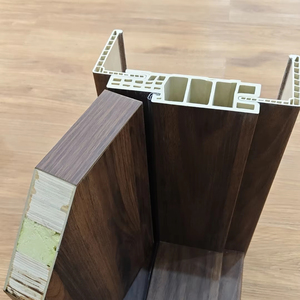
| High-Density WPC Polymer | Zero water absorption, anti-termite, impact resistant | 100% Waterproof (Immersed Grade) | B1 Flame Retardant (Self-Extinguishing) | Interior Residential Jambs, Bathrooms, High-Humidity Urban Apartments |
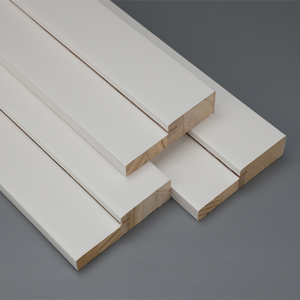
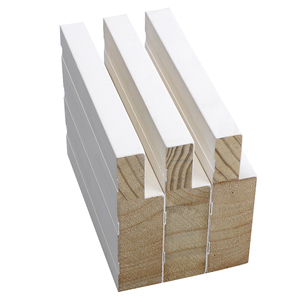
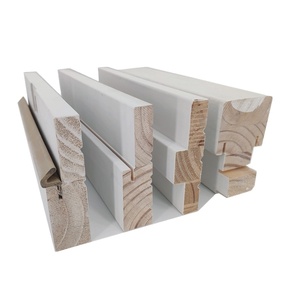
| Finger-Joint Radiata / Pine | Kiln-dried stability, natural timber grain texture | Moderate (Requires Primed Sealing) | Standard Wood Fire Performance | Luxury Dry Interior Living Areas, Custom Stained Timber Projects |
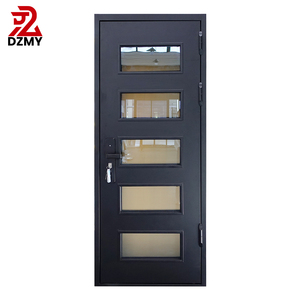
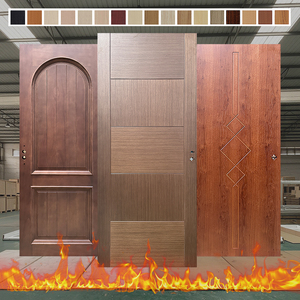
| Galvanized Reinforced Steel | Maximum tensile strength, high impact security | High (Electrophoretic Zinc + Powder) | 60 to 120 Min (ASTM / EN Certified) | Building Entrance Gates, Utility Rooms, Fire Escape Stairwell Enclosures |
Understanding the micro-climatic and structural dynamics of the Brazilian construction market is fundamental for specifying correct frame profiles. A single building project in Santos requires vast material differences compared to a commercial high-rise in Paulista Avenue, São Paulo.
Urban apartment towers demand strict acoustic isolation between interior hallways and living spaces. High-density WPC jambs and thermally broken aluminum frame profiles equipped with multi-cavity EPDM gaskets dramatically attenuate air-borne sound, meeting ABNT NBR 15575 acoustic performance thresholds while providing flush architectural integration.
Continuous marine air carrying fine salt vapor rapidly oxidizes non-treated metallic frames. Engineered 6063-T6 aluminum frames with specialized anodic coatings (minimum 15-20 microns) or heavy WPC frames resist salt crust accumulation, preventing frame rot, hinge swelling, or structural paint peeling.
Hospitals, shopping centers, and office hubs require fire-rated steel and heavy-gauge aluminum frames tested under ASTM E119 / EN 1634 standards. Integrated panic-hardware cutouts, concealed door closers, and impact-resistant frames guarantee safety compliance under Brazilian Corpo de Bombeiros regulations.
The Brazilian fenestration market is undergoing a structural transition driven by changes in modern design aesthetics, environmental standards, and economic efficiency. Importers and construction companies sourcing from China are taking advantage of three distinct macro trends:
Architects are overwhelmingly favoring flush-to-wall door designs with sub-framing completely concealed inside the drywall or masonry opening. Chinese manufacturers provide 45-degree aluminum profile kits that allow total structural concealment with ultra-clean perimeter reveals.
Traditional Brazilian hardwoods like Ipê, Jatobá, and Cumaru face rising costs, strict IBAMA environmental controls, and susceptibility to moisture warping. High-density WPC door jambs provide an exact visual timber aesthetic while remaining 100% insect-proof, termite-proof, and completely immune to water decay.
Rather than purchasing raw frames, door panels, and hardware from separate suppliers, Brazilian developers are moving toward complete prefabricated door kits. Chinese suppliers export factory-cut frame profiles pre-drilled for hardware, reducing expensive job-site fitting labor by up to 60%.
Essential guidance for Brazilian procurement managers, importers, architects, and structural contractors regarding customs, quality assurance, logistics, and technical specifications.
Door frame import classification depends on the primary structural material. Aluminum door frame extrusions and prefabricated assemblies typically fall under NCM 7610.10.00 (Doors, windows and their frames of aluminum). Wood-Plastic Composite (WPC) and PVC door jambs fall under NCM 3925.20.00. Wooden frames are classified under NCM 4418.20.00. Verifying exact NCM codes with your Brazilian despachante alfandegário is recommended to calculate II, IPI, PIS, COFINS, and ICMS tax rates.
Our aluminum and WPC frame systems are designed to meet structural deflection, air permeability, water tightness, and acoustic performance benchmarks outlined in NBR 15575. We provide certified structural calculation reports, alloy mill test certificates (MTC), and profile acoustic attenuation test data to support submittals for Brazilian building approvals.
Natural timber expands and contracts in response to ambient relative humidity, leading to door binding, surface paint cracking, and vulnerability to drywood termites (cupins). WPC jambs and 6063-T6 aluminum profiles exhibit near-zero moisture absorption. They maintain geometric stability year-round and will never suffer subterranean or drywood termite infestation.
Export packaging is engineered for long-haul maritime transport. Extruded frame members are wrapped in protective PE anti-scratch film, bundled with corner edge protectors, interleaved with shock-absorbing foam, and sealed inside fully enclosed wooden crates or heavy-duty corrugated cartons containing silica desiccant packets to prevent condensation damage during transit across equatorial ocean zones.
Yes. 100% of our production is executed based on verified shop submittal drawings. We custom-extrude and CNC-machine frame depths to accommodate non-standard wall thicknesses common in Brazilian brick masonry construction (e.g., 140mm, 190mm, 240mm), ensuring a perfect flush fit without requiring field-trimmed extensions.
Our factory CNC machinery can pre-rout frame pockets for international and Brazilian standard hardware brands (such as Papaiz, Stam, ABLOY, Hafele, and dormakaba). Frame cutouts for magnetic latch plates, 3D adjustable concealed hinges, drop seals, and electronic access control strike plates are fully integrated during factory production.
Connect directly with our engineering and export team. Send your project schedule, architectural CAD files, or rough opening list for a comprehensive quote and shop drawing review within 24 hours.
Send an Inquiry