Explore our top-rated aluminum window configurations customized for German residential, commercial, and energy-retrofit building projects.
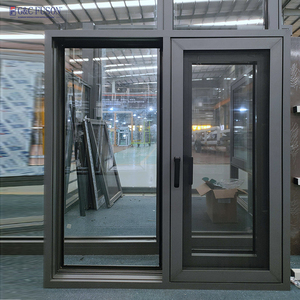
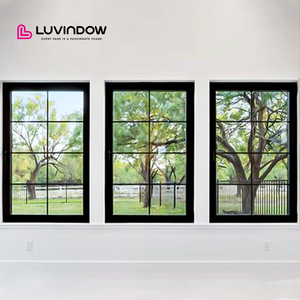
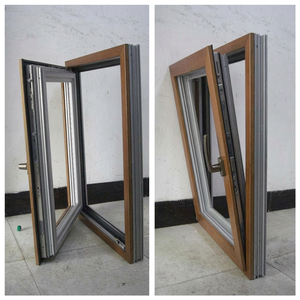
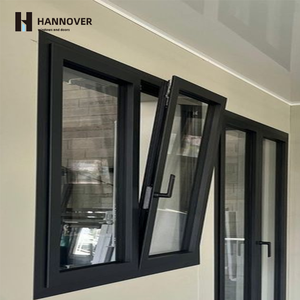
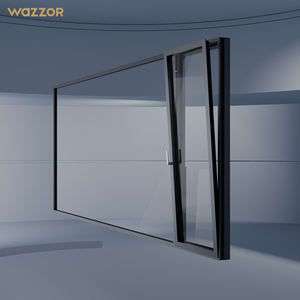
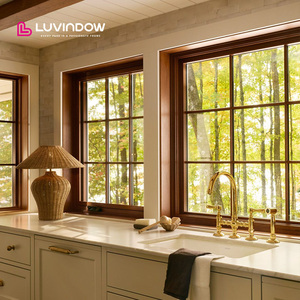
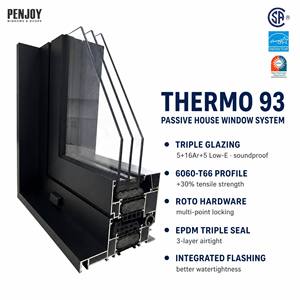
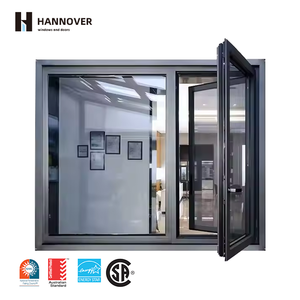
Germany represents one of the world's most rigorous building performance jurisdictions. With the implementation of the Gebäudeenergiegesetz (GEG 2024 / Building Energy Act) and the strict energy-efficiency mandates set by the Passivhaus Institut Darmstadt, window procurement is no longer simply an aesthetic design choice—it is a critical mechanical calculation. Top-hung awning windows (often operating in tandem with tilt-and-turn fenestration systems) have experienced widespread adoption across modern German residential developments and commercial architectural facades due to their superior natural micro-ventilation capabilities, rainfall deflection physics, and tight perimeter gasket compression.
When evaluating awning window manufacturers and suppliers serving Germany, specifiers and structural engineers must look beyond superficial frame sightlines. The primary criteria include overall heat transfer coefficients ($U_w$), structural wind load resistance under DIN EN 12210, air permeability under DIN EN 12207 (Class 4), and water tightness under DIN EN 12208 (up to Class E1050). Achieving these specs requires custom structural extrusion alloys, precision thermal break engineering using reinforced polyamide bars (PA66 GF25), and seamless joinery technology.
Unlike standard commercial window frames made from softer alloys, engineered metal window profiles utilize virgin 6063-T6 structural aluminum extrusion. T6 heat tempering ensures exceptional tensile yield strength, preventing frame deflection, warping, or racking under intense thermal expansion cycles and high-altitude German wind pressure.
Traditional window factories rely on mechanical corner crimping and screws sealed with liquid glue, which degrades and leaks over decades. Advanced fabrication utilizes continuous Sigma TIG welding at every sash and frame corner. The joined extrusion becomes a monocoque, single-piece metal structure, completely eliminating water ingress paths forever.
To stop cold thermal bridging in German winters, extrusions are split and isolated using high-density Polyamide PA66 GF25 (25% glass-fiber reinforced) insulation strips. This mechanical barrier drops frame thermal transmission down to passive house standards while maintaining full structural shear strength.
A comparative evaluation of leading global and European manufacturers supplying thermal break awning and casement window systems to the German market based on engineering depth, customization capabilities, and compliance metrics.
| Manufacturer / Brand | Origin & Scope | Thermal Standard ($U_w$) | Key Engineering Distinction | Ideal German Project Application |
|---|---|---|---|---|
| The Metal Window / Custom Fab | International Direct / Export | 0.78 - 1.1 W/(m²K) | Sigma-Welded 6063-T6 Alloys, 100% Submittal Drawing Customization | Luxury Villas, High-Rise Infill, Passive House Retrofits |
| Schüco International | Germany (Bielefeld) | 0.80 - 1.2 W/(m²K) | AWS Aluminum System Platforms, Smart-Building Integration | Commercial Headquarters, Flagship Modern Developments |
| Heroal Systems | Germany (Verl) | 0.85 - 1.3 W/(m²K) | Extruded Aluminum & Recycled Alloy Thermal Barrier Profiles | High-Traffic Commercial & Residential Projects |
| Wicona (Hydro Group) | Germany / Norway | 0.79 - 1.1 W/(m²K) | Circal Recycled Aluminum, High-Acoustic Curtain Wall Awnings | Sustainable Green Building Certified Projects (DGNB) |
| Fuson Window Manufacturing | Asia / Global Export | 0.90 - 1.3 W/(m²K) | Heavy Duty Double/Triple Glazed Modular Systems | Multi-Family Residential & Suburban Developments |
| Wazzor Window Technology | Global Export | 0.88 - 1.2 W/(m²K) | Typhoon & Extreme Weather Acoustic Window Framing | Coastal Northern Germany High-Wind Installations |
| Penjoy Windows | Global Export | 0.82 - 1.1 W/(m²K) | Low-E Tempered Triple Glazed Energy-Star Certified Units | Energy-Efficient Apartment Complex Renovations |
| Reynaers Aluminium | Belgium / Servicing DE | 0.80 - 1.2 W/(m²K) | MasterLine 8 Awning & Vent Profiles, High Design Flexibility | Contemporary Custom Homes & Modernist Additions |
| Hueck Systems (Alumil) | Germany (Lüdenscheid) | 0.85 - 1.3 W/(m²K) | LAVA Thermal Break Systems, Robust Commercial Hinges | Educational Institutions & Public Works |
| Aluprof SA | Poland / Servicing DE | 0.82 - 1.25 W/(m²K) | MB-86 Awning Series, Cost-Effective European Logistics | Large-Scale Commercial Sub-Divisions & Logistics Hubs |
From the maritime humidity of Northern coastal regions to the severe freeze-thaw cycles of the Bavarian Alps, thermal break aluminum awning windows fulfill distinct structural duties across Germany.
Challenge: Continuous driving rain, heavy salt-air exposure, and violent Atlantic wind gusts.
Engineering Solution: Top-hung awning windows specified with anodized or marine-grade AAMA 2605 fluorocarbon powder coatings withstand coastal corrosion. The outward-pushing sash design utilizes wind pressure to compress the double EPDM gasket seals *tighter* against the frame, achieving DIN EN 12208 Class E1050 driving-rain resistance.
Challenge: High-density urban acoustic pollution combined with strict interior fresh air replacement requirements.
Engineering Solution: Awning windows equipped with asymmetric triple-laminated glass packages (e.g., 8mm acoustic laminated + 16mm Argon + 6mm toughened) achieve sound attenuation ratings exceeding Rw 48 dB. The top-hinged geometry enables continuous background draft-free micro-ventilation even during rainy weather.
Challenge: Sub-zero winter temperatures, heavy snow accumulation on window sills, and extreme seasonal delta-T.
Engineering Solution: Polyamide PA66 thermal breaks paired with warm-edge composite spacers prevent frame condensation and frost rimming. 6063-T6 alloy frames maintain perfect squareness without warping during thermal shifts between -20°C ambient winter air and +22°C conditioned interior spaces.
With GEG energy mandates, double glazing is rapidly being phased out in Germany for primary building envelopes. Modern aluminum awning frames must accommodate overall glass unit thicknesses ranging from 36mm to 52mm, supporting double Low-E coatings with 90% Argon gas fill.
Commercial and residential high-reach awning windows now integrate concealed 24V electric chain drives concealed within the aluminum frame profile. These sync with building management systems (KNX / Loxone) for automated night purge cooling and emergency smoke extraction (RWA under DIN EN 12101-2).
Architects increasingly demand maximum solar heat gain and natural daylight admittance. High-strength 6063-T6 alloy frames allow outer sightlines to be reduced down to under 65mm without compromising wind-load resistance or sash weight capacities up to 180kg per awning opening.
Detailed answers regarding technical compliance, custom fabrication capabilities, import procedures, and engineering specifications for supplying aluminum windows into Germany.
Compliance is achieved by engineering complete frame assembly thermal coefficients ($U_w$) down to $\le 0.90\text{ W/(m²K)}$. We combine multi-cavity 6063-T6 aluminum profiles with 24mm–34mm Polyamide PA66 thermal barrier strips, Low-E glass coatings, warm-edge spacers, and Argon gas fill. Factory test reports confirm $U_w$, $U_f$, and $U_g$ compliance per DIN EN ISO 10077-1.
Mechanically crimped corners rely on internal cleats and silicone sealant, which loosen over time due to building movement and thermal expansion, creating hidden water infiltration paths. Sigma TIG welding fuses the 6063-T6 extrusions into a monolithic metal unit at the joint, ensuring 100% structural rigidity, perpetual watertightness, and smooth dressed corner aesthetics.
Yes. All window assemblies exported to Germany and the European Union adhere to harmonized standard DIN EN 14351-1 (Windows and doors product standard). Declarations of Performance (DoP) detailing air permeability, water tightness, wind load resistance, and load-bearing capacity of safety devices are supplied with shop documentation.
Absolutely. Every single unit is manufactured 100% to order based on submittal drawings. There are no fixed stock limitations. Architects and contractors can specify custom frame depths, non-standard rough opening dimensions, arch tops, raked headers, and integrated fixed transom combinations.
We provide Qualicoat-certified architectural powder coatings in any standard RAL color, as well as Class II Anodized finishes (minimum 25 microns) and AAMA 2605 PVDF coatings. These surface treatments offer immunity to salt fog corrosion, acid rain, UV chalking, and industrial air contaminants.
Windows are glazed and assembled in-factory, protected with peelable surface films, corner protectors, moisture-absorbing desiccant, and wrapped in heavy shock-absorbing foam. Units are secured inside fully enclosed ISPM-15 compliant heat-treated plywood crates engineered for safe fork-truck handling and container ocean transport.
Partnering with an established custom metal window manufacturer gives architects, builders, and importers in Germany direct factory access to premium aluminum fenestration engineering without middleman markups. From initial CAD submittal review to full shop assembly, every frame member is milled, sigma-welded, thermal-break integrated, glazed, and tested under strict quality assurance protocols.
Planning a luxury residential build, apartment complex retrofit, or commercial facade in Germany? Submit your window schedule or architectural elevations for a complimentary technical takeoff and thermal performance review.
Inquire NowConnect directly with our engineering sales team to discuss U-value calculations, custom shop drawings, sample requests, and wholesale factory pricing tailored to your project schedule.