A technical guide for architectural specifiers, curtain wall engineers, and commercial developers operating within Southern Vietnam's rigorous urban climate.
The structural reliability of any window, casement sash, or high-rise curtain wall panel is fundamentally governed by the mitered joint. At the core of our OEM/ODM manufacturing capability is high-density 6063-T6 architectural aluminum alloy. Chemically balanced with precise ratios of Magnesium (0.45–0.9%) and Silicon (0.2–0.6%), 6063-T6 delivers exceptional tensile strength (minimum 205 MPa) and yield strength (minimum 170 MPa), ensuring that the structural corner keys—whether cast aluminum, extruded wedge cleats, or expansion corner locks—do not deform under dynamic thermal movement or violent shear loads.
Traditional fenestration manufacturing often relies on simple mechanical screws or cold-crimped aluminum cleats. While economical, mechanical joints inevitably experience micro-gapping under repeated wind suction pressure and thermal cycling. Our production floor integrates Sigma Continuous Argon Arc Welding alongside pneumatic corner-crimping machines with structural glue injection channels.
A sigma-welded corner fuses the mitered profile walls into a singular, monolithic piece of metal. This eliminates water penetration channels entirely and prevents frame racking during heavy glass loading (such as triple-glazed Low-E insulated glass units weighing over 45 kg/m²).
| Corner Joint Technology | Mechanical Shear Capacity | Water Tightness (Pa) | Air Infiltration (m³/h·m) | Thermal Bridge Resistance | Recommended Application |
|---|---|---|---|---|---|
| Sigma-Welded 6063-T6 Joint | > 5,200 N (Fused Metal) | 1,000 Pa (Class E1050) | < 0.1 m³/h·m (Class 4) | Continuous with PA66GF25 Isolator | High-Rise Towers & Coastal Villas |
| Hydraulic Crimped + Glue Injection | 4,500 N – 4,800 N | 750 Pa (Class 9A) | < 0.2 m³/h·m (Class 4) | Polyurethane Corner Seal Cavity | Luxury Apartments & Commercial Storefronts |
| Screw-Fastened Mechanical Cleat | 2,100 N – 2,800 N | 450 Pa (Class 7A) | < 0.5 m³/h·m (Class 3) | Prone to Gapping Over Time | Low-Rise Interior / Non-Conditioned Spaces |
How our custom OEM/ODM corner joint assemblies solve the specific physical challenges of Southern Vietnam’s built environment.
Villas located in Thu Thiem, Thao Dien, and District 7 (Phu My Hung) demand expansive floor-to-ceiling glass openings with ultra-narrow sightlines. These designs place immense structural stress on corner joinery. Our OEM corner cleats utilize internal cast-zinc alignment keys and 25mm PA66GF25 polyamide thermal breaks. This prevents frame sweating and condensation buildup caused by intense indoor air-conditioning contrasting against HCMC’s high external humidity (often exceeding 85%).
Developments along the Saigon River experience severe wind pressure gusts during monsoon season (May through November) along with salt-laden tropical vapor. Standard corner joints erode and leak water at the miter cuts. Our factory applies AAMA 2605-compliant PVDF coatings and high-build anodizing treatments up to 25 microns across all frame miters, backed by dual EPDM continuous vulcanized gasket corners to withstand 3.0 kPa dynamic typhoon loads without seal degradation.
For industrial headquarters, R&D facilities, and manufacturing administrative centers in nearby Binh Duong and Dong Nai provinces, rapid construction turnarounds and exact BIM submittal compliance are critical. We supply fully customized pre-mitered corner joint modules and knock-down (KD) frame kits that allow local installers to assemble airtight, sound-insulated (STC 42 dB) casements rapidly on site.
Analyzing the shift toward energy code compliance, high acoustic dampening, and tropical weather-proofing in Vietnam’s urban centers.
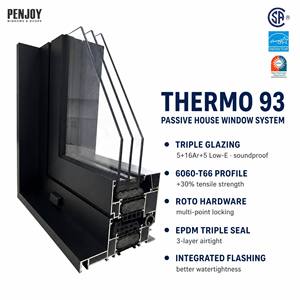
Architects and project developers in HCMC are rapidly aligning with Vietnam’s QCVN 09:2017/BXD (Technical Regulation on Energy Efficiency Buildings) as well as international LEED and local LOTUS certifications. Because raw aluminum frame perimeters represent significant thermal bridging risk, high-end specifications now mandate thermally broken aluminum window profiles incorporating corner key epoxy sealing. This reduces overall HVAC cooling energy demands by up to 32% in tropical climate zones.
With Ho Chi Minh City’s dense urban traffic (over 8 million registered motorbikes), ambient acoustic noise levels frequently exceed 75–85 dB along major arteries like Mai Chi Tho, Vo Van Kiet, and Nguyen Van Linh. Modern casement systems require multi-cavity corner keys that support heavy laminated double or triple glazing packages (e.g., 6mm + 1.52PVB + 6mm). Precision miter joints eliminate micro-flaws that allow high-frequency sound waves to bypass weatherstripping.
Direct technical clarity on ordering custom OEM/ODM corner joint assemblies, lead times, logistics, and compliance.
6063-T6 aluminum profile corner keys share identical thermal expansion coefficients with the main window profiles. Generic zinc die-cast keys expand and contract at different rates under tropical sun exposure (38°C daylight down to 24°C night rains), leading to joint loosening, broken adhesive seals, and eventual frame misalignment over 3–5 years.
For custom extrusion profiles and precision-machined corner cleats, initial tooling and CAD submittal approvals take 7 to 10 days. Mass production requires 15 to 20 days. Maritime freight from our primary manufacturing hub to Cat Lai Port in Ho Chi Minh City typically takes 5 to 9 ocean transit days, enabling total order fulfillment within 30 days.
Yes. We operate an advanced 5-axis CNC machining shop specializing in custom OEM/ODM aluminum profiles, structural cleats, and internal corner locks. We accept DWG, DXF, STEP, and Revit files. Shop drawings detailing profile wall thickness, corner key tolerances, and gasket groove alignment are issued for client sign-off prior to extrusion cutting.
Our corner joint designs feature dual-injection channels. Once the aluminum corner cleat is hydraulically crimped into place, two-component polyurethane structural sealant is injected under high pressure. The glue flows outward into internal micro-grooves, completely filling miter voids and forming a 100% watertight barrier rated past 1,000 Pa dynamic rain testing.
We offer Qualicoat Class 2 & Class 3 Architectural Powder Coatings, Fluorocarbon PVDF (2-coat and 3-coat systems compliant with AAMA 2605), and Hard-Anodized finishes (15 to 25 microns). All surface treatments are tested via 3,000-hour neutral salt spray (ASTM B117) to ensure no pitting or oxidation near riverbanks or sea breeze exposures.
Yes. Our thermally broken aluminum casements, tilt-and-turn windows, and fixed architectural frames are engineered to meet NFRC, Energy Star, and European Passive House performance criteria, achieving low U-factors (≤ 1.4 W/m²·K) when paired with appropriate Low-E glass units.
Combining over 60 years of shop floor legacy with modern 5-axis automation and rigorous quality assurance.
Founded on rigorous metal fabrication standards, our facilities bring six decades of specialized extrusion, miter-sawing, and corner joint development to every architectural order. We understand exactly how metal behaves under physical stress and climatic extremes.
From initial profile die design and thermal break alignment to custom corner key stamping, hardware milling, and bespoke powder coating colors, we serve as your direct production partner with zero reliance on intermediate brokers.
Every single frame assembly undergoes strict pre-shipment inspections: 100% corner squareness measurement, pneumatic air-tightness verification, sealant cure checks, and protective crating designed for international ocean freight.
Contact our engineering desk today for CAD shop drawing reviews, structural corner joint samples, or competitive FOB/CIF quotation to Cat Lai Port, Ho Chi Minh City.