Manufactured to order from high-grade structural extrusions, featuring custom Low-E soft coats, Argon gas fill, and thermal break barriers calibrated for North American climate zones.
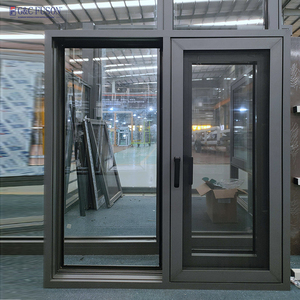
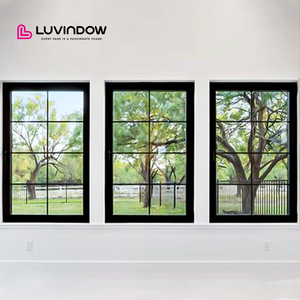
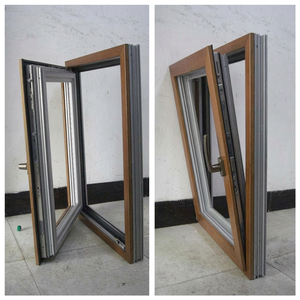
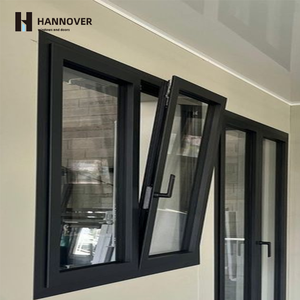
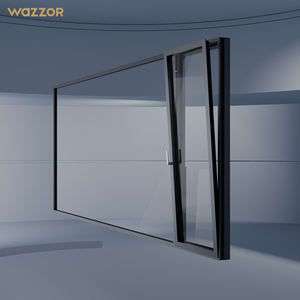
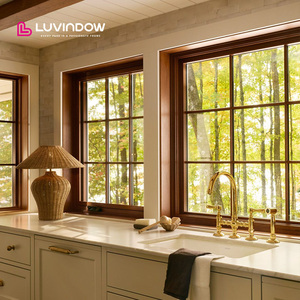
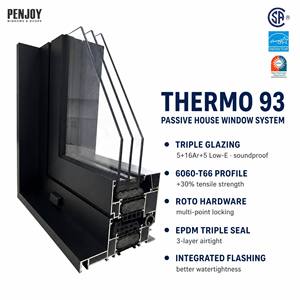
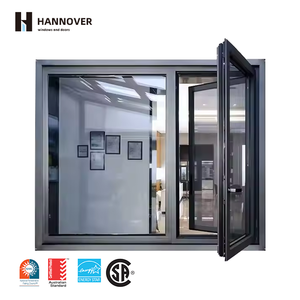
As building codes across the United States adopt stricter energy conservation mandates—such as the 2024 International Energy Conservation Code (IECC) and California's Title 24 Building Energy Efficiency Standards—specifying fenestration systems requires an advanced understanding of thermal modeling, material science, and structural load mechanics. Double glazing (Insulated Glass Units or IGUs) combined with thermally broken 6063-T6 aluminum extrusions represents the gold standard for high-performance commercial and residential building envelopes.
Aluminum is naturally highly conductive ($\approx 160\text{ W/m}\cdot\text{K}$). To stop thermal bridging between the exterior ambient temperature and interior conditioned space, our windows utilize precision-extruded Polyamide PA66-GF25 (25% Glass Fiber Reinforced) thermal barrier struts. This creates a complete structural break, reducing frame thermal conductivity to less than $1.5\text{ W/m}\cdot\text{K}$.
Unlike standard residential grade vinyl (uPVC) which degrades under intense UV radiation and exhibits high thermal deflection, our aluminum frames utilize solid 6063-T6 architectural alloy. 6063-T6 provides an ultimate tensile strength of at least 30,000 psi (207 MPa) and a yield strength of 25,000 psi (172 MPa).
Furthermore, all sash and frame joints are engineered using Sigma Shielded Metal Arc Welding (GMAW/MIG) at every corner, dressed completely smooth. A welded joint integrates the frame into a single continuous monolithic structure. Unlike mechanically crimped or screwed corners used by mass-market suppliers—which rely on organic sealants that dry out, loosen under wind loads, and leak water—sigma-welded joints will never rack out of square or develop capillary water paths over the lifespan of the building.
A double-glazed unit's performance is driven by its glass configuration. Our customized IGUs engineered for the US market feature flexible combinations of:
Direct B2B manufacturing engineered to streamline trade procurement, submittal approvals, and job site installation across all 50 US States.
Every order receives CAD/BIM submittal drawings detailing profile cross-sections, flashing lap conditions, glass bite, frame anchor points, and egress clearance dimensions before production begins.
High-performance fluoropolymer PVDF coatings applied in-house to meet AAMA 2605 compliance. Resists salt-spray corrosion, chalking, and color fading for coastal real estate applications.
Laminated double-glazed glass packages with PVB/SGP interlayers tested to withstand ASTM E1886/E1996 missile impact requirements for Florida HVHZ hurricane zones.
Asymmetrical double glazing thickness (e.g., 6mm exterior + 4mm interior) breaks acoustic resonance frequencies, yielding STC ratings up to 42 dB for urban developments near highways or airports.
Integrated long-leg and flat-frame insect screens fabricated from heavy-gauge roll-formed aluminum profiles with 16x18 charcoal fiberglass mesh and stainless hardware clips.
Custom wooden crating with foam corner protection, moisture desiccant bags, and seamless ISPM-15 compliant sea/air freight shipping directly to job sites or distributor warehouses across North America.
Comparative technical data tested in compliance with NFRC 100/200/400 and ASTM test standards.
| Glazing Specification | U-Factor (BTU/h·ft²·°F) | Solar Heat Gain (SHGC) | Acoustic Rating (STC) | Ideal US Climate Zone Target |
|---|---|---|---|---|
| Clear Double Glazed (5mm + 12A + 5mm) | 0.46 - 0.48 | 0.68 - 0.72 | 31 - 33 dB | Zone 1 - 2 (Garage / Unconditioned spaces) |
| Single Low-E Double Glazed (Argon Fill) | 0.26 - 0.28 | 0.38 - 0.42 | 34 - 36 dB | Zone 3 - 4 (Mixed-Humid / Temperate States) |
| Triple-Silver Low-E Double Glazed (Warm-Edge) | 0.20 - 0.22 | 0.21 - 0.25 | 36 - 38 dB | Zone 2 - 3 (Sunbelt / High Cooling Load States) |
| Passive House Triple Glazed (Dual Low-E + Argon) | 0.14 - 0.17 | 0.28 - 0.35 | 38 - 42 dB | Zone 5 - 7 (Cold Northern US / Canada Border) |
| Impact Laminated Double Glazed (PVB Interlayer) | 0.24 - 0.27 | 0.22 - 0.26 | 40 - 45 dB | Coastal Florida / Gulf Coast HVHZ Zones |
The vast geographic diversity of the United States requires tailored window specifications depending on regional atmospheric loads, solar irradiance, and state energy codes:
In Florida (Miami-Dade and Broward counties) and coastal regions of Texas and the Carolinas, windows must withstand cyclic wind pressures exceeding $+/- 70\text{ PSF}$ and windborne debris impacts. Our impact-rated double glazed casement systems feature heavy-wall 6063-T6 extrusions coupled with outer laminated glass units (e.g., 6mm Tempered + 1.52mm SentryGlas Interlayer + 6mm Low-E). This configuration prevents envelope breach even if the outer pane shatters during Category 5 hurricane events.
In states like Minnesota, New York, Colorado, and Maine, winter thermal losses dominate building utility costs. Here, the primary objective is minimizing U-factor. We supply double thermal break aluminum frames filled with high-density polyurethane foam insulation, paired with triple-pane insulated glass packages. This achieves U-factors as low as 0.15 BTU/h·ft²·°F, preventing heat escape and eliminating frost formation along frame sightlines.
In the American Southwest, intense ultraviolet and infrared radiation can cause extreme indoor solar heat gain and air conditioning overload. Specifying our high-performance double glazing with double or triple-silver Low-E magnetron sputtering coatings drops the Solar Heat Gain Coefficient (SHGC) to below 0.20 while maintaining high Visible Light Transmittance (VLT > 60%). This lowers peak cooling demand and prevents UV degradation of furniture and flooring.
The US fenestration market is undergoing a structural shift driven by federal incentives, updated energy codes, and modern architectural aesthetics:
The implementation of Energy Star Version 7.0 guidelines raises the performance bar for residential and commercial window replacements across North America. US property owners and developers can access federal tax credits (such as Section 25C Energy Efficient Home Improvement Credit) by installing fenestration products meeting strict U-factor ($\le 0.20$ Northern, $\le 0.23$ North-Central) and SHGC thresholds. Our product engineering directly supports compliance with these federal benchmark requirements.
Modern architectural design trends heavily favor ultra-thin, narrow-sightline aluminum frames that maximize daylighting and uninterrupted views. However, traditional thin frames often compromise thermal efficiency or structural load resistance. By utilizing high-tensile 6063-T6 alloy with internal structural ribs and concealed polyamide struts, our windows deliver ultra-narrow frame profiles without sacrificing structural deflection performance under high wind loads.
Direct answers regarding engineering specs, codes, freight logistics, and structural performance.
Solid 6063-T6 aluminum maintains precise dimensional stability under extreme temperature fluctuations (-40°F to 180°F). Unlike wood, aluminum will not warp, rot, swell, or absorb humidity. Unlike vinyl (uPVC), which expands rapidly under direct solar heat and has low structural frame strength, aluminum handles massive glass sizes with exceptionally slim sightlines while resisting wind load pressures exceeding 60 PSF.
A thermal break is a continuous non-metallic insulating strip (Polyamide PA66-GF25) inserted between interior and exterior aluminum profiles. Because aluminum is a strong thermal conductor, an unbroken frame causes severe heat loss in winter and heat gain in summer. The thermal break interrupts heat paths, dramatically improving overall U-factor to meet IECC, Title 24, and Energy Star standards while preventing interior frame condensation.
Mechanical crimping relies on corner keys and liquid sealants to join aluminum extrusions. Over time, thermal movement and wind vibration loosen mechanical fasteners, degrading sealants and causing water penetration into building walls. Our frames feature full Sigma Shielded Metal Arc Welding at all corner joints. The metal fuses into one contiguous solid frame that can never loosen, rack, or leak water throughout the life of the structure.
Yes, 100% of our production is custom-manufactured to site-specific opening schedules, submittal drawings, and architect elevations. We accommodate custom arch heads, rake shapes, oversized storefront sashes, multi-panel sliding configurations, and specialized hardware pre-creations without arbitrary stock size restrictions.
All units undergo rigorous pre-shipment quality inspection, glass edge protection, and individual protective film wrapping. Windows are packed in custom heavy-duty, fully enclosed fumigation-free plywood crates fitted with shock-absorbing foam lining and internal steel strapping to prevent movement during container transit to US ocean ports or direct project sites.
For projects located within 3 miles of saltwater coastlines, we recommend Fluoropolymer PVDF powder coatings certified to AAMA 2605 specifications. This 3-coat system utilizes advanced resins that resist color fading, chalking, oxidation, and salt-fog corrosion under intense coastal sun and sea spray conditions.
Consult directly with our structural fenestration engineers. Send us your door and window schedules, CAD elevations, or rough opening sizes for CAD shop drawing verification and factory-direct wholesale pricing.