Fabricated with heavy-duty 6063-T6 extruded alloys, sigma-welded joints, and advanced thermal breaks. Fully customizable for residential luxury villas, commercial infill, and high-rise Houston developments.
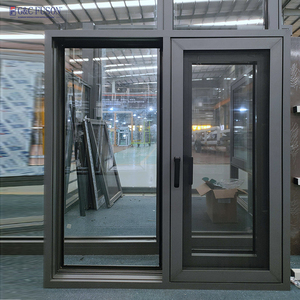
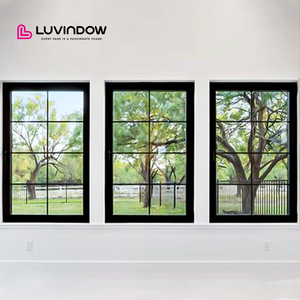
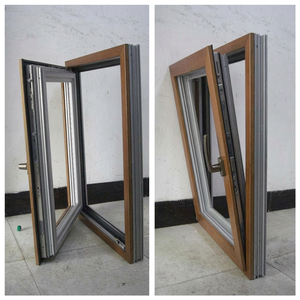
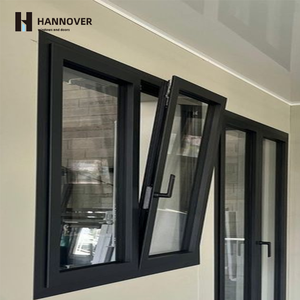
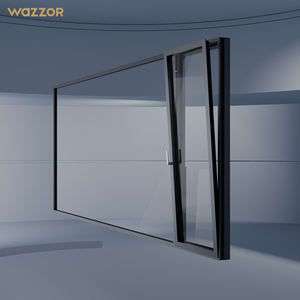
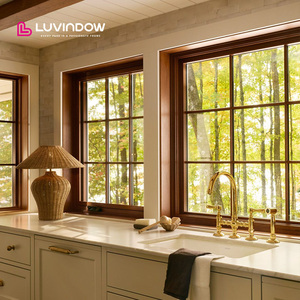
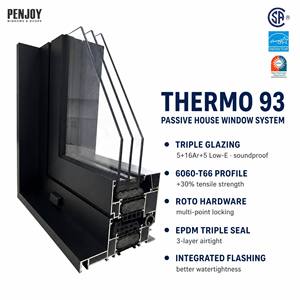
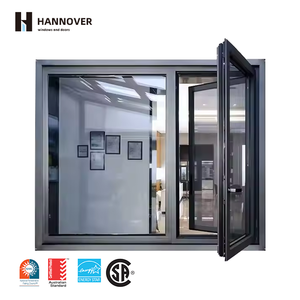
The Greater Houston Metropolitan Area presents one of North America's most demanding fenestration environments. Our custom aluminum windows are tailored specifically for South Texas building physics.
Houston experiences an average annual relative humidity of 75% paired with severe convective storms and tropical rain systems. Standard vinyl frames warp under intense solar radiation, while wood fenestration rots due to high ambient moisture. Our 6063-T6 extruded aluminum profile system features full perimeter EPDM synthetic rubber gaskets and precision-machined internal weep channels. Every sash corner is sigma-welded, eliminating mechanical corner joint separations that allow water infiltration during heavy downpours in areas like River Oaks and Katy.
Classified under International Energy Conservation Code (IECC) Climate Zone 2A (Hot-Humid), Houston residential and commercial buildings require aggressive Solar Heat Gain Coefficient (SHGC) limits. We integrate multi-layer spectrally selective Low-E glass packages (such as Triple-Silver Low-E coatings) combined with 24mm polyamide thermal breaks. This structure yields SHGC values as low as 0.21 and U-factors down to 0.22, dramatically lowering HVAC operational loads during Houston's summer heatwaves exceeding 100°F.
Projects located in Harris County, Galveston, and coastal Texas regions must withstand high design pressures (DP) and windborne debris. Our impact-rated window lines incorporate PVB/SGP laminated structural glass packages and reinforced aluminum wall thicknesses up to 3.0mm. Certified under ASTM E1886 and ASTM E1996 standards, our units resist high-velocity hurricane impacts (DP50 to DP90), protecting building envelopes from catastrophic pressure equalization failures.
Due to proximity to Galveston Bay and the Houston Ship Channel industrial corridor, airborne chlorides and volatile industrial pollutants rapidly oxidize bare metal and sub-par powder coatings. We apply high-performance AAMA 2605 fluoropolymer (PVDF) finishes and marine-grade anodization treatments. Tested to withstand over 4,000 hours of continuous salt spray testing (ASTM B117), our aluminum window frames retain structural integrity and color retention without chalking or blistering.
Objective performance metrics comparing 6063-T6 Sigma-Welded Aluminum against legacy window materials utilized across Texas construction projects.
| Performance Criteria | 6063-T6 Sigma-Welded Aluminum | Standard Vinyl (uPVC) | Traditional Softwood |
|---|---|---|---|
| Tensile Yield Strength | 214 MPa (Ultra-High Load) | 40 - 50 MPa (Low) | 40 MPa (Variable) |
| Frame Thermal Expansion (in/in/°F) | 13.0 × 10⁻⁶ (Stable Dimension) | 40.0 × 10⁻⁶ (High Warping Risk) | 3.0 × 10⁻⁶ (Moisture Swell) |
| Structural Wind Load (DP Rating) | DP50 to DP90+ Certified | DP20 to DP35 Max | DP30 to DP45 |
| Corner Joint Fabrication | Continuous Sigma Fusion Weld | Heat Welded / Weak Miter | Mortise & Tenon (Gluing) |
| Acoustic Isolation (STC) | STC 38 - STC 42 (Triple Glass) | STC 26 - STC 30 | STC 28 - STC 32 |
| Expected Service Life (Houston) | 40+ Years (Zero Rot/Degradation) | 10 - 15 Years (UV Yellowing) | 12 - 18 Years (Requires Recoating) |
From historical re-developments in The Heights to contemporary glass mansions in Memorial and River Oaks, aluminum windows are defining modern Texan luxury.
Architects across Houston are demanding maximum daylighting and uninterrupted views of outdoor living spaces and bayous. Because 6063-T6 aluminum possesses immense structural rigidity, our profile frame sightlines can be engineered as thin as 38mm while carrying heavy double and triple laminated glass units up to 10 feet tall.
With high-density residential infill projects accelerating in Midtown, Montrose, and Washington Corridor, fire-rated and sound-insulating aluminum windows are mandatory. Our window assemblies achieve exceptional Sound Transmission Class (STC) ratings, damping heavy urban traffic noise from I-45 and Westheimer Road.
As Houston commercial developers strive for LEED v4 certification and Texas Energy Code compliance, thermal-break window systems are no longer optional. By preventing conductive thermal bridges between interior conditioned spaces and exterior heat, our systems decrease total annual cooling energy expenditure by up to 28%.
Over six decades of engineering experience, rigorous OEM export management, and precision metallurgy tailored for international project standards.
We exclusively utilize prime 6063-T6 billet aluminum extrusions. Unlike re-melted scrap metal alloys, 6063-T6 guarantees uniform wall thickness, exceptional tensile elasticity, and flawless surface grain for anodizing and PVDF coating.
Mechanical screw-and-crimp miter joints loosen over time due to building movement and thermal expansion. Our frame and sash corners undergo continuous TIG sigma welding and mechanical dressing, forming a single monolithic metal unit.
Every Houston order is preceded by comprehensive architectural shop drawings. Our engineering department generates detailed elevations, section details, glass bite calculations, and anchor placement maps prior to metal cutting.
We provide full international logistics support, exporting containerized freight directly to the Port of Houston or door-to-jobsite flatbed delivery with heavy-duty fumigated wooden crating and corner armor protection.
Technical guidance covering building code compliance, shipping lead times, glass specifications, and thermal performance for Texas window procurement.
Aluminum extruded from 6063-T6 alloy does not expand, warp, split, or rot when exposed to Houston's 100°F+ heatwaves and 80%+ humidity levels. Unlike vinyl frames, which become brittle and bow under high solar radiation, aluminum maintains structural squareness across decades, enabling significantly narrower frame profiles and larger structural glass expanses.
For IECC Climate Zone 2A (Houston), we recommend a dual-pane or triple-pane insulated glass unit (IGU) equipped with a double or triple-silver spectrally selective Low-E coating on surface #2, combined with argon gas fill and a warm-edge composite spacer. This configuration reliably delivers an SHGC of ≤ 0.22, preventing radiant heat transfer while maintaining high visible light transmittance (VLT).
Yes. Our impact-resistant series can be specified to meet Texas Gulf Coast windborne debris requirements (ASTM E1886/E1996 Large Missile Impact Level D). Featuring SGP/PVB laminated glass interlayers and heavy-wall extruded aluminum frames, our units achieve Design Pressure (DP) ratings from DP50 up to DP90 for coastal Harris, Brazoria, and Galveston counties.
Aluminum is naturally highly conductive. A thermal break is an engineered structural polyamide (PA66 GF25) strut inserted between the interior and exterior aluminum extrusions. This barrier disrupts heat conduction, preventing outside heat from radiating into air-conditioned interior spaces during Houston summers, while stopping condensation formation ("frame sweating") during humid spells.
Following final shop drawing sign-off and color sample approval, manufacturing generally takes 25 to 35 days depending on project size and specialized glazing specifications. Transit from our export manufacturing facility to the Port of Houston takes approximately 22 to 28 days via ocean freight, with full customs clearance and local delivery coordination provided.
Yes. 100% of our production is made-to-order based on exact architectural opening dimensions. We do not restrict builders to rigid stock sizes. Whether your project requires 12-foot architectural fixed picture windows, raked heads, continuous radius arches, or custom corner-miter glass systems, our engineering team builds directly to your CAD drawings.
Request direct factory pricing, structural calculation reports, and custom shop submittals. Speak with our fenestration engineering specialists today.