Custom fabricated to exact submittal drawings with 6063-T6 alloy frames, sigma-welded joints, and high-performance tempered glass packages optimized for Nagoya's climate.
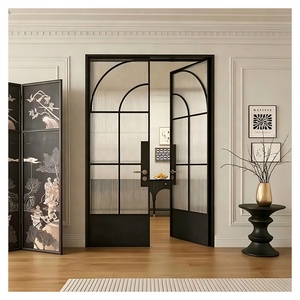
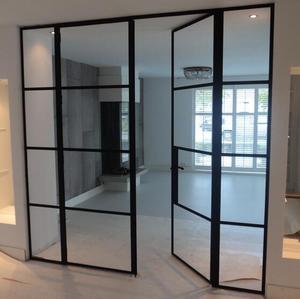
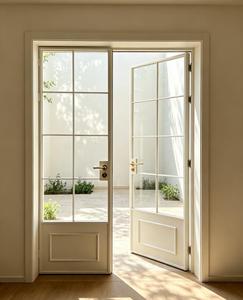
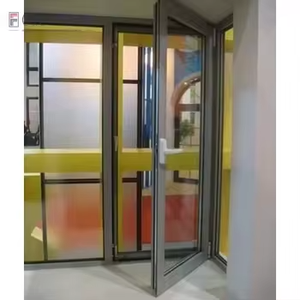
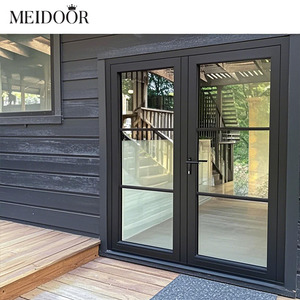
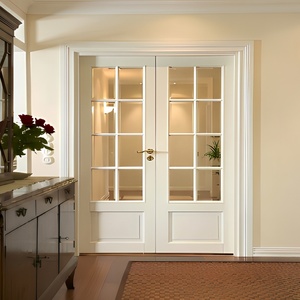
An in-depth technical analysis for Japanese general contractors, architectural procurement firms, and facade developers operating in Aichi Prefecture and the greater Chubu economic region.
The construction market in Nagoya and the wider Aichi Prefecture represents one of Asia's most demanding engineering environments. As the core industrial hub of Japan’s Chubu region, Nagoya balances dense urban redevelopment around Meieki Station and Sakae with coastal industrial facilities bordering the Port of Nagoya. Modern building envelopes in this region require fenestration and structural glazing engineered specifically to withstand rigorous environmental stressors: intense typhoon wind loads (up to 60 m/s pressure ratings), significant seismic inter-story drift specifications under the Japanese Building Standards Law (BSL Article 20), and harsh maritime salt spray exposure.
Sourcing fully custom, high-precision tempered glass packages and heavy-duty aluminum frame assemblies directly from tier-1 Chinese wholesale manufacturing plants provides Nagoya contractors and importers with a crucial competitive advantage. By establishing direct OEM/ODM supply channels, procurement directors eliminate localized distributor markups while securing rigorous compliance with Japanese Industrial Standards (JIS R 3206 for tempered glass, JIS R 3205 for laminated glass, and JIS A 4706 for window performance).
How Chinese precision glass and aluminum systems meet the distinct environmental and urban demands of Nagoya's distinct development zones.
Commercial high-rises in Nagoya’s main central business districts require point-supported structural glass and unitized curtain wall assemblies capable of taking dynamic seismic shear movements. Our heavy-duty tempered glass (8mm to 15mm options) undergoes 100% Heat Soak Testing (HST) to eliminate spontaneous explosion risks caused by Nickel Sulfide (NiS) inclusions, protecting high-foot-traffic pedestrian zones.
Developments surrounding the Port of Nagoya and Chubu Centrair International Airport face relentless marine humidity and airborne salt corrosion. Our fenestration systems feature 6063-T6 extruded aluminum profiles protected by 25-micron fluorocarbon (PVDF) electrostatic spray coatings and 316-grade stainless steel hardware, guaranteeing zero corrosion and structural decay over decades of coastal exposure.
Residential and mixed-use complexes situated along JR Tokaido Main Line, Meitetsu railways, or the Nagoya Municipal Subway corridors suffer from low-frequency rail noise pollution. We supply double and triple-glazed acoustic insulated glass units (IGUs) incorporating PVB/SGP acoustic laminated interlayers, achieving Sound Transmission Class (STC) ratings exceeding 42 dB.
Aichi Prefecture resides in a designated high-seismic watch zone regarding potential Nankai Trough earthquake events. Standard mechanical window frame joints fastened solely by self-tapping screws tend to rack, loosen, and fail under extreme lateral shear forces. Our factory employs full Sigma-Welded Joint Technology across all frame corners and door sashes.
A sigma-welded corner fuses the 6063-T6 aluminum alloy into a continuous structural monolith. When combined with structural silicone glazing (SSG) and structural EPDM gaskets, the glass pane remains flexibly floating within a frame that cannot racking out of square. This prevents catastrophic glass shattering during seismic tremors while maintaining an airtight seal against typhoon-driven rain pressures exceeding 2400 Pa.
The Chubu region is undergoing a massive shift toward Net-Zero Energy Buildings (ZEB) and ZEH residential standards. Here is how our glass technology directly aligns with localized energy regulations.
| Glazing Configuration Type | U-Factor (W/m²·K) | SHGC (Solar Heat Gain) | Visible Light (VLT) | Primary Nagoya Application Target |
|---|---|---|---|---|
| Standard Single Tempered (6mm/8mm) | 5.7 | 0.82 | 88% | Interior glass walls, balustrades, office partitions in Sakae |
| Double Glazed Low-E (6mm + 12Ar + 6mm) | 1.4 | 0.38 | 70% | Standard suburban residential & commercial low-rise buildings |
| Thermally Broken Triple Glazed Low-E | 0.8 | 0.28 | 62% | ZEB / ZEH certified luxury villas, mountain retreats (Seto/Kasugai) |
| SGP Laminated Hurricane Impact Glass | 2.1 | 0.45 | 75% | Coastal industrial facilities near Port of Nagoya & Centrair |
Thermal Insulation Performance: Nagoya experiences high seasonal temperature variances—ranging from humid 38°C summer spikes to below-freezing winter drops compounded by cold Ibuki-oroshi winds descending from the Suzuka Mountains. Non-thermally broken metal frames lose significant energy and sweat heavily indoors, leading to interior mold and finish decay.
Our thermally broken aluminum profile series utilizes imported PA66GF25 (Polyamide 66 reinforced with 25% glass fiber) thermal barrier strips. This structural bridge isolates the exterior aluminum profile from the interior frame, reducing frame thermal conductivity by up to 85% and maintaining interior surface temperatures above dew point regardless of outdoor conditions.
Combining 60+ years of cumulative metal fabrication heritage with cutting-edge automated glass processing technology.
Unlike ordinary commodity suppliers who utilize mechanically screwed or mechanically crimped frame corners that open water paths over time, our assemblies feature 100% full-penetration sigma welding across frame joints and sashes. Every joint is dressed smooth by automated CNC sanders before anodizing or powder coating, creating a perfectly continuous weather barrier.
Our glass processing lines utilize NorthGlass dual-chamber forced convection glass tempering furnaces. This guarantees optical flatness, eliminates visual roller wave distortion, and yields stress compression values exceeding 90 MPa—surpassing the strict shatter particle requirements specified in JIS R 3206 (>40 fragments per 50x50mm square area).
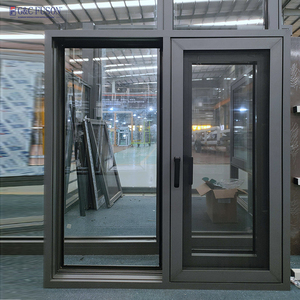
Every operable casement and sliding window package can be paired with our proprietary heavy-duty insect screen systems. Manufactured in flat-frame and long-leg profiles from roll-formed aluminum with 16 x 18 charcoal fiberglass mesh retained by high-density vinyl splines, our screen systems clip seamlessly into place and allow easy tool-free removal for cleaning.
Send your project CAD drawings, elevation schedules, or opening dimensions. Our engineering department will generate detailed shop drawings and unit-by-unit pricing within 24 hours.
From initial submittal drawing review to crated container discharge at Tobishima Container Terminal (Port of Nagoya).
Send architectural schedules or rough opening dimensions. We evaluate thermal performance needs, wind load codes, hardware requirements, and glass bite specs.
We issue unit-by-unit production CAD drawings illustrating net frame sizes, glass thickness specs, sightlines, drainage weep details, and swing directions for written sign-off.
Profiles are extruded, CNC machined, sigma-welded, and coated. Glass panes are precision-cut, edge-polished, tempered/laminated, and assembled into IGUs under climate-controlled conditions.
Units are individual-labeled to match floorplans, corner-protected, and packed into steel-reinforced wooden crates with desiccant packs for sea transport directly to Port of Nagoya.
Everything you need to know about regulatory compliance, sea logistics, custom manufacturing, and installation standards for the Japanese construction market.
Our architectural tempered glass is manufactured using automated horizontal convection furnaces under strict ISO 9001 quality management systems. Every batch undergoes factory fragment testing (confirming >40 particles per 50x50mm square), surface stress measurement (>90 MPa), and four-point bend tests matching JIS R 3206 requirements. Mill test certificates and third-party inspection reports are provided with every shipment container.
Standard fabrication lead time is 18 to 25 calendar days following CAD shop drawing approval. Direct sea container vessel sailings from Shanghai or Ningbo ports to Tobishima Container Terminal (Port of Nagoya) take approximately 3 to 5 transit days. Including export clearance and Japanese customs processing, total door-to-jobsite delivery timeframe is typically within 30 to 35 days.
Mechanically screwed frame corners rely on small fasteners and corner cleats. Over time, dynamic wind vibration and seismic movement loosen these screws, compromising water sealant integrity and causing air leakage. A sigma-welded corner fuses 6063-T6 aluminum into a permanent single continuous structure. It will never rack out of square, loosen, or open a water path over decades of service.
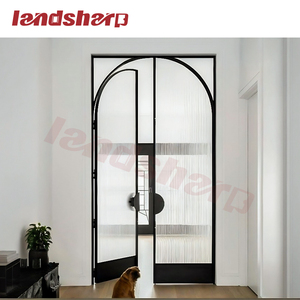
Yes. Custom dimensioning is our standard manufacturing model. We do not rely on fixed stock catalog sizes trimmed down in the field. We fabricate custom architectural glass and door/window profiles to match exact opening dimensions, including radius heads, raked gable shapes, and specific anodized or custom RAL powder coat finish matches requested by architects.
All glass units are packed using heavy-duty, fully enclosed plywood crates equipped with steel corner strapping and internal shock-absorbing rubber padding. Mildew-proof interleaving powder and silicon desiccant bags are placed between glass panes to eliminate moisture staining. Crates are custom-sized to fit flush within 20GP or 40HQ ocean containers, preventing internal load shift during sea transport.
We integrate multi-point lock hardware systems manufactured from 304/316 stainless steel to ensure high security and air tightness against typhoon pressures. German-engineered hardware brands (such as HOPPE, Siegenia, or Roto) or premium Japanese-style Mortise keyway locksets can be pre-installed and factory-tested prior to shipment.
Contact our engineering sales team today for comprehensive technical catalogs, structural glass performance calculations, or immediate factory-direct pricing for your upcoming bids.