Direct factory supply of high-performance architectural fenestration manufactured to European CE standards (EN 14351-1) and tested for North American structural and thermal requirements.
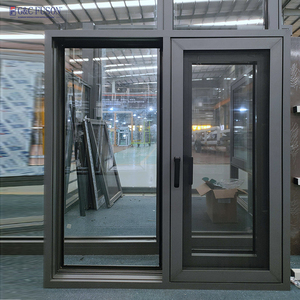
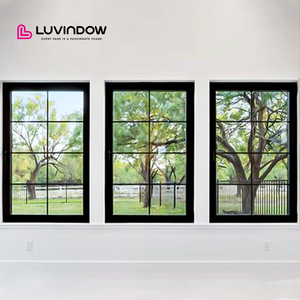
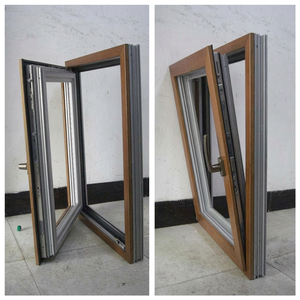
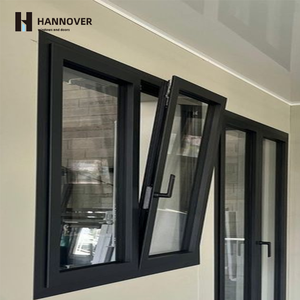
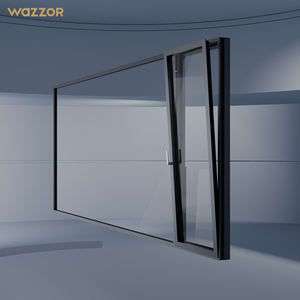
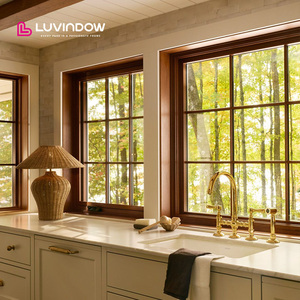
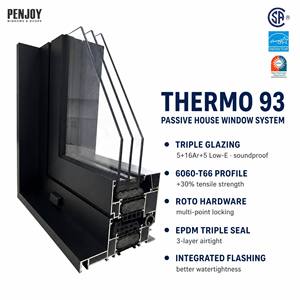
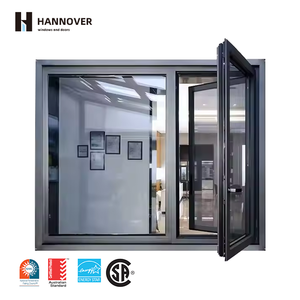
Why Tier-1 developers, commercial general contractors, and fenestration importers in Chicago specify our CE Certified aluminum sliding window systems over domestic stock options.
As an international manufacturer and direct exporter serving the Greater Chicago metropolitan area—including Cook County, DuPage, and Lake County—our engineering approach to aluminum sliding window manufacturing addresses the extreme atmospheric demands of Zone 5A humid continental climates. Chicago architectural projects face a brutal dual threat: sub-zero winter temperatures driven by polar vortex surges off Lake Michigan, paired with intense summer heat and high humidity levels. Generic fenestration systems manufactured with mechanically crimped corners or non-thermally broken profiles deteriorate rapidly under these severe thermal expansion differentials.
Our CE Certified sliding windows are fabricated exclusively from prime 6063-T6 extruded aluminum alloy. Unlike standard 6063-T5 alloys used in light commercial applications, T6 precipitation-hardened aluminum delivers a minimum tensile strength of 205 MPa (30,000 psi) and a yield strength of 170 MPa (25,000 psi). This structural stiffness allows for ultra-narrow sightlines while maintaining structural deflection criteria under heavy wind loads exceeding DP60 (Design Pressure ratings up to 3000 Pa).
Every frame member, sash corner, and structural meeting rail is fully sigma-welded at 100% of joint contact surfaces and dressed smooth. Unlike mechanically screwed or crimped corners that loosen over time and open water infiltration paths, a welded corner acts as one monolithic metal structure that resists racking, frame twist, and water leakage indefinitely.
Our sliding window profiles incorporate glass-fiber reinforced Polyamide (PA66 GF25) thermal break strips. This structural barrier completely isolates the exterior aluminum profile from the interior frame, halting conductive heat transfer, eliminating interior frame condensation (sweating), and achieving U-factors as low as 0.18 BTU/h·ft²·°F when paired with triple-pane Low-E glazing.
All exported window packages carry full European CE Certification under Directive EN 14351-1. This rigorous testing protocol verifies water tightness (Class 9A under EN 12208 up to 600 Pa), air permeability (Class 4 under EN 12207), and wind resistance (Class C5 under EN 12210), guaranteeing performance that exceeds standard local building codes.
While Chicago building codes frequently reference AAMA/WDMA/CSA 101/I.S.2/A440 ratings, European CE Certification under EN 14351-1 imposes significantly stricter factory production control (FPC) and third-party lab verification for air leakage and acoustic attenuation. For Chicago architects and developers seeking LEED Gold/Platinum or Passive House verification, importing CE Certified fenestration provides rigorous material traceability, verified EPDs (Environmental Product Declarations), and predictable thermal metrics.
Custom-engineered window assemblies tailored to specific Chicago architectural typologies and physical environmental challenges.
Lakefront properties along Lake Shore Drive experience intense gusting wind pressures, wind-driven rain from Lake Michigan, and elevated noise pollution from nearby traffic arterials.
Converting historic timber-and-brick industrial warehouses into modern luxury residential lofts requires fitting modern thermal glass into existing non-standard rough openings.
Modern suburban residential estates require floor-to-ceiling multi-slide panoramic glass panels with seamless transition tracks and ultra-low U-factors for energy compliance.
Suburban commercial centers demand durable, high-traffic fenestration packages that comply with the latest Chicago Energy Transformation Code while minimizing long-term operational maintenance.
Comprehensive technical specifications comparing our structural aluminum sliding systems against standard architectural requirements.
| Performance Specification | Standard Commercial Window | Our CE Certified Sliding Window | Chicago Engineering Relevance |
|---|---|---|---|
| Structural Alloy | 6063-T5 Recycled Aluminum | Prime 6063-T6 Extruded Alloy | 40% higher yield strength to withstand Lake Michigan wind pressure loads. |
| Corner Joint Assembly | Mechanically Crimped & Screwed | 100% Sigma-Welded & Dressed Smooth | Prevents corner water leakage and frame racking caused by severe thermal freeze-thaw cycles. |
| Thermal Insulation Barrier | PVC / Pour-and-Debridge Resin | Polyamide PA66 GF25 Reinforced Strip | Maintains structural integrity at -20°F without embrittlement or seal separation. |
| Overall Window U-Factor | 0.32 - 0.40 BTU/h·ft²·°F | 0.18 - 0.22 BTU/h·ft²·°F (Triple Low-E) | Exceeds Chicago Energy Transformation Code (IECC 2021/2024) mandates. |
| Air Permeability Standard | Class 2 (EN 12207) | Class 4 (EN 12207) / < 0.10 cfm/ft² | Prevents cold air draft infiltration during Chicago winter cold spells. |
| Water Resistance Rating | 300 Pa (Class 7A) | 600 Pa (Class 9A / DP60) | Guarantees waterproof performance during severe spring thunderstorm downpours. |
| Acoustic Performance (STC) | STC 28 - 32 dB | STC 38 - 44 dB (Acoustic Interlayer) | Crucial for urban infill projects near CTA elevated tracks and highway corridors. |
| European CE Certification | Not Certified / Self-Declared | Full EN 14351-1 Certification | Third-party audited factory quality assurance for international export peace of mind. |
Key market forces shaping window specification across Illinois and the Midwest commercial construction sector.
The City of Chicago has aligned its municipal energy codes with aggressive zero-carbon targets. High-performance fenestration with low Solar Heat Gain Coefficients (SHGC < 0.25) and U-factors below 0.20 are now required for major commercial retrofits and new multi-family developments.
Modern architectural aesthetics favor expansive glass spans with minimal visible aluminum frames. Our sliding window systems feature ultra-narrow interlock profiles (down to 18mm) while utilizing heavy-wall internal structural ribs to maintain structural wind load capacity.
Chicago general contractors face surging local labor costs and tight construction schedules. Sourcing fully glazed, shop-tested, and factory-assembled CE Certified window units directly from an export manufacturer significantly reduces on-site installation labor and window framing errors.
Direct technical answers covering structural code compliance, thermal performance, custom engineering submittals, and international export logistics.
European CE Certification under standard EN 14351-1 provides rigorous, third-party audited testing metrics for windows and exterior doors, covering air permeability (EN 12207), water tightness (EN 12208), and load resistance (EN 12210). For Chicago projects, our engineering department provides comprehensive test reports, cross-reference documentation, and structural calculations that map directly to ASTM, NFRC, and AAMA standards. Local architects and building inspectors accept these certified engineering packages for plan approval and permit verification.
Aluminum alloy 6063-T6 undergoes artificial aging to achieve maximum hardness, tensile strength, and structural rigidity. When fabricated into sliding window profiles, T6 aluminum will not flex or bow under high wind loads or heavy thermal differentials. Furthermore, our proprietary sigma-welding process permanently fuses the metal corners together. Unlike traditional mechanically crimped corners that rely on screws and butyl sealants—which degrade under Chicago's sharp temperature swings—sigma-welded corners form a single continuous metal frame that is 100% watertight and structural for decades.
For Chicago's cold winters and warm summers, we recommend a thermally broken aluminum profile equipped with a triple-pane insulated glass unit (IGU). A typical specification includes 6mm tempered glass / 12mm Argon gas filled cavity with TGI warm edge spacer / 4mm Low-E middle pane / 12mm Argon cavity / 6mm Low-E interior pane. This configuration achieves an overall system U-factor below 0.19 BTU/h·ft²·°F and an SHGC of ~0.22, effectively retaining indoor heat during sub-zero cold waves and dramatically reducing HVAC energy consumption.
We specialize in direct-to-site containerized export shipping. Window units are individual wrapped in protective foam, edge-guarded with high-density corner protectors, and sealed inside fully enclosed ISPM-15 compliant fumigated plywood crates. Crates are engineered with internal steel banding and shock-absorbing pallets designed for forklift or crane unloading. We handle complete export documentation, ocean freight to the Port of Chicago / inland rail ramp, customs clearance, and final flatbed truck delivery directly to your staging yard or jobsite.
Yes, 100% of our production is custom-fabricated from contractor field measurements or architect CAD/BIM submittal drawings. There are no standard catalogue size limitations. Our engineering team generates detailed shop drawings for every unit—verifying frame depth, glass bite, hardware placement, weep hole location, and installation flange options (e.g., nail fin, flush fin, or box frame)—which are submitted for your written approval prior to metal cutting and extrusion milling.
Sliding window performance depends entirely on roller carriage quality. We specify German-engineered tandem stainless steel needle-bearing rollers running on extruded heavy-gauge stainless steel tracks. This hardware combination eliminates track pitting, prevents roller flat-spots, and allows heavy triple-glazed sliding sashes to glide effortlessly with minimal operational force. Multi-point locking hooks constructed from corrosion-resistant 304 stainless steel provide forced-entry security along the entire vertical sash jamb.
Elevate your next Chicago architectural development with custom 6063-T6 aluminum sliding window systems built for extreme performance, superior aesthetics, and long-term durability. Contact our engineering team today for technical submittals, glass samples, and direct factory pricing.
Send an Inquiry