Direct factory supply for Polish general contractors, architectural firms, real estate developers, and glazing distributors. Fully customizable to submittal drawings.
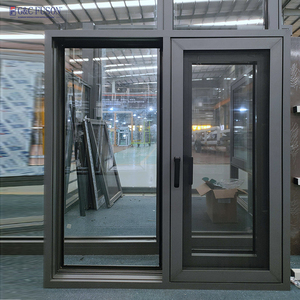
Engineered for low-energy residential builds, featuring multi-chamber thermal breaks and triple-sealed perimeter gaskets for high acoustic damping.
Contact Us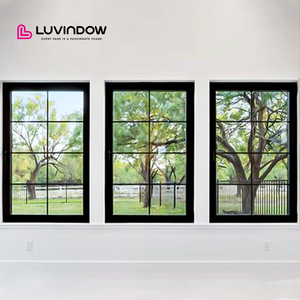
Ultra-thin sightlines combined with heavy-duty structural wall thickness. Ideal for modern minimalist architectural projects requiring maximum glass exposure.
Contact Us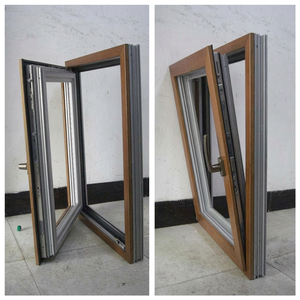
Designed for urban apartment complexes and luxury hotels in high-noise environments. Provides extreme thermal insulation and multi-point locking security.
Contact Us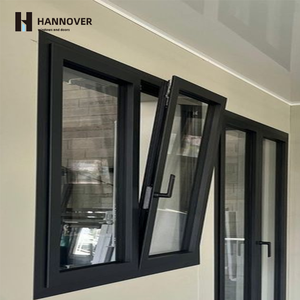
A balanced residential solution providing excellent structural stability, leak resistance, and customizable architectural powder coating finishes.
Contact Us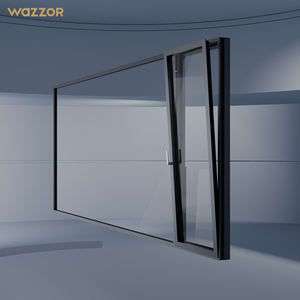
Heavy-gauge aluminum extrusion engineered for extreme weather conditions, high wind loads, and long-term durability in severe climates.
Contact Us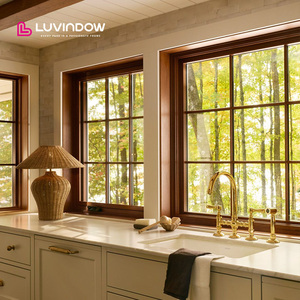
Combines the exterior weather resistance of heavy anodized aluminum with the natural interior warmth of solid wood for premium residential designs.
Contact Us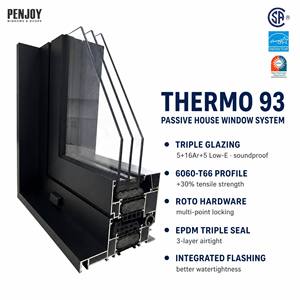
High-performance thermal glass units with warm-edge spacers designed to achieve strict European energy efficiency ratings for modern housing.
Contact Us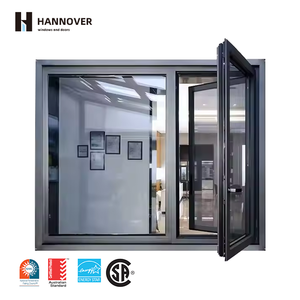
Dual-function operation tailored specifically for European architectural standards, offering micro-ventilation and easy interior maintenance cleaning.
Contact UsPoland has rapidly transformed into one of Europe's premier hubs for advanced residential and commercial architecture. Following the implementation of Poland’s updated building code regulations—Warunki Techniczne 2021 (WT 2021)—the performance standards required for exterior joinery have reached unprecedented rigor. Under WT 2021, the maximum allowable thermal transmittance co-efficient ($U_w$) for standard vertical windows in residential and public buildings is strictly capped at $0.9 \text{ W/(m²·K)}$, while roof windows must achieve $0.8 \text{ W/(m²·K)}$ or lower.
For Polish general contractors, real estate developers, and architectural specifiers operating in metropolitan areas like Warsaw, Kraków, Wrocław, and Poznań, selecting an offshore aluminum window manufacturing partner requires looking beyond simple aesthetic appeal. Factories must possess the technological infrastructure to produce high-precision, multi-chamber thermally broken profile systems integrated with advanced triple-glazing or quadruple-glazing packages.
Technical Compliance Insight for Importers in Poland: Standard un-insulated aluminum profiles (thermal conductivity $\lambda \approx 160,000 \text{ W/m·K}$) are strictly prohibited for conditioned building envelopes under WT 2021. Our export series utilizes polytechnic polyamide (PA66 GF25) thermal insulation strips reinforced with 25% glass fiber, creating a structural thermal barrier that drives overall frame assembly performance down to $U_f = 1.0 - 1.2 \text{ W/(m²·K)}$, easily yielding finished window units at $U_w \le 0.85 \text{ W/(m²·K)}$.
The structural longevity of modern metal fenestration relies entirely on the composition of the aluminum extrusion alloy and the structural joint assembly method. While many regional fabricators rely on secondary or scrap-recycled aluminum alloys to cut costs, our production facility utilizes exclusively primary 6063-T6 architectural grade aluminum alloy.
6063-T6 alloy provides an optimal balance of tensile strength ($205 \text{ MPa}$ ultimate tensile strength), yield strength ($170 \text{ MPa}$), and high resistance to atmospheric corrosion. This enables thinner profile sightlines capable of supporting massive structural glass panes without frame deflection or sash sagging over decades of operation.
Unlike mechanically screwed and crimped corners that rely on transient sealant pastes, every corner of our structural sash and frame is full-depth sigma welded and ground flush, eliminating water ingress pathways permanently.
Our architectural surface coatings adhere to Qualicoat Class 2 standards, utilizing 50-80 micron fluorocarbon (PVDF) or anodized surface finishes engineered to withstand C5-M marine environments along the Baltic coastal zone.
Incorporating multi-layer acoustic PVB laminated glass packages allows our fenestration units to deliver acoustic attenuation values up to $R_w = 48 \text{ dB}$, ideal for high-density urban infill developments.
In conventional European window production, corner joints are frequently assembled using mechanical corner cleats with mechanical crimping. Over cyclic thermal expansion (which ranges in Poland from $-25^\circ\text{C}$ in winter to $+35^\circ\text{C}$ in summer), mechanical crimps develop microscopic gaps, leading to air infiltration and joint leakage. Our continuous Sigma Welding Technology fuses the extruded profile walls into a monolithic structural frame. A welded corner behaves as one continuous piece of structural metal, ensuring zero structural failure under high wind pressures (Class C5 / 2000 Pa testing standard).
Poland's geography encompasses diverse microclimates, ranging from severe Baltic marine exposure to sub-zero alpine winter conditions in the South. Factory-direct architectural fenestration must be engineered precisely for these regional operational demands:
| Region / Microclimate | Architectural & Physical Challenge | Optimized Profile & Glazing Specification | Key Performance Target |
|---|---|---|---|
| Warsaw & Wrocław (Urban High-Rise) | Extreme wind load deflections, high urban traffic noise, tall window openings. | Heavy-wall 6063-T6 tilt-and-turn profile, 44mm triple acoustic laminated glass. | $R_w \ge 45 \text{ dB}$, Wind Load Class C5 |
| Gdańsk & Gdynia (Baltic Coastline) | High air salinity, atmospheric corrosion, heavy driving rains. | PVDF Fluorocarbon coated (Qualicoat Class 2), EPDM continuous gaskets. | Corrosion Resistance C5-M, Water Tightness E1050 |
| Zakopane & Tatras (Mountain Alpine) | Sub-zero temperature extremes, high snow pressure, frost condensation. | Multi-chamber PA66 thermal break (34mm strip), Low-E Argon triple glazed. | $U_w \le 0.78 \text{ W/(m²·K)}$, Zero sweating |
| Kraków Suburbs (Passive Residential) | Strict municipal air quality goals, low energy usage mandates, clean aesthetics. | Slim-sightline thermal break casement, warm edge Swisspacer Ultimate. | nZEB & WT 2021 Compliant ($U_w \le 0.85$) |
Importing custom architectural aluminum joinery into the European Union requires strict adherence to regulatory documentation. All window and door units produced in our factories for shipment to Poland carry full CE Marking compliance under EN 14351-1:2006+A2:2016 (the harmonized European standard for windows and external pedestrian doorsets).
Before shipment, every order undergoes complete CAD shop drawing submittal approval. Our engineering team generates 1:1 scale cross-sectional shop drawings detailing net frame dimensions, glass bite depths, drainage weep hole locations, perimeter flashing channels, and mounting anchor placement. This meticulous documentation guarantees that when crated shipments arrive at sea ports like Port of Gdańsk or regional logistics terminals in Katowice, installation crews can place units into rough openings without costly site modifications.
Export Packaging & Transit Safety: Custom architectural windows are packed in fumigated ISPM-15 wooden crates with corner guards, moisture-barrier wrapping, and internal rubber vibration dampeners. Standard ocean container freight lead times from our factory to Polish ports average 28–35 days, supported by complete customs clearance paperwork (Bill of Lading, Commercial Invoice, Packing List, and Declaration of Performance - DoP).
Key operational, technical, and regulatory questions answered by our fenestration engineering team.
Send us your project elevations, window schedules, or CAD drawings. Our structural fenestration engineers will provide line-item factory pricing, $U_w$ calculation reports, and shop drawings within 48 hours.