Supplying high-purity non-alloy ingots, extrusion billets, and induction melting systems certified under ISO & CE guidelines for Indonesian casting plants and extruders.
As Indonesia accelerates its national industrialization policy (Hilirisasi Industri), the structural demand for standardized primary non-alloy aluminum ingots (A00 grade), foundry die-casting alloys (ADC12, A356), and extrusion billets (6063, 6061) has reached an unprecedented peak. As a premier international manufacturer and direct smelter exporter, our enterprise provides a integrated metallurgical supply chain engineered specifically for Indonesian manufacturers across West Java, East Java, North Sumatra, and the Riau Islands.
Operating state-of-the-art continuous casting production lines equipped with electromagnetic stirring and vacuum ceramic tube degassing systems, our facility ensures every aluminum ingot bundle delivered to ports such as Tanjung Priok (Jakarta), Tanjung Perak (Surabaya), and Belawan (Medan) meets rigorous international metallurgical criteria—specifically GB/T 1196-2017 A00, ASTM B209, and EN 573-3 standards.
Our primary aluminum ingots maintain iron (Fe) content strictly controlled below 0.10%, preventing intermetallic compound embrittlement during downstream remelting for critical automotive components.
Utilizing inline SNIF rotary degassing prior to mold casting, hydrogen gas concentration is constrained beneath 0.10 cm³/100g Al, drastically suppressing porosity defects in die-castings.
All shipments include authenticated ASEAN-China Free Trade Area Form E certificates, granting Indonesian importers zero-tariff clearance under HS Codes 7601.10.00 and 7601.20.00.
Precision spectrometry guarantees that every batch conforms to precise elemental tolerances, enabling predictable melt chemistry for local foundries.
| Alloy Grade | Al Purity (%) | Fe (Max %) | Si (Max %) | Cu (Max %) | Mg (%) | Primary Industrial Use in Indonesia |
|---|---|---|---|---|---|---|
| Primary A00 | ≥ 99.97% | 0.070 | 0.050 | 0.005 | 0.005 | Electrical conductors, high-purity re-melting, foil feedstock |
| A7 Grade | ≥ 99.70% | 0.200 | 0.100 | 0.010 | 0.020 | General extrusion billets, architectural profiles, cookware |
| ADC12 (Al-Si-Cu) | Balance | 0.900 | 9.6 - 12.0 | 1.5 - 3.5 | 0.300 | Automotive engine blocks, motorcycle crankcases (Cikarang/Karawang) |
| A356.2 | Balance | 0.120 | 6.5 - 7.5 | 0.050 | 0.30 - 0.45 | High-stress structural components, EV chassis, alloy wheels |
| 6063 Ingot/Billet | Balance | 0.350 | 0.20 - 0.60 | 0.100 | 0.45 - 0.90 | Architectural window frames, structural extrusions, solar frames |
The industrial corridors of West Java host the largest automotive manufacturing hub in Southeast Asia. OEM tier-1 and tier-2 foundries rely on our consistent supply of ADC12 and A356.2 foundry ingots. The low gas content and strictly governed zinc/iron trace limits reduce cast micro-porosity, ensuring structural integrity in high-vibration motorcycle engine blocks, transmission cases, and brake callipers.
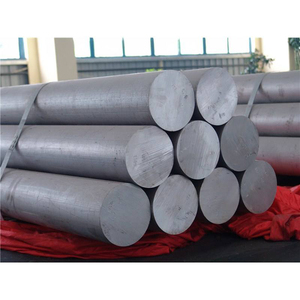
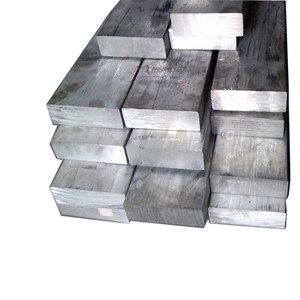
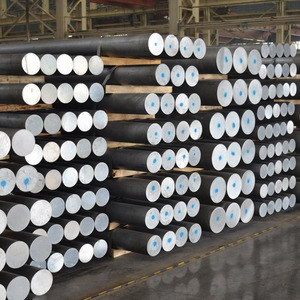
With the construction of Indonesia's new capital city, IKN Nusantara, alongside urban infrastructure expansion in Jakarta and Surabaya, demand for 6063 and 6061 extruded architectural sections has surged. Extruders utilize our high-homogeneity 6063 billets and primary A00 ingots to produce anodized curtain walls, thermal-break window systems, and heavy-duty structural framing with flawless surface finishing capability.
PT Perusahaan Listrik Negara (PLN) requires high-conductivity aluminum rod and wire for overhead transmission lines (AAC, AAAC, and ACSR conductors). Our 99.97% Primary A00 Aluminum Ingots provide electrical conductivity exceeding 61.2% IACS (International Annealed Copper Standard), significantly minimizing power dissipation across long-distance inter-island electrification projects.
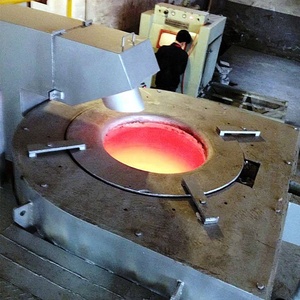
For recyclers and remelters utilizing our UBC Cans Aluminum Induction Melting Furnaces, we supply technical expertise alongside primary raw material blends. Our equipment and ingot feedstocks allow local recyclers in East Java and Batam to re-alloy post-consumer scrap into commercial-grade 3004 and 5052 aluminum coils efficiently with maximum thermal energy retention.
Indonesia's industrial landscape is undergoing a structural shift driven by green energy transition, nickel processing integration, and localized EV ecosystem development. Procurement directors must align their supply chains with these macro dynamics:
Every melt batch undergoes dual-testing via Thermo Scientific ARL OES analyzers before pouring, guaranteeing exact chemical compliance with complete Mill Test Certificates (MTC).
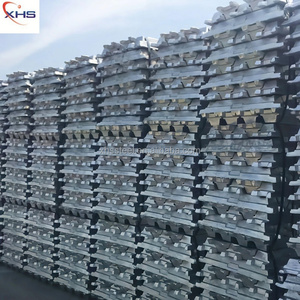
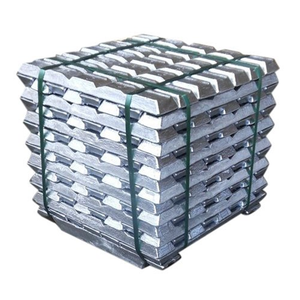
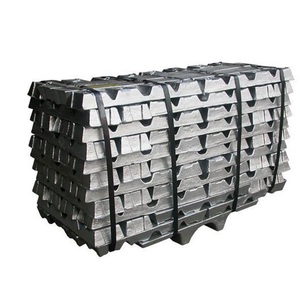
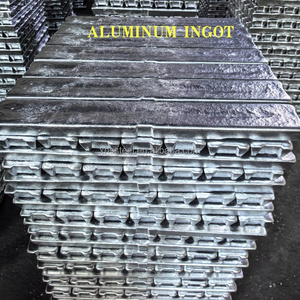
Available in standard 20kg–25kg ingots bundled into 1,000kg secure pallets, as well as large 500kg T-bar ingots for high-capacity industrial melting furnaces.
Our experienced logistics department coordinates directly with Indonesian PPJK (Customs Clearance Brokers) to ensure smooth Bea Cukai processing at Port Tanjung Priok & Surabaya.
Under the ASEAN-China Free Trade Area (ACFTA) agreement, aluminum ingots under HS Code 7601.10.00 (Non-alloy) and HS Code 7601.20.00 (Alloyed) qualify for a 0% preferential import tariff when accompanied by an official Form E Certificate issued by our trade authorities.
All aluminum ingot bundles are wrapped in heavy-duty polyethylene shrink-film combined with VCI (Volatile Corrosion Inhibitor) desiccants inside dry container units. This prevents salt-spray moisture ingress across tropical maritime shipping routes.
Our standard Minimum Order Quantity for export is 1 FCL (Full Container Load), which fits approximately 25 to 26 Metric Tons. For specialty alloy testing or custom billet formulations, trial orders can be arranged upon technical consultation.
Yes. Our primary non-alloy ingots comply with international equivalencies recognized by BSN (Badan Standardisasi Nasional) for SNI 07-0408-1989 / GB/T 1196 testing protocol. Full chemical assay documentation is delivered alongside each Bill of Lading.
Our coreless aluminum induction melting furnaces (ranging from 100kg to 20 Tons) feature high power density, precise electromagnetic stirring, and rapid thermal recovery. This drastically reduces metal dross formation to under 1.5% during UBC scrap re-melting, delivering maximum energy savings for Indonesian recycling facilities.