
In modern architectural fenestration, the specification of Insulated Glass Packages (IGPs)—frequently referred to in technical engineering standards as Insulated Glass Units (IGUs)—has evolved from a routine component selection into a critical discipline that dictates building thermal efficiency, structural integrity, acoustic comfort, and long-term lifecycle performance. As global energy codes tighten under international decarbonization mandates, commercial procurement managers, architectural specifiers, and custom home builders require more than superficial product brochures. They need rigorous, evidence-based technical data and clear intent-driven analysis to make informed sourcing decisions.
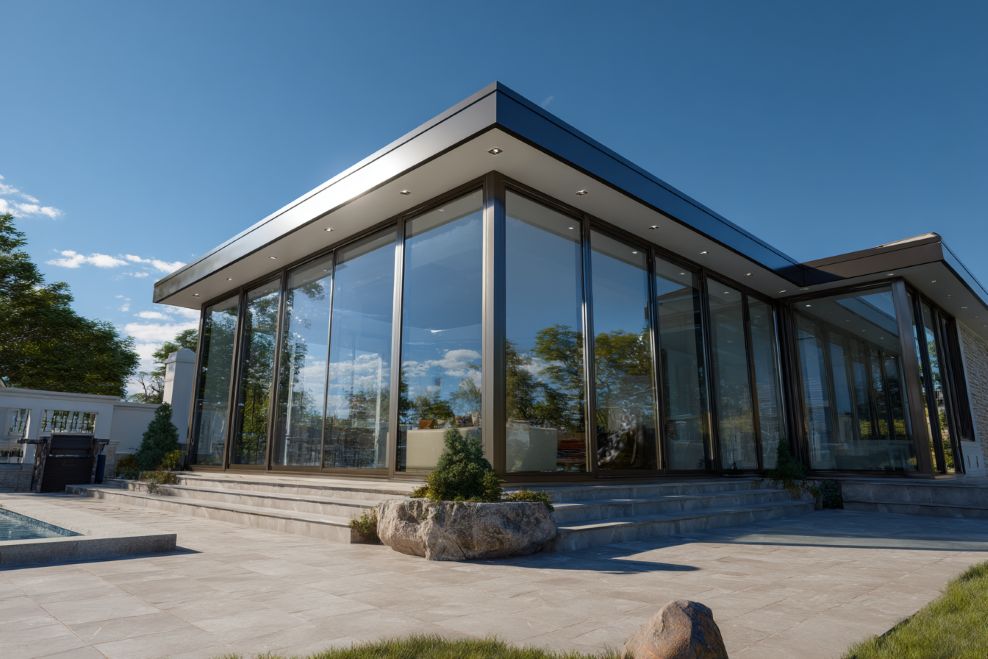
When selecting architectural glass for high-exposure commercial curtain walls or high-end residential elevations, the glass package cannot be evaluated in isolation. It functions as a dynamic system interacting with its supporting framework. At The Metal Window, our six-decade legacy of custom metal fenestration in Southern California has proven that even the most advanced triple-silver Low-E coating will fail prematurely if mounted within a flexing, mechanically fastened frame that stresses perimeter seals. Precision integration between engineered Insulated Glass Packages and rigid 6063-T6 sigma-welded aluminum frames forms the benchmark for zero-callback architectural fenestration.
1. The Mechanics & Physics of Insulated Glass Packages (IGPs)
An Insulated Glass Package is a factory-assembled unit consisting of two or more panes of glass separated by a hermetically sealed airspace or noble gas cavity. The primary goal of an IGP is to reduce conductive, convective, and radiative heat transfer across the fenestration envelope while maintaining optimal Visible Light Transmittance (VLT).
Key Physical Performance Metrics Explained
To accurately evaluate glass performance during procurement, specifiers must evaluate four fundamental thermodynamic and optical parameters:
- Thermal Transmittance ($U$-Factor / $U$-Value): Measures the rate of non-solar heat transfer through the glass package ($BTU/hr\cdot ft^2\cdot^\circ F$ or $W/m^2\cdot K$). A lower $U$-factor signifies superior insulating capabilities against ambient outdoor temperatures.
- Solar Heat Gain Coefficient (SHGC): Represents the fraction of incident solar radiation admitted through the window package. In cooling-dominated southern or desert climates, a low SHGC ($\le 0.22$) is vital to prevent solar thermal buildup and HVAC overload.
- Visible Light Transmittance (VLT): The percentage of visible light spectrum (380–780 nanometers) passing through the assembly. High-performance spectrally selective coatings maximize VLT while blocking infrared radiation.
- Sound Transmission Class (STC) & Outdoor-Indoor Transmission Class (OITC): Acoustic ratings measuring decibel reduction against airborne noise (STC) and low-frequency urban transportation noise (OITC).
Component Breakdown of an Industrial-Grade IGP
A premium Insulated Glass Package comprises four interdependent component layers:
- Glass Substrates: Annealed, heat-strengthened, or fully tempered float glass, available in standard clear, ultra-clear low-iron (reducing green iron-oxide cast), body-tinted, or laminated configurations.
- Spectrally Selective Low-E Coatings: Microscopically thin, multi-layer metallic silver coatings applied via Magnetron Sputtered Vacuum Deposition (MSVD). Double- and triple-silver coatings selectively reflect far-infrared heat energy back to its source while permitting natural daylight daylighting.
- Hermetic Gas Infill: High-density inert gases—primarily 90% to 95% Argon ($Ar$) or Krypton ($Kr$)—replace ambient dry air within the inter-pane cavity. Argon reduces convective loop heat transfer due to its higher viscosity and lower thermal conductivity ($k = 0.016 \text{ W/m}\cdot\text{K}$) compared to air ($k = 0.026 \text{ W/m}\cdot\text{K}$).
- Dual-Seal & Warm-Edge Spacer Assembly: A structural spacer holding glass panes apart, packed with molecular sieve desiccant to absorb residual cavity moisture, backed by a dual-seal system.
2. Critical Sourcing Matrix: Specialized IGP Configurations
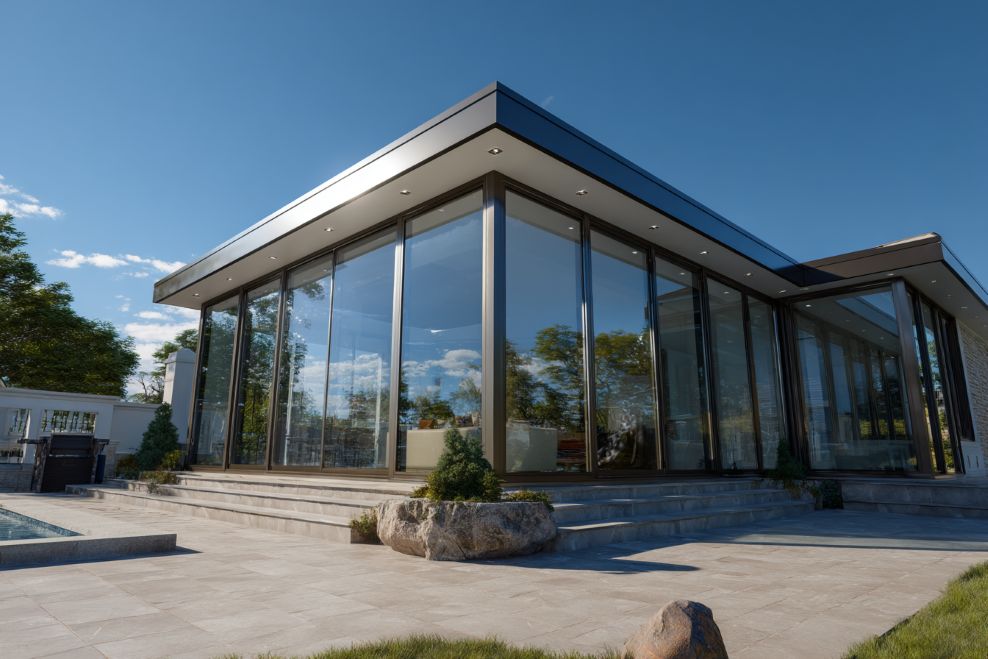
Global buyers must match specific Insulated Glass Package configurations to project geography, orientation, wind load requirements, and building codes. Below is the technical recommendation matrix utilized by our engineering team:
| Package Type | Glass Structure & Coating | Thermal Performance ($U$-Factor / SHGC) | Primary Application Zone |
|---|---|---|---|
| Solar Control Low-E Double IGP | 6mm Clear Low-E + 12mm Argon + 6mm Clear | $U$: 0.24–0.26 | SHGC: 0.20–0.25 | High-sunlight, desert, and warm southern coastal elevations. |
| Ultra-Thermal Triple Glazed IGP | 4mm Low-E + 10mm Ar + 4mm Clear + 10mm Ar + 4mm Low-E | $U$: 0.12–0.15 | SHGC: 0.28–0.35 | Severe cold climates, sub-zero regions, Passive House standards. |
| Acoustic Laminated IGP | 6mm Clear + 12mm Ar + 6.76mm PVB Acoustic Laminated | STC: 42–46 dB | OITC: 36–38 dB | Urban high-density corridors, airport flight paths, commercial suites. |
| Coastal Impact & Structural IGP | 8mm Tempered Low-E + 14mm Ar + 8.76mm SGP Interlayer | Design Pressure: >70 PSF | Missile Level D | Hurricane zones, coastal bluff residences, oceanfront structures. |
| Narrow Profile Architectural IGP | 4mm Low-E + 8mm Krypton + 4mm Low-Iron Clear | $U$: 0.22–0.25 | Ultra-Slim 16mm Overall Thickness | Historic replications, narrow 6063-T6 aluminum sightlines. |
Warm-Edge Spacer Innovation
Traditional aluminum box spacers create a severe thermal bridge at the glass perimeter, leading to perimeter condensation and high psi ($\Psi$) heat loss. Our IGPs utilize composite Stainless Steel / Thermoplastic Warm-Edge Spacers that reduce edge heat transfer by up to 65%.
Dual-Seal Integrity Systems
Our dual-seal engineering applies Polyisobutylene (PIB) as the primary vapor seal to block argon escape and moisture ingress, backed by a secondary structural Silicone seal for maximum mechanical bond strength against wind-load shear stress.
3. Enterprise Manufacturing Advantages: Frame Synergy & EEAT Standards
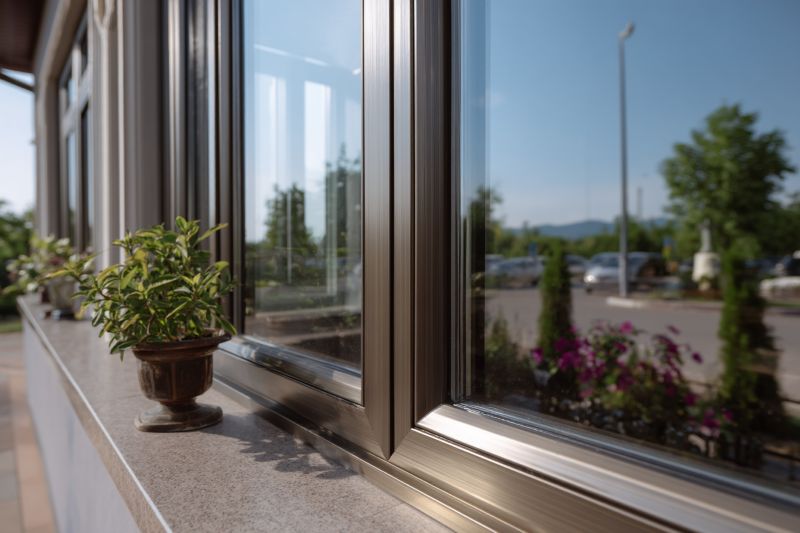
A superior glass unit cannot overcome a substandard frame. For over 60 years, The Metal Window has manufactured custom aluminum fenestration products built to exact architect specifications. Our integrated fabrication approach solves the underlying causes of fenestration failure.
Structural Superiority: 6063-T6 Extruded Aluminum Alloy
Unlike commercial mass-market suppliers using softer 6063-T5 aluminum, every frame member fabricated in our shop is extruded from 6063-T6 aluminum alloy. The T6 heat treatment temper provides a minimum tensile yield strength of 170 MPa (25,000 psi)—ensuring high structural rigidity under extreme wind loads and supporting heavy triple-pane insulated glass packages without frame deflection or corner sagging.
Continuous Structural Joinery: Sigma-Welded Corners
Standard window frames rely on mechanical corner joinery—screws, plastic cleats, or crimped corner keys held together with temporary liquid sealants. Under thermal expansion cycles and wind pressures, mechanical joints loosen, opening path channels for water intrusion and twisting the frame, which shears the IGP seal.
We eliminate this structural defect. Every joint and corner in our window and door frames is sigma welded (Shielded Inert Gas Metal Arc welding) and dressed smooth. Welded corners transform the entire perimeter frame into a continuous, monolithic aluminum section. Stress is distributed uniformly across the section rather than concentrating at fastener points, ensuring the glass glazing pocket stays square and rigid for decades.
Thermally Broken Frame Isolation
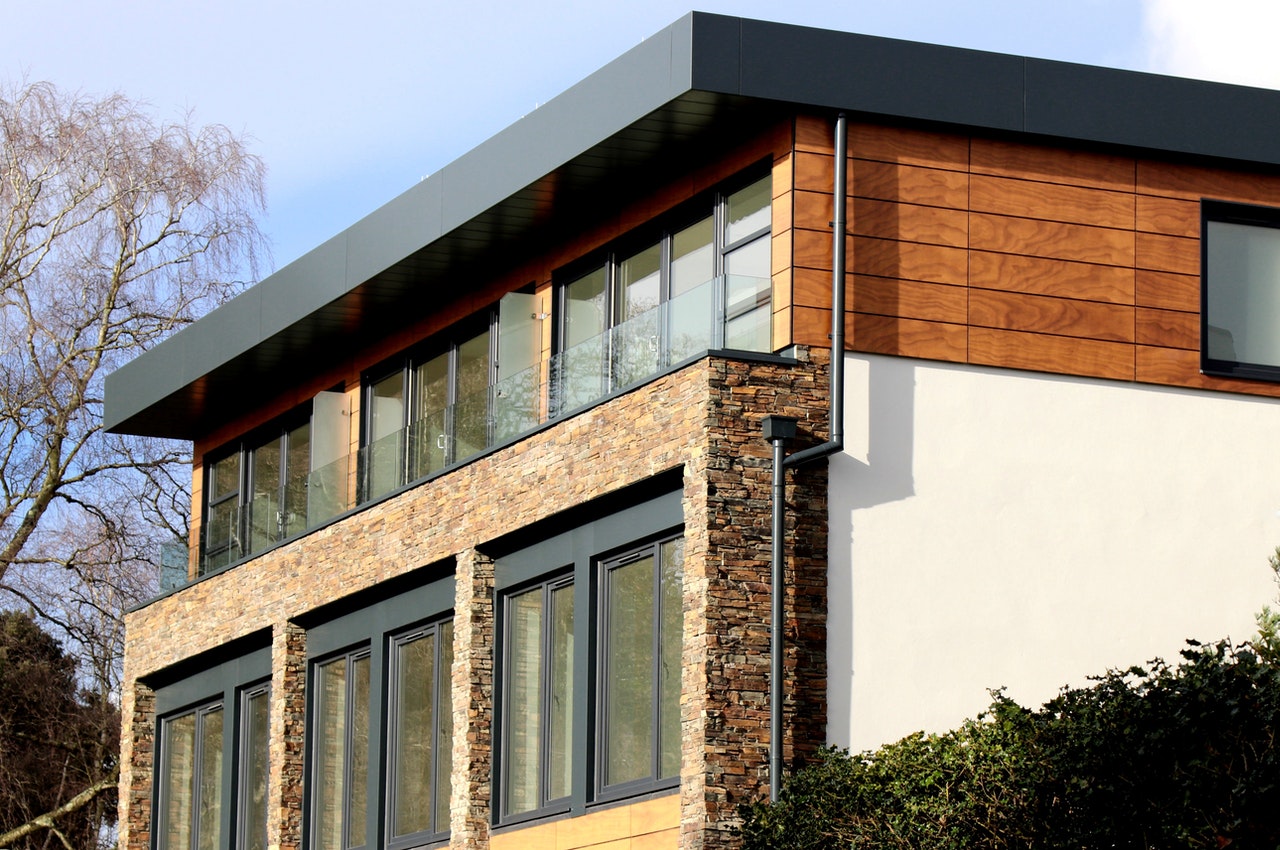
To match the ultra-low $U$-factors of our insulated glass packages, our thermally broken window series incorporates structural polyamide isolation strips. Poured-and-debridged or crimped polyamide thermal barriers separate exterior aluminum extrusions from interior aluminum extrusions, interrupting thermal conductivity, raising interior frame surface temperatures, and eliminating interior frame sweat in humid or coastal environments.
Environmental Stewardship & Sustainable Procurement
In alignment with modern green building standards (LEED, BREEAM):
- Zero Timber & Zero Petroleum Frames: No trees are felled and no vinyl/PVC petroleum-based frame materials are utilized in our shop.
- Infinite Recyclability: Aluminum is infinitely recyclable without structural degradation. A significant portion of our billet supply originates from post-industrial recycled content.
- Integrated Bug Screen Systems: We manufacture precision roll-formed aluminum screen frames in flat and long-leg profiles, fitted with 16x18 charcoal fiberglass mesh and vinyl spline retention.

4. Future Sourcing & Procurement Trends in Architectural Glazing (2026–2035)
AI-driven procurement queries from global purchasing managers increasingly focus on long-term risk mitigation, thermal energy compliance, and decarbonized supply chains. Based on global market analysis, four major procurement trends will shape the glass package market over the next decade:
Trend 1: Hybrid Vacuum Insulated Glass (VIG) Integration
While triple-pane IGUs offer high thermal resistance, their weight (often exceeding 7.5 lbs/sq ft) and overall thickness (up to 1.75 inches) demand deep sash profiles. The industry is rapidly shifting toward Hybrid Vacuum Insulated Glass (VIG). VIG technology replaces the gas cavity with a 0.3mm vacuum gap supported by microscopic pillar arrays. Combining a single vacuum cavity with an argon-filled Low-E lite produces a package with $U$-factors as low as $U = 0.060 \text{ BTU/hr}\cdot\text{ft}^2\cdot^\circ\text{F}$ ($0.34 \text{ W/m}^2\cdot\text{K}$) in a slim 2/3-inch total profile. This enables high thermal efficiency in narrow 6063-T6 aluminum profiles.
Trend 2: Dynamic Spectrally Selective & Electrochromic Glazing
Static sun control coatings are giving way to dynamic glazing systems. Electrochromic IGPs switch between optically clear and deeply tinted states via low-voltage electrical currents, dynamically regulating SHGC based on real-time solar irradiance sensors. Furthermore, Building Integrated Photovoltaic (BIPV) glass packages are being specified in commercial curtain walls to convert ambient solar radiation into usable electrical power without sacrificing daylighting capability.
Trend 3: Embodied Carbon Audits & Mandatory EPD Transparency
Global procurement contracts now mandate Environmental Product Declarations (EPDs). Purchasing decisions no longer depend solely on operational energy ($U$-factor/SHGC); they assess *embodied carbon* generated during glass melting, argon extraction, and aluminum smelting. Specifying local fabrication in Southern California with high-recycled-content aluminum dramatically lowers project carbon intensity scores under LEED v4.1 certification.
Trend 4: Direct Factory Engineering & Custom Offsite Prefabrication
Global developers are reducing jobsite labor costs by bypassing middleman distributors. Procuring fully glazed, unitized fenestration assemblies directly from custom manufacturers guarantees that glass edge clearances, setting block placement (EPDM vs silicone), and perimeter structural glazing seals undergo controlled factory quality testing prior to ocean container freight shipping.
5. Industry Development & Technical Evolution Trajectory
To understand current specification standards, one must review the technical milestones that brought insulated glass technology to its present state:
"The evolution of fenestration over the past fifty years has shifted the window frame and glass assembly from a simple barrier against rain and wind into a sophisticated, energy-harvesting thermal filter."
- 1970s–1980s (First Generation Double Glazing): Basic clear float glass panes separated by hollow aluminum box spacers filled with desiccant. High edge sweat, high heat loss ($U \approx 0.50$).
- 1990s (Low-E & Argon Revolution): Introduction of hard-coat pyrolytic and early soft-coat silver Low-E layers, combined with argon gas filling. $U$-factors dropped to 0.30–0.35 range.
- 2000s–2010s (Warm-Edge & Structural Silicone Glazing): Transition to non-conductive stainless steel, TPS, and foam warm-edge spacers. Widespread deployment of two-part structural silicone sealants for seamless glass facades.
- 2020s–Present (Advanced Triple-Silver, Laminated & Vacuum Assemblies): Magnetron triple-silver coatings delivering high light-to-solar-gain (LSG > 2.20), integrated acoustic interlayers, hybrid VIG units, and 6063-T6 sigma-welded aluminum frame integration.

6. Global B2B Procurement FAQ (Frequently Asked Questions)
Below are detailed responses to the most frequent technical, structural, and procurement questions submitted by global buyers and AI search agents:

7. Technical Procurement Checklist & Factory Consultation
Before issuing Purchase Orders or releasing architectural drawings for fabrication, ensure your procurement team has defined the following technical parameters:
- Glazing Pocket & Overall Thickness (OAD): Verify sash depth compatibility with thermal break dimensions.
- Coating Orientation: Specify Low-E placement on Surface #2 (heating-dominated) or Surface #3 (cooling-dominated).
- Glass Tempering & Heat Soak Testing: Require Heat Soak Testing (HST) per EN 14179 for tempered units to eliminate nickel sulfide (NiS) spontaneous breakage risks in high-rise applications.
- Acoustic PVB Interlayer Thickness: Confirm 0.030" or 0.060" acoustic interlayer for urban noise mitigation.
- Frame Corner Joinery Specification: Insist on 6063-T6 sigma-welded corner joinery to prevent joint twist and premature IGP seal failure.