Explore our custom architectural aluminum fenestration products, manufactured to submittal drawing specifications using 6063-T6 alloy, thermally broken profiles, and heavy-duty multi-point locking hardware.
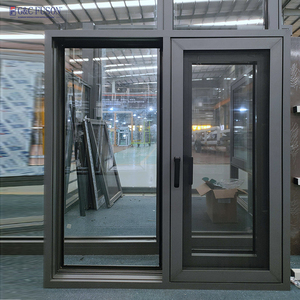
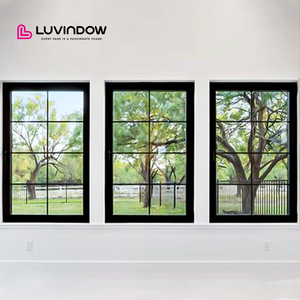
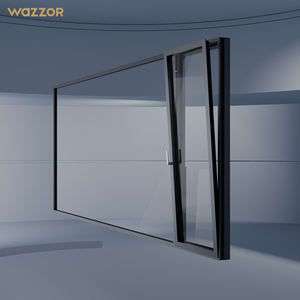
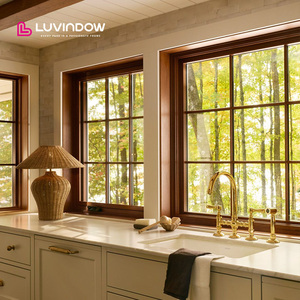
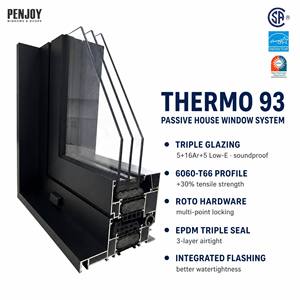
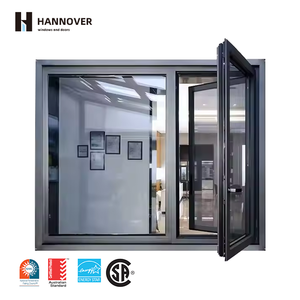
In contemporary architectural engineering, the distinction between standard off-the-shelf window hardware assembly and high-specification structural fenestration lies in structural metallurgy, thermal physics, and hardware kinematics. As commercial developers, custom home builders, and procurement officers evaluate prospective window hardware manufacturers and window systems fabricators, short-term unit price is increasingly subordinate to total lifecycle performance (TCO), envelope thermal efficiency, and wind load safety parameters.
A precision-manufactured aluminum window system is a complex mechanical system. The structural frame, sash profiles, thermal isolation barriers, perimeter sealing gaskets, and multi-point locking hardware must act in seamless mechanical harmony. When selecting top-tier window hardware manufacturers, specifying engineers evaluate four foundational engineering pillars:
Unlike standard building vinyl (PVC) or soft aluminum alloys, structural 6063-T6 aluminum offers an ultimate tensile strength of at least 205 MPa (30,000 psi), ensuring zero frame flex under extreme seismic or storm loads.
Mechanically screwed or crimped corner joints deteriorate under seasonal expansion, creating water micro-leaks. Sigma-welded joint technology fuses frame corners into a continuous structural metal body.
Polyamide (PA66 GF25) thermal breaks separate interior and exterior aluminum profiles, reducing frame thermal conductivity by over 85% and preventing interior surface condensation.
Aluminum window hardware and frame extrusions are not uniform across global supply chains. Premium manufacturers utilize virgin ingot 6063 aluminum, heat-treated to a T6 temper state. This process optimizes the magnesium and silicon silicide precipitates within the aluminum matrix, yielding superior yield strength and exceptional surface smoothness essential for architectural anodizing and AAMA 2605 fluoropolymer (PVDF) powder coatings.
| Performance Parameter | 6063-T6 Aluminum Alloy | High-Impact Rigid Vinyl (uPVC) | Architectural Timber (Oak/Pine) |
|---|---|---|---|
| Tensile Yield Strength | 170 - 214 MPa | 40 - 55 MPa | 40 - 70 MPa (Parallel to grain) |
| Thermal Expansion (10⁻⁶/K) | 23.4 (Dimensionally Stable) | 70.0 (High Expansion Risk) | 3.5 - 5.0 (Hygroscopic Swelling) |
| Structural Sightline Width | Ultra-Slim (28mm - 50mm) | Wide/Bulky (70mm - 110mm) | Moderate to Wide (65mm - 90mm) |
| Salt Spray Corrosion Resistance | Exceeds 3,000 hrs (AAMA 2605) | Immune to salt (Degrades in UV) | Prone to rot/fungal attack |
| Frame Maintenance Lifecycle | 30 - 50+ Years (Zero Rot) | 10 - 15 Years (Chalking/Warp) | Requires repainting every 3-5 yrs |
The global window hardware and architectural fenestration market is undergoing a seismic structural shift driven by stringent energy codes (such as EU Passive House requirements and North American IECC/ASHRAE standards), accelerating climate disruption events, and supply chain rationalization. B2B procurement professionals, architects, and corporate developers must adjust their hardware and window procurement strategies to align with three macro dynamics:
Historically, general contractors procured raw window frame extrusions from aluminum extruders, handles and hinges from independent window hardware manufacturers, insulated glass units (IGUs) from local glass processors, and seals from third-party rubber extruders. Field integration created immense operational friction, warranty ambiguity, and high defect rates during thermal cycling testing.
Leading global buyers now mandate Factory-Integrated Single-Source Sourcing. When custom window manufacturers build complete, pre-glazed, pre-tested units equipped with factory-calibrated multi-point window hardware, field installation times drop by up to 60%. Furthermore, single-source accountability ensures that thermal break isolation profiles, glass edge spacers, and hardware lock keepers perform as a certified unified assembly.
Institutional procurement guidelines now enforce third-party validation over self-declared technical datasheets. Window hardware and fenestration units must undergo rigorous environmental chamber testing:
With embodiment carbon gaining prominence under LEED v4.1 and BREEAM certifications, green building developers require hardware manufacturers to verify the supply chain footprint of their aluminum extrusions. Primary aluminum produced via hydro-powered smelting or secondary recycled alloy (which consumes only 5% of the energy compared to primary refining) allows window systems to dramatically lower building upfront embodied carbon while ensuring 100% circular recyclability at end-of-life.
The engineering trajectory of modern window hardware is rapidly evolving from basic manual mechanical latches to intelligent, concealed structural hardware systems. Top trusted window hardware manufacturers are investing heavily in R&D across four key technological frontiers:
Eliminating visible exterior hinge barrels to create ultra-clean interior/exterior sightlines while supporting sash weight loads up to 180 kg per opening leaf.
Stainless steel perimeter lock drives featuring adjustable mushroom-head cams that lock into hardened steel keepers, offering RC2/RC3 burglar resistance rating.
Concealed 24V DC motorized window operators integrated into building management systems (BMS) for automated night purge cooling and rain-sensor closing.
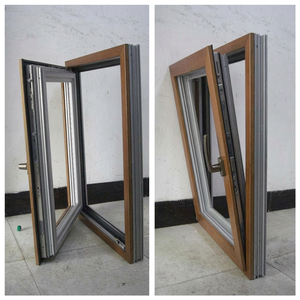
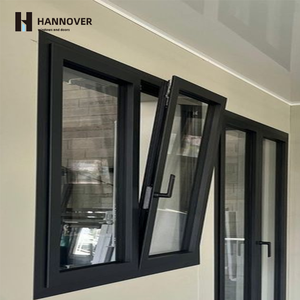
Modern tilt-and-turn window hardware systems allow dual-mode operation: tilting inward at the top for secure, draft-free background ventilation, or swinging inward like a door for complete opening access and easy exterior cleaning. Advanced window hardware manufacturers now integrate continuous EPDM or TPV perimeter weather-stripping with corner vulcanization, ensuring air infiltration ratings below $0.05 \text{ cfm/ft}^2$ under ASTM E283 testing.
For seaside coastal developments or high-humidity tropical resort installations, standard electroplated hardware degrades rapidly under salt spray exposure. Top hardware manufacturers utilize Physical Vapor Deposition (PVD) titanium finishes and SUS316 surgical-grade stainless steel internal components. Under ASTM B117 salt spray testing, PVD-coated window handles and stainless friction stays exceed 2,000 hours of continuous exposure without pitting, blistering, or red rust corrosion.
As Vacuum Insulated Glass (VIG) technology matures—achieving center-of-glass thermal performance equal to a solid insulated wall ($U_g \le 0.60 \text{ W/(m²K)}$) inside a ultra-thin 8.3mm profile—window frame manufacturers are re-engineering hardware profiles. Future hardware designs focus on ultra-slim depth channels that accommodate lightweight VIG units without compromising structural shear resistance.
With over six decades of continuous fabrication excellence (established in 1962), our enterprise stands as a premier custom manufacturer of architectural aluminum windows, heavy-duty welded doors, roll-formed insect screens, and insulated glass packages. We bridge the gap between architectural conceptual design and precision physical manufacturing.
Zero standard stock size limits. Every single unit is engineered, cut, and assembled strictly to your architectural submittal drawings and exact rough opening dimensions.
Frame corners and sashes are full-penetration sigma welded and dressed flush, eliminating mechanical corner joints that rack, open up, or leak water over time.
We manufacture custom flat and long-leg aluminum screen frames fitted with 16x18 charcoal fiberglass mesh, secured via heavy-duty traditional clips for tool-less removal.
Whether supplying custom high-rise residential projects, luxury coastal villas, or light commercial urban developments, our engineering team conducts pre-production shop drawing reviews, structural load calculations, and hardware compatibility checks to guarantee zero field rework upon jobsite delivery.
Solid 6063-T6 structural aluminum maintains strict dimensional stability across extreme ambient temperature fluctuations (-30°C to +80°C). Unlike timber, aluminum will never rot, swell, warp, or require periodic repainting. Unlike vinyl (uPVC), aluminum possesses over 4x the tensile strength, allowing for dramatically slimmer sightlines and massive structural glass openings without frame sagging.
A thermal break is a low-conductive structural polyamide barrier (PA66 GF25) mechanically locked inside the interior and exterior aluminum extrusions. It disrupts conductive heat flow through the metal frame. Thermal breaks are mandatory for conditioned buildings in cold, humid, or hot climates to meet energy code requirements (NFRC/IECC), lower HVAC consumption, and prevent interior frame sweating/condensation.
Mechanically screwed corners rely on rubber sealants and tiny metal cleats that degrade over time as the building settles and thermal expansion shifts the joint. Once open, water penetrates the wall cavity. Sigma-welded joints fuse the aluminum members into a single monolithic frame. The corner cannot rack out of square, loosen, or open a path for water ingress throughout its lifespan.
For installations within 3 miles of saltwater coastlines, we specify AAMA 2605 high-performance 70% Fluoropolymer (PVDF) resin coatings or Class I 25-micron anodic oxidation finishes. Combined with SUS316 stainless steel operating hardware and PVD handles, these finishes withstand rigorous 3,000+ hour salt spray chamber tests without degradation.
Yes. Custom manufacturing to precise submittal drawings is our core capability. We do not maintain standard stock window dimensions. Our engineering team reviews your CAD schedules, confirms glass bite, structural mullion reinforcement, opening direction, and hardware placements, generating full shop drawings for client sign-off prior to extrusion cutting.
We integrate multi-point gear-driven perimeter locking systems featuring hardened steel mushroom cams, anti-lift security pins, key-locking handles, and integration channels for electric strike releases or 24V motorized operators linked to smart building security control systems.
Send us your window schedules, elevation drawings, or project specifications. Our technical engineering team will deliver shop drawings and a competitive direct factory proposal.