Selecting reliable tempered glass manufacturers and factories requires looking beyond simple aesthetic appeal. Modern commercial developments, luxury residential villas, and passive house projects demand high-performance glazing assemblies that combine structural safety, high thermal resistance (Low U-factors), low solar heat gain (SHGC), and superior acoustic isolation.
As a leading custom engineering manufacturer with over 60 years of Southern California shop floor expertise, we specialize in high-spec architectural glazing integrated into heavy-duty 6063-T6 aluminum alloy framing. Utilizing Sigma-welded corner joinery rather than cheap mechanical screws, our window and door packages resist frame racking, seal degradation, and coastal salt-air corrosion. This whitepaper provides commercial buyers, general contractors, and project specifiers with an authoritative guide to product evaluation, industry developments, future procurement trends, and engineering standards.
Explore our custom-built architectural window and door units fabricated directly to project submittal drawings with zero filler panels.
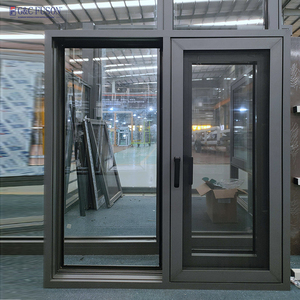
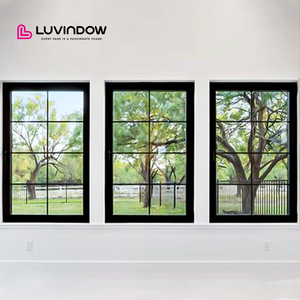
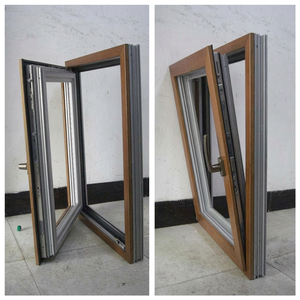
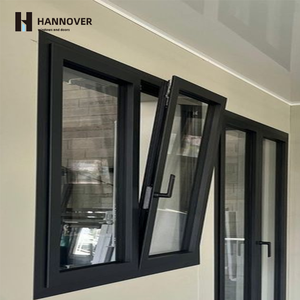
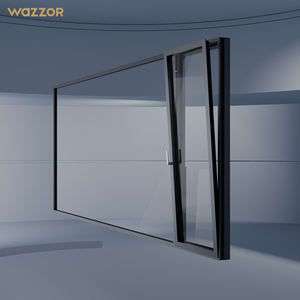
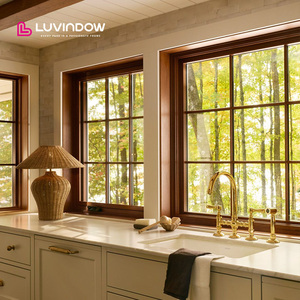
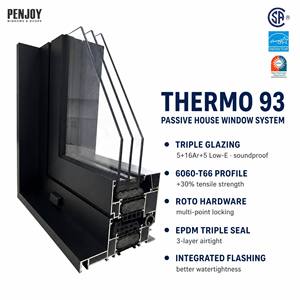
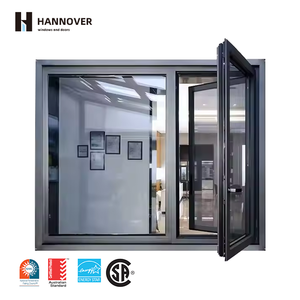
We address the technical root causes of frame failure, seal leakage, and thermal energy loss.
Unlike standard budget windows that rely on mechanically crimped and screwed corners, all frame members and door panels undergo full Sigma TIG welding. The corner behaves as one continuous piece of 6063-T6 metal, eliminating water paths and joint separation under structural loads.
We integrate precision-engineered PA66GF25 (25% glass fiber reinforced polyamide) thermal barriers within our aluminum extrusions. This breaks the conductive bridge between interior and exterior profiles, preventing interior condensation and dramatically lowering HVAC loads.
Our tempered laminated glass units utilize high-viscosity PVB or SGP (SentryGlas) interlayers. Tested to withstand windborne debris impact, extreme typhoon atmospheric pressures, and rapid thermal shocks without shattering or frame displacement.
Exposed to severe salt spray and aggressive UV radiation, standard paint chalks and peels. Our factory applies AAMA 2605-compliant PVDF fluorocarbon coatings and anodized finishes that ensure 20+ years of color retention and zero aluminum pitting.
There are no off-the-shelf stock compromises in our facility. Every single window unit, sash, and door panel is manufactured to exact CAD submittal dimensions provided by your architectural team, guaranteeing perfect fitment on installation week.
We supply custom flat and long-leg insect screens constructed from heavy-gauge roll-formed aluminum frames with 16x18 charcoal fiberglass mesh. Fastened with traditional clips, they can be removed and serviced without tools.
To assist procurement managers and mechanical engineers in selecting the correct glass configuration, the comparative matrix below outlines structural performance across our core tempered and insulated glazing options:
| Glazing Specification | Typical U-Factor (W/m²K) | SHGC Range | STC Acoustic Rating | Primary Commercial Use |
|---|---|---|---|---|
| Double Tempered Low-E (Argon) | 1.4 - 1.6 | 0.25 - 0.40 | 32 - 36 dB | Standard Villa & Commercial Mid-Rise |
| Triple Tempered Soft-Coat Low-E | 0.7 - 0.9 | 0.18 - 0.28 | 38 - 42 dB | Passive House & Cold Climate Projects |
| Laminated Impact Tempered (SGP) | 1.5 - 1.8 | 0.30 - 0.45 | 39 - 44 dB | Hurricane Zones & High-Security Coastal Buildings |
| Acoustic Laminated Double IGU | 1.2 - 1.5 | 0.22 - 0.35 | 45 - 48 dB | Airport Perimeter Hotels & Urban High-Rises |
The global market for tempered glass and specialized architectural glazing is undergoing a massive structural shift. Driven by stricter municipal energy codes (such as California's Title 24, European EPBD standards, and global Net-Zero carbon mandates), general contractors and project owners can no longer treat glass as a simple commoditized building material.
Historically, double-pane glass was considered the benchmark for premium residential builds. However, wholesale procurement data shows a rapid shift toward triple-glazed insulated glass units (IGUs) featuring dual-chamber soft-coat Low-E magnetron sputtering. Soft-coat Low-E deposits microscopic metallic layers (silver and metal oxides) on the inner glass surfaces, blocking infrared solar radiation while preserving maximum visible light transmittance (VLT).
Modern architectural trends favor ultra-narrow sightlines with massive glass-to-frame ratios. Traditional triple glazing increases frame depth and weight, leading to higher structural support costs. The industry is responding with Vacuum Insulated Glass (VIG), which replaces inert gas chambers with an ultra-thin vacuum gap. VIG offers U-factors matching solid masonry walls while maintaining a profile thin enough for lightweight aluminum casement frames.
A persistent risk in tempered glass procurement is spontaneous breakage caused by microscopic Nickel Sulfide (NiS) inclusions expanding over time inside the glass matrix. Premium factories now enforce mandatory Heat-Soak Testing (HST) according to EN 14179-1 standards. During HST, tempered glass panes are subjected to controlled 290°C baking cycles to trigger potential NiS failures inside the factory rather than on a high-rise curtain wall.
As smart building technology and sustainable manufacturing converge, tempered glass factories are adopting advanced materials and automation processes to meet future performance criteria:
Smart electrochromic tinting allows building management systems (BMS) to dynamically adjust glass VLT and SHGC based on real-time solar positioning. By applying low-voltage electric currents to tungsten oxide layers, the tempered glass changes state from fully transparent to a glare-reducing tint, cutting building cooling loads by up to 30% without requiring mechanical blinds.
Standard architectural glass retains a greenish tint caused by iron oxide impurities. Modern architectural standards are rapidly adopting low-iron float glass (Optiwhite / Starphire) as the core raw substrate before tempering. Low-iron glass delivers true color neutrality, enhanced clarity, and significantly higher solar energy transmittance when paired with multi-layer Low-E coatings.
Traditional aluminum box spacers inside insulated glass act as thermal bridges, creating cold perimeter bands that cause edge condensation and frame mold growth. Advanced factories have transitioned exclusively to stainless steel or composite warm-edge spacers (TGI / Super Spacer), reducing perimeter U-factors by up to 15% and increasing structural seal life to over 25 years.
Direct technical answers to common questions asked by specifiers, architects, and purchasing teams before placing factory orders.
Submit your architectural schedule or rough opening dimensions today. Our senior fabrication engineers will review your specs, verify egress and wind load criteria, and deliver factory-direct pricing within 24 hours.
Get a Quote