
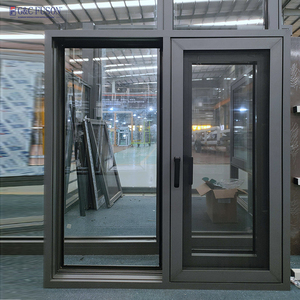
Fuson Thermal Break Aluminum Windows Double Glazing French Window Triple Glazed Casement
- Heavy-duty multi-point security hardware
- Triple-glazed acoustic insulation option
- 6063-T6 sigma-welded frame durability
Engineered for international architectural projects requiring NFRC certification, hurricane-impact resistance, soundproofing, and integrated multi-point lock security.
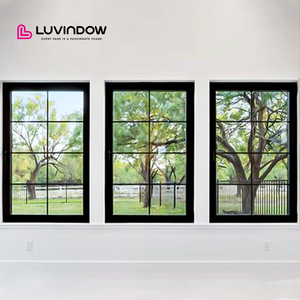
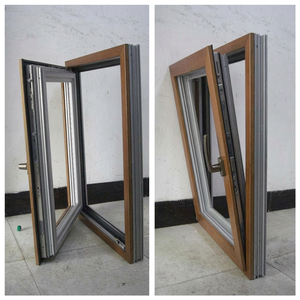
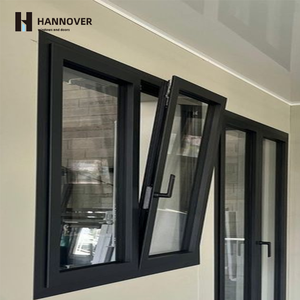
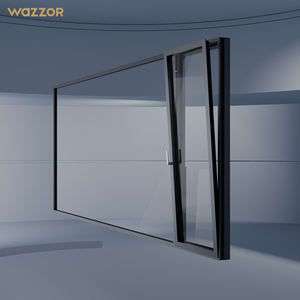
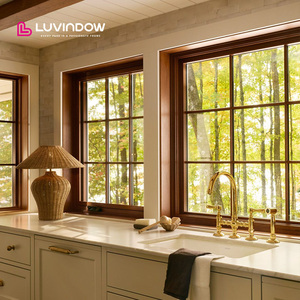
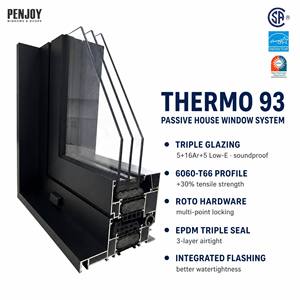
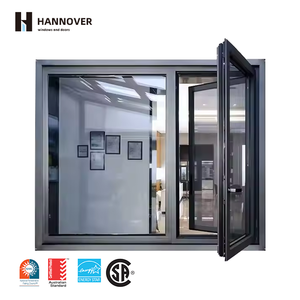
Combining 60+ years of precision shop fabrication with state-of-the-art security locking integration and high-grade structural alloys.
Every frame member is extruded exclusively from solid 6063-T6 aluminum alloy. Unlike standard commercial aluminum, 6063-T6 retains dimensional stability under extreme solar heat, high structural loads, and intense humidity without warping, rotting, or cracking.
We eliminate mechanically screwed or crimped corners that loosen over time. All sashes, frames, and door panel corners undergo full sigma welding and precision dressing to form a single continuous metal unit, permanently guaranteeing 0% corner water path leakage.
Our door lock systems and window operators utilize heavy-gauge multi-point locking gear, stainless steel shoot bolts, and anti-pry deadbolts, thoroughly tested for forced-entry protection in residential and high-occupancy commercial properties.
A comprehensive technical evaluation of mechanical security, thermal breaks, and structural hardware integration for commercial project B2B procurement.
In high-end architectural door and window manufacturing, security is no longer confined to a single latch bolt at the center handle. Modern structural engineering mandates multi-point locking systems where a single turn of a key or lever drives multiple heavy-duty steel bolts, mushroom cams, and hooks into reinforced frame strike plates across the top, center, and bottom of the leaf.
Top-tier door locks factories and exporters design these mechanisms in direct tandem with the extruded profile depth. When paired with 6063-T6 aluminum frames, multi-point lock assemblies eliminate frame flexing, distribute wind-load stresses evenly across the entire frame perimeter, and drastically raise the resistance to forced entry (conforming to stringent PAS 24 and ANSI/BHMA Grade 1 requirements).
High-security lock hardware must be seated precisely without compromising the thermal break polymer inside the aluminum profile. Premier exporters utilize dual-cavity profile geometry with custom isolation gaskets so lock pockets do not create thermal bridges or frame condensation.
A door lock's longevity is directly tied to the dimensional stability of the door frame holding it. Timber doors naturally absorb ambient moisture, leading to expansion, seasonal warping, and latch misalignment that causes locks to bind or fail. Conversely, vinyl (uPVC) frames exhibit significant thermal expansion under direct sunlight, softening under heat and losing the structural rigidity needed to hold high-torque heavy-duty deadbolts.
| Framing Material | Structural Rigidity (T6 Temper) | Locks & Keepers Hold Strength | Coastal Corrosion Resistance | Maintenance Lifecycle Cost |
|---|---|---|---|---|
| 6063-T6 Aluminum | High (Yield >210 MPa) | Exceptional (Sigma Welded Joints) | Superior (AAMA 2605 Powder Coating) | Near Zero (30+ Year Lifecycle) |
| Architectural Timber | Moderate (Subject to moisture warping) | Moderate (Screws can strip over time) | Poor (Swells, rots, requires repainting) | High (Periodic sealing & painting) |
| Standard uPVC / Vinyl | Low (High thermal expansion) | Basic (Requires internal steel liners) | Good (Non-metallic) | Moderate (UV degradation risk) |
For exporters supplying coastal regions, salt air is the ultimate test of door lock and hardware hardware resilience. Untreated lock strikes and cheap zinc-alloy handles deteriorate rapidly when exposed to airborne sodium chloride. Premier manufacturers mitigate oceanfront corrosion through three essential engineering steps:
Key technological shifts reshaping international procurement for architects, commercial developers, and hardware importers through 2030.
The industry is rapidly shifting from purely mechanical keyways to mechatronic lock bodies. Modern factories now embed motor-driven multi-point lock actuators inside door sashes, allowing seamless integration with biometrics, RFID access, and smart building management systems (BMS).
Global environmental regulations mandate lower embodied carbon in building envelopes. Future procurement requires door lock factories to supply recycled 6063-T6 billets extruded using hydro-electric power, backed by verified Environmental Product Declarations (EPD).
To cut expensive on-site labor cost, buyers demand fully assembled, factory-glazed, and lock-fitted unitized door and window systems. Exporters must pre-calibrate all multipoint locking latches and strike plates under factory quality controls prior to crated shipping.
Leading hardware exporters provide complete 3D BIM (Building Information Modeling) objects containing exact lock geometry, thermal properties, structural weight, and electrical wiring pathways for smart locks, streamlining architectural submittals.
Expert guidance on factory direct ordering, door lock security standards, thermal engineering, and international export logistics.
Factory-integrated multi-point lock systems are milled directly into the internal 6063-T6 aluminum extrusion channel during primary fabrication. This guarantees exact alignment between locking hooks, deadbolts, and frame strike keepers. Aftermarket surface-mounted locks compromise profile thermal breaks, weaken structural frame integrity, and rarely provide equal weatherproofing against wind-driven rain.
A thermal break is a continuous structural polyamide (PA66 reinforced with glass fiber) bar positioned inside the aluminum profile that physically separates interior metal from exterior metal. This drastically slows heat transfer. In cold or humid climates, non-insulated lock mechanisms can transfer cold temperatures indoors, creating condensation ("frame sweating") that damages surrounding drywalls. Thermally broken profiles completely eliminate frame sweating.
All structural sashes and outer frames are full-penetration sigma welded at every corner and dressed completely smooth. A welded joint functions as a single continuous piece of metal that will never flex, open up a water penetration gap, or loosen under heavy daily lock usage—vastly superior to mechanical screws and crimped corner cleats.
Yes. Custom fabrication is our standard workflow. We do not force buyers into restrictive catalogue sizes or fixed lock hardware locations. Clients send opening elevations, CAD details, or submittal schedules, and our engineering team confirms sightlines, lock mortise pocket depths, glass bite, handings, and finishes before any metal cutting begins.
International buyers should look for NFRC (National Fenestration Rating Council) energy performance ratings (U-factor & SHGC), AAMA structural wind/water pressure test ratings, PAS 24 security certification, and ISO 9001 factory production quality management systems. All units built by our partner facilities are tested to meet these international building codes.
Connect directly with our senior engineering team for project takeoffs, shop drawing reviews, and custom export pricing for door locks and aluminum window packages.