Direct factory-engineered thermal break casements, hurricane-rated profiles, and architectural window packages customized for commercial and residential developments worldwide.
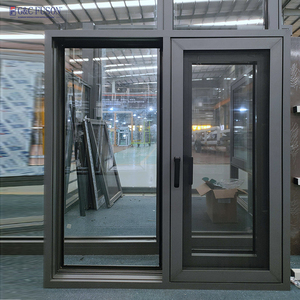
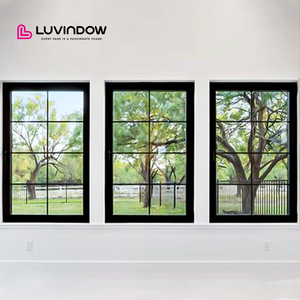
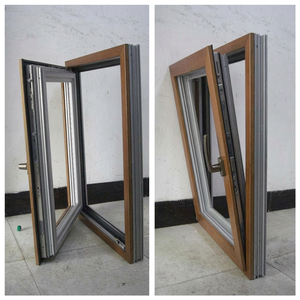
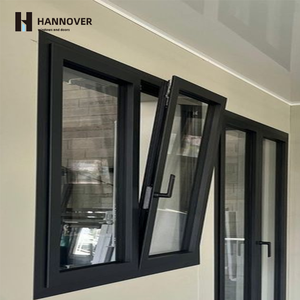
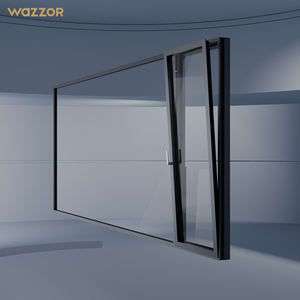
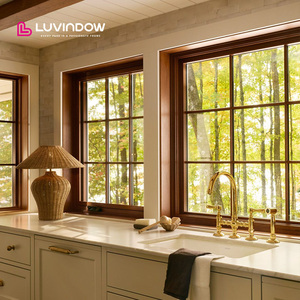
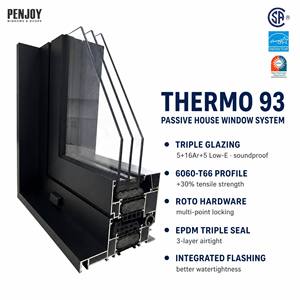
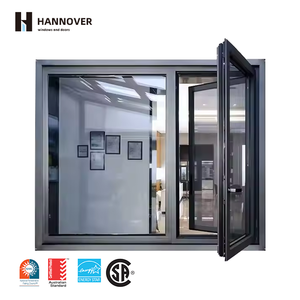
Beyond standard profile production, our integrated fabrication ecosystem provides structural integrity, advanced thermal insulation, and strict compliance with international building codes.
We reject recycled low-purity aluminum scrap in structural extrusions. Every profile is extruded exclusively from primary virgin 6063-T6 aluminum alloy billets, offering tensile strengths up to 205 MPa. This guarantees zero frame deformation, superior wind-load resistance (ASTM E330), and decades of dimensional stability under intense solar thermal stress.
Unlike conventional window factories that rely on cheap mechanical screws and crimped corner keys—which eventually loosen, leak water, and compromise structural rigidity—our frames utilize full-penetration Sigma welding. Joints behave as a single continuous block of alloy, sealing water pathways permanently and eliminating corner racking during transport or installation.
To prevent frame sweating and eliminate interior energy losses, our profiles integrate Technoform Polyamide PA66 reinforced with 25% glass fiber thermal break strips. This structural separation decreases overall U-factors down to 0.18 BTU/hr·ft²·°F, exceeding ENERGY STAR®, NFRC, and European Passive House standards for extreme hot and cold climates.
Exposed coastal projects require specialized surface chemistry. We provide certified Qualicoat Class 2/3 powder coating, hard-coat anodizing (up to 25 microns), and Fluorocarbon Kynar 500 (PVDF) finishes compliant with AAMA 2605. Our coatings withstand over 4,000 hours of continuous salt-spray testing without chalking, blistering, or color fading.
Zero stock limitations, zero compromise. Every unit is engineered strictly to your submittal shop drawings, CAD elevations, and project specifications. From non-standard rough opening dimensions to specialized structural mullions, radius heads, and custom hardware prep, our engineering team guarantees 100% fit accuracy prior to metal cutting.
From raw ingot sourcing to final protective film wrapping, every extrusion bundle and fabricated window undergoes strict dimensional, mechanical, and seal-integrity checks. Mill Test Certificates (MTC ISO 10204 3.1) are dispatched with every consignment, ensuring seamless verification for general contractors and municipal inspectors.
In modern architectural fenestration, selecting the correct aluminum alloy temper determines whether a curtain wall or window system will endure high structural loads over a 50-year lifespan. While 6063 aluminum is universally celebrated for its superior surface finish and extrudability, the thermal treatment temper (T5 vs T6) plays a decisive role in yield strength and deflection limits under atmospheric pressure.
Our mills utilize 6063-T6 artificial aging protocols, elevating the yield strength to a minimum of 170 MPa and ultimate tensile strength to 205 MPa. Compared to standard T5 temper alloys commonly used by budget exporters (yield strength ~110 MPa), 6063-T6 profiles permit significantly narrower sightlines without risking elastic deformation under design wind loads (such as Florida Building Code TAS 201/202/203 hurricane impact criteria).
| Mechanical Property / Spec | Standard 6063-T5 (Commercial Grade) | Factory 6063-T6 (Specification Grade) | Engineering Benefit for Specifiers |
|---|---|---|---|
| Yield Strength (0.2% proof) | 110 - 130 MPa | 170 - 210 MPa | +55% structural load resistance, less frame flexing |
| Ultimate Tensile Strength | 160 - 175 MPa | 205 - 245 MPa | Prevents frame blowout under peak typhoon pressures |
| Webster Hardness | 8 - 10 HW | 12 - 15 HW | Resists mechanical denting during site installation |
| Joint Assembly Technique | Mechanical Screws & Corner Crimping | Full-Penetration Sigma Welding | Zero water pathways; 100% structural corner unity |
| Thermal Barrier Polymer | PVC or Low-Grade Polyamide | PA66 GF25 (25% Glass Fiber) | Matches aluminum expansion coefficient; no shearing |
Solid aluminum profiles are natural heat conductors with a high thermal conductivity rate ($k \approx 200\text{ W/m}\cdot\text{K}$). Left un-isolated, an aluminum frame will quickly transfer exterior heat into air-conditioned spaces during hot summers, or radiate interior thermal energy outward during freezing winters, creating heavy condensation (frame sweating) that damages adjacent drywall and timber finishes.
To solve this, our advanced thermal break profile extrusions incorporate dual parallel PA66 GF25 polyamide strips. By inserting a low-conductivity polymer ($k \approx 0.3\text{ W/m}\cdot\text{K}$) directly into the center of the interior and exterior extrusions, the thermal bridge is broken. The 25% glass fiber structural reinforcement ensures that the thermal strip shares the exact linear thermal expansion coefficient ($\alpha = 2.3 \times 10^{-5}\text{ /K}$) as the surrounding metal, preventing structural delamination under extreme temperature swings.
Salt spray, ultraviolet radiation, and high humidity accelerate corrosion on un-passivated metal surfaces. Microscopic airborne sea salt particulates ($NaCl$) react with moisture to form electrolytic cells that penetrate inferior paint finishes, causing filiform corrosion beneath the coating layer.
Our chemical passivation and finish line adheres strictly to AAMA 2605 standards. The process begins with a 7-stage immersion chrome-free pre-treatment to produce a non-reactive conversion layer. We then apply 70% Fluorocarbon PVDF resin coatings, baked at high temperatures to form an chemically inert shield. This surface chemistry guarantees color retention ($\Delta E < 5$) and resists chalking even after 10+ years of intense coastal sun exposure.
How global supply chain evolutions, decarbonization mandates, and high-performance energy codes are changing the way architects, developers, and facade contractors select profile manufacturers.
Global environmental mandates (such as the EU Carbon Border Adjustment Mechanism - CBAM) are making carbon accounting critical for B2B buyers. Forward-thinking aluminum exporters are adopting low-carbon primary smelting powered by hydropower and integrating up to 30% pre-consumer clean industrial recycled metal without compromising structural alloy purity, reducing carbon footprints down to $< 4.0\text{ kg CO}_2/\text{kg Al}$.
Standard catalog windows frequently fail to meet non-traditional architectural visions, leading to costly field shimming, wider sightlines, and compromised water seals. Modern procurement models favor factory-direct custom fabrication, where submittal shop drawings govern every extruding cut, Sigma-welded seam, and hardware prep step before container packing.
As global energy efficiency codes shift toward net-zero building standards, single- and basic double-glazing packages are being phased out. Modern profile extrusions are engineered with wider pocket depth (bite up to 48mm), accommodating heavy triple-glazed, Low-E, argon-filled, and electrochromic smart glass units without frame distortion or hinge sagging.
Procuring custom metal window systems across international borders requires strategic supply chain controls. Reputable factories mitigate buyer risk through clear submittal approval protocols, rigid quality control stages, standardized wooden crate packing, and door-to-port logistical transparency.
By enforcing a strict Review → Shop Drawing → Fabrication → Protect & Ship workflow, general contractors eliminate dimensions mismatched during site installation, avoiding budget overruns and project schedule delays.
In-depth answers addressing structural engineering, thermal compliance, factory customization, and international shipping logistics.
Solid 6063-T6 structural aluminum profiles hold their exact physical dimensions under heavy solar heat, extreme humidity, and high structural wind loads. Unlike timber, aluminum will never swell, rot, warp, or crack, eliminating continuous painting and sealing budgets. Unlike vinyl (uPVC), aluminum supports dramatically larger glass panels and narrower sightlines without flexing, cracking, or degrading under intense UV exposure.
A thermal break is an engineered mechanical barrier—utilizing reinforced Polyamide (PA66 GF25) strips—placed inside the inner and outer aluminum extrusion chambers. This strip stops heat conduction through the frame, reducing frame thermal transfer and eliminating interior frame condensation. Thermally broken profiles are essential for conditioned living spaces in cold or hot climates, for meeting strict energy code requirements (such as NFRC, ENERGY STAR®, and Title 24), and for preventing moisture damage to interior plaster and trim.
Top-tier factories utilize full-penetration Sigma welding at every frame joint and corner, which are then dressed flush and smooth. A welded corner behaves as one monolithic block of aluminum alloy. It cannot loosen, shift, or open up water pathways over decades of thermal expansion, unlike low-cost mechanically screwed or crimped corners that rely purely on temporary silicone sealants.
Yes. Custom unit fabrication is standard practice for premier exporters. Every unit is manufactured directly from contractor or architect elevation drawings and dimension schedules. Detailed shop drawings confirming frame depth, glass pocket width, hardware positioning, egress clearance, and net frame dimensions are issued and approved prior to metal cutting.
Aluminum inherently naturally resists rust compared to carbon steel. For coastal and marine environments, profiles are finished with high-performance Fluorocarbon PVDF (Kynar 500 compliant with AAMA 2605) or hard anodized coatings (20+ microns). Paired with 316 marine-grade stainless steel hardware and EPDM weather seals, these systems withstand intense salt-spray exposure without pitting or surface flaking.
Factories manufacture both flat-frame and long-leg frame insect screens engineered from roll-formed aluminum profiles. The screens feature durable 16 x 18 charcoal fiberglass or stainless steel security mesh secured by high-density vinyl splines. Standard configurations feature quick-release clips, enabling homeowners or maintenance crews to remove, clean, and re-hang screens without tools.
Every commercial production batch undergoes strict mill testing. Customers receive Mill Test Certificates (MTC ISO 10204 3.1) verifying alloy chemical composition and mechanical hardness. In addition, third-party test reports for water penetration resistance (ASTM E331), air infiltration (ASTM E283), structural load capacity (ASTM E330), and thermal performance (NFRC 100/200) are supplied for project submittals.
All finished frames and glazed window units are labelled corresponding to approved shop elevation drawings. Units are wrapped in protective polyethylene films, reinforced with impact-resistant corner blocks, and secured inside fully enclosed ISPM-15 compliant fumigated plywood crates. This eliminates shift damage, frame scratching, or seal ruptures during long-distance ocean transit.