Engineered for commercial high-rises, luxury residential passive homes, and extreme weather resilience. Built strictly to submittal drawings.
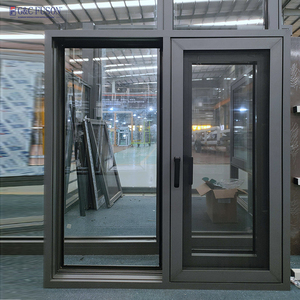
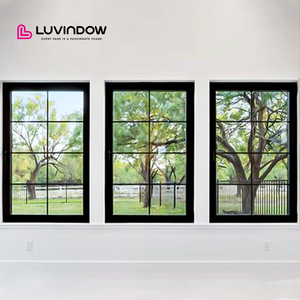
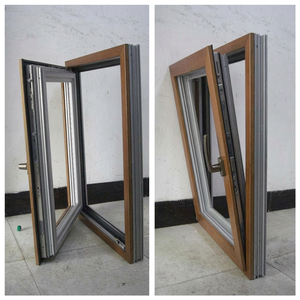
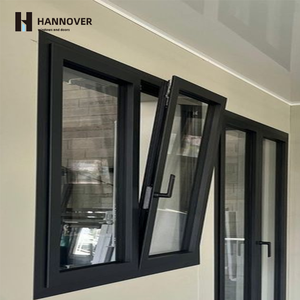
Aluminum extrusions serve as the structural backbone of modern architectural facades, industrial automation frameworks, cleanrooms, and high-performance transportation equipment. Selecting a premier aluminum extrusions manufacturer and exporter requires an in-depth understanding of alloy chemistry, thermal break physics, frame joinery dynamics, and protective surface treatments. As a global supplier rooted in 60+ years of fabrication heritage, we engineer structural profiles to exacting tolerances from 6063-T6 aluminum alloy, offering verified structural load-bearing capacity, permanent corrosion resistance, and thermal insulation compliant with rigorous global building codes.
Information Gain Benchmark: Standard commercial aluminum extrusions suffer from dimensional drift under extreme thermal cycling. Our precision-aged 6063-T6 profiles maintain yield strength above 170 MPa and ultimate tensile strength exceeding 205 MPa under ambient fluctuations from -40°C to +80°C.
The performance of an aluminum profile is defined at the atomic level during billet heating and die extrusion. 6063 aluminum alloy—composed of magnesium (0.45–0.9%) and silicon (0.2–0.6%) as its primary alloying elements—delivers an optimal synthesis of high surface finish quality, extrudability, intricate cross-sectional detail, and superior resistance to atmospheric corrosion.
When subjected to the T6 temper treatment (solution heat-treated and artificially aged), the microstructural precipitation of magnesium silicide ($Mg_2Si$) is maximized. This increases mechanical strength significantly over raw T5 or T4 tempers, enabling structural mullions, transoms, and sash frames to withstand massive wind loads without structural deflection.
| Alloy & Temper Spec | Yield Strength (0.2% offset) | Tensile Strength (UT) | Machinability & Surface Finish | Primary Industrial Application |
|---|---|---|---|---|
| 6063-T5 | ≥ 110 MPa | ≥ 150 MPa | Good finish; Moderate structural stiffness | Standard interior partitions, light residential frames |
| 6063-T6 (Our Standard) | ≥ 170 MPa | ≥ 205 MPa | Superior finish; High structural stiffness | High-rise curtain walls, structural fenestration, marine profiles |
| 6061-T6 | ≥ 240 MPa | ≥ 290 MPa | Moderate finish; Excellent toughness | Heavy structural framing, industrial machinery, aerospace subframes |
| 6005A-T6 | ≥ 215 MPa | ≥ 260 MPa | Complex thin-wall extrusion capability | Rail car structures, solar mounting systems, heavy truck bodies |
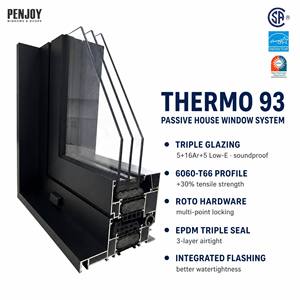
Uninsulated aluminum exhibits high thermal conductivity ($k \approx 200 \text{ W/m}\cdot\text{K}$), which leads to rapid heat transfer, frame sweating, thermal bridging, and interior HVAC energy loss. To eliminate thermal transfer in conditioned spaces, our manufacturing facility integrates mechanical thermal break technology utilizing glass-fiber reinforced polyamide strips.
We utilize 25% glass-fiber reinforced Polyamide 66 (PA66 GF25) thermal struts inserted into knurled aluminum profile cavities. PA66 GF25 matches the coefficient of thermal expansion of structural aluminum ($2.3 \times 10^{-5}/\text{K}$), preventing delamination, shear failure, or thermal seal breakage under extreme temperature shifts.
Unlike budget suppliers who rely solely on mechanical cleating, corner crimping, or solvent-based sealers, every structural corner in our fabrication shop is Sigma Welded (Shielded Inert Gas Metal Arc Welding) and dressed smooth. A welded joint behaves as a continuous monolithic structure, permanently mitigating frame racking, water leaks, and joint opening over decades of operation.
Extrusion dies are engineered using CAD/CAM software and cut via high-precision Wire EDM. Profile dimensions adhere strictly to ISO 2768-mK and EN 12020-2 tight-tolerance standards. CNC end-milling guarantees tight water-drainage slots, weep-hole routing, and hardware recess accuracy down to $\pm 0.05\text{ mm}$.
Global procurement directors, project developers, and architectural specifiers face shifting regulatory compliance, carbon taxation frameworks, and elevated performance benchmarks. Navigating the next decade of aluminum extrusion procurement requires foresight into four transformative industrial trends:
With the implementation of the European Union's CBAM and similar global decarbonization mandates, the embedded carbon footprint of imported extrusions is now a primary financial metric. Primary aluminum produced via traditional coal-fired electrolysis generates up to $16\text{ kg CO}_2\text{ per kg of metal}$. Our manufacturing operations are shifting aggressively toward hydro-powered smelter billets and high-fraction post-industrial recycled content (low-carbon aluminum), reducing carbon intensity below $4.0\text{ kg CO}_2/\text{kg Al}$. Sourcing low-carbon extrusions protects buyers from import tariffs and qualifies projects for LEED v4.1 Platinum certifications.
Modern architectural design trends favor maximal glass area and minimal visible metal framing. To achieve minimal sightlines without sacrificing wind load capacity, extrusions require complex internal ribbing, variable wall thickness distribution, and high-modulus steel inserts embedded within the aluminum profile chamber. Custom extrusion dies designed for ultra-narrow profiles permit continuous glass elevations exceeding 3.5 meters in height while resisting wind pressures up to 4.0 kPa.
Surface degradation in severe coastal, marine, and industrial environments is the leading cause of field warranty claims. Procurement trends are moving away from basic AAMA 2603 standard liquid paints toward high-performance Fluoropolymer PVDF coatings (AAMA 2605 standard) and Class I Anodized Finishes (minimum 18-micron film thickness). These surface treatments withstand over 4,000 hours of continuous salt spray testing (ASTM B117) and resist chalking, blistering, and UV-induced color fading for over 25 years.
Extrusions are evolving from static structural channels into intelligent building envelopes. Leading architectural profiles now feature built-in wire raceways, concealed motorized actuators, integrated magnetic sensors, and automated micro-ventilation channels. Procurement teams must source extrusions engineered to house these smart hardware ecosystems without compromising thermal or water-tightness integrity.
For over six decades, our enterprise has operated as a vertically integrated aluminum extrusion manufacturer and global exporter. From raw billet alloy casting to finished window and door assembly, every step of production is contained within our quality-managed facilities.
We maintain an active catalog of over 15,000 custom extrusion die profiles while offering rapid prototyping for custom OEM submittals. Dies are cut, polished, and hardened in-house, reducing new section lead times to under 14 business days.
Our engineering team delivers complete shop drawing sets, thermal analysis modeling (THERM/WINDOW), CAD elevations, and BIM models. No metal is cut until submittal drawings are approved in writing by your structural engineer.
Every extrusion batch undergoes spectral chemical analysis, tensile testing (ASTM E8), anodizing film thickness measurement (ISO 2360), cross-hatch adhesion testing, and water-tightness chamber testing prior to international sea-crating.
Addressing core structural, metallurgical, thermal, and logistics queries for international architects, contractors, and import distributors.
Solid 6063-T6 aluminum profiles maintain dimensional stability under extreme heat, structural loads, and humidity. Unlike timber, aluminum will not swell, warp, rot, split, or support fungal growth. Unlike vinyl (uPVC), which has a high coefficient of thermal expansion and low flexural modulus, 6063-T6 aluminum handles massive structural spans, heavy double/triple glass packages, and slim sightlines without sagging or frame distortion. When finished with AAMA 2605 coatings, aluminum eliminates recurring maintenance and repainting budgets entirely.
A thermal break profile incorporates a low-conductive insulating barrier—specifically glass-fiber reinforced polyamide PA66 GF25—placed directly between the interior and exterior aluminum extrusion profiles. This breaks the metal-to-metal thermal path, drastically lowering the overall frame U-factor and preventing condensation (sweating) on interior metal surfaces. Thermally broken extrusions are mandatory for conditioned commercial and residential spaces in cold, temperate, or hot-humid climates to satisfy energy codes such as ASHRAE 90.1, IECC, and Title 24.
Mechanical cleating and corner crimping rely on internal corner keys, screws, and liquid butyl sealants to hold extruded frame joints together. Over years of thermal expansion, wind load vibration, and building settlement, crimped corners can open up micro-gaps, creating water leakage paths and structural racking. Sigma Welding (Shielded Inert Gas Metal Arc Welding) fuses the aluminum profile ends together into a continuous, seamless metallic bond. The joint becomes as strong as the profile body itself, offering 100% water-tightness and permanent frame squareness.
For coastal environments within 3 miles (5 km) of ocean saltwater exposure, we recommend either a Class I Architectural Anodized finish (minimum 18-25 micron anodic film thickness) or a 70% Fluoropolymer PVDF Powder Coating compliant with AAMA 2605 specifications. Additionally, all hardware components (hinges, rollers, fasteners) should be specified in 316-grade stainless steel, and weep-hole systems must be routinely inspected to clear salt-crust deposits.
Yes. Custom extrusion profiles are our core manufacturing specialization. Clients submit DWG/DXF files, STEP 3D models, or architectural submittal schedules. Our tooling engineers perform FEA structural analysis, confirm wall thickness suitability, calculate thermal break stress resistance, cut the custom extrusion die, and supply sample extrusions for dimensional approval prior to full-scale production runs.
We manufacture two primary insect screen profile styles: Flat Frame and Long-Leg Retainer Frame profiles. Both are extruded from rigid aluminum framing and fitted with 16x18 mesh count charcoal fiberglass screen wire, stainless steel 304 mesh, or high-clarity pet mesh held via a flexible vinyl spline. Screens are mounted using traditional spring clips or concealed slide locks, allowing tool-free removal for cleaning and maintenance.
International extrusion shipments are protected against corrosion, surface scratching, and structural bending. Profiles are individually wrapped with protective PE masking film, bundled with interleaving protective paper, wrapped in moisture-barrier plastic wrap, and loaded into ISPM-15 certified fumigated wooden crates or heavy-gauge steel frame stillages. Stillages are secured inside 20GP or 40HQ ocean containers using high-tensile polyester strapping.
Die engineering and sample extrusion production typically require 10 to 14 calendar days from final shop drawing approval. Once sample extrusions are approved by the client, full mill production, thermal break insertion, surface finishing, CNC machining, and crating are completed within 15 to 21 calendar days, depending on overall order tonnage and complexity.