Custom-fabricated to exact shop submittal drawings. Designed for extreme energy efficiency, passive house compliance, heavy structural loads, and high-impact sound insulation.
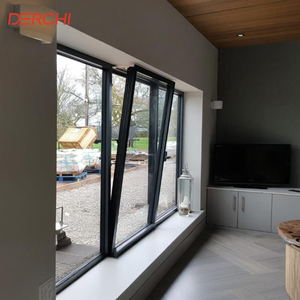
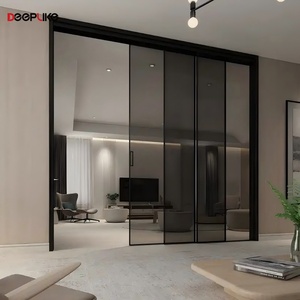
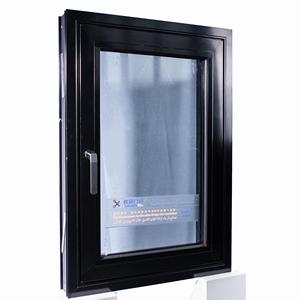
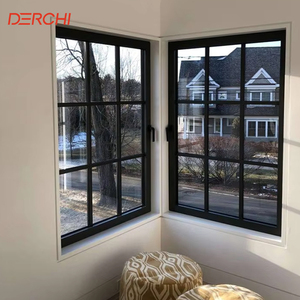
The global facade andfenestration industry is undergoing a paradigm shift driven by stringent energy codes (such as Europe’s EPBD directive and North America’s updated IECC regulations), demanding significantly lower overall window thermal transmittance ($U_w$). As architectural specifications transition from standard double-pane insulated glass units (IGUs) to advanced triple-glazed architectures, China has emerged as the premier manufacturing powerhouse for specification-grade, custom-engineered aluminum windows and doors.
When procuring triple-glazed window packages for high-end residential estates, commercial developments, or extreme-climate projects, global buyers must navigate complex trade-offs between thermal efficiency, structural deflection ($L/175$ or $L/240$), optical clarity, acoustic isolation, and long-term joint durability. This whitepaper establishes an authoritative evaluation framework based on 60+ years of cumulative metal window engineering expertise.
Core Engineering Principle: A triple-glazed window unit is only as performant as its structural perimeter. Pairing a high-spec triple-pane IGU ($U_g \le 0.6 \text{ W/m}^2\text{K}$) with a mechanically screwed, non-thermally broken aluminum frame results in massive perimeter thermal bridging and severe frame sweating. Optimal performance requires structural 6063-T6 extrusions integrated with high-performance polyamide thermal breaks (PA66 GF25) and continuous sigma-welded joints.
Substandard aluminum windows frequently rely on lower-grade recycled alloys (such as non-certified 6063-T5 or mixed scrap metal) combined with mechanically crimped corner keys held together by surface sealants. Over several seasonal thermal cycles, differential thermal expansion causes mechanical crimps to loosen, fracturing the sealant bead and creating invisible moisture ingress pathways into the building envelope.
In contrast, tier-one Chinese manufacturers employ primary 6063-T6 aluminum extrusions—a structural alloy celebrated for its superior tensile yield strength ($\ge 170 \text{ MPa}$) and high resistance to stress-corrosion cracking. Every frame member, sash rail, and door panel undergoes full-penetration Sigma Welding (TIG/MIG shield gas welding) at all corner intersections. A sigma-welded joint behaves as a single continuous monolithic metal structure, completely eliminating frame racking under dynamic wind loads ($P_3 \ge 5000 \text{ Pa}$) and permanently preventing joint separation.
Understanding the core pillars of top-tier OEM/ODM window manufacturing in China ensures project specifiers select partners capable of meeting strict submittal requirements.
Extruded from virgin billet aluminum with T6 precipitation heat treatment. Provides exceptional structural rigidity for expansive floor-to-ceiling triple-glazed units without sightline distortion.
Utilizes 24mm to 34mm multi-cavity glass-fiber reinforced polyamide thermal barrier strips (PA66 GF25) that physically decouple interior and exterior aluminum profiles, stopping heat transfer.
Dual sealed gas cavities filled with 90%+ Argon or Krypton gas, incorporating warm-edge TPS (Thermoplastic Spacer) technology and dual soft-coat triple-silver Low-E coatings.
Achieves STC ratings up to 48 dB and OITC up to 38 dB by combining asymmetrical glass pane thicknesses (e.g., 6mm + 4mm + 8mm) with PVB acoustic laminated interlayers.
Every order is pre-engineered with detailed CAD cross-sections, thermal modeling simulations (THERM/WINDOW), and BIM objects to ensure 100% fit accuracy on site.
Finished with 3-coat Fluorocarbon (PVDF) or high-durability AAMA 2605 powder coatings, resisting salt-air oxidation, high-UV radiation, and chemical degradation for 30+ years.
To assist architects and commercial procurement directors in quantifying ROI, the comparative matrix below highlights key thermal, acoustic, and structural performance parameters across window glazing configurations.
| Performance Spec | Single Glazed (Baseline) | Double Glazed Low-E | Triple Glazed (Standard) | Triple Glazed High-Performance (PA66 Break) |
|---|---|---|---|---|
| U-Factor (Btu/h·ft²·°F) | 1.10 – 1.30 | 0.30 – 0.45 | 0.18 – 0.24 | 0.11 – 0.15 (Passivhaus Compliant) |
| Glass Thermal Transmittance (Ug) | 5.8 W/m²K | 1.4 W/m²K | 0.8 W/m²K | 0.5 – 0.6 W/m²K |
| Sound Reduction (STC) | 26 – 28 dB | 32 – 35 dB | 38 – 42 dB | 44 – 48+ dB (Acoustic Laminated) |
| Max Glass Size Capability | Limited (Flexing) | Medium Spans | Large Architectural Spans | Ultra-Large Vision Spans (Heavy-Duty Rollers) |
| Condensation Resistance Index (CR) | < 20 (High Sweating) | 45 – 55 | 65 – 72 | 78 – 85+ (Zero Interior Sweating) |
| Corner Joint Construction | Screwed / Mechanical | Crimp & Glue | Crimp / Welded | Monolithic Sigma Welded (No Water Path) |
The next frontier in window export technology combines a tempered Vacuum Insulated Glass (VIG) unit with a standard third glass pane creating a hybrid triple structure. This configuration achieves an astonishing thermal transmittance value of $U_g \le 0.4 \text{ W/m}^2\text{K}$ while reducing overall IGU thickness by nearly 40%. Leading Chinese manufacturers are investing heavily in automated VIG sealing lines, enabling ultra-slim profile depth without sacrificing extreme insulation.
Thermal breaks are expanding from simple dual-strip designs into multi-chambered polyamide profiles packed with hydrophobic silica aerogel insulation. This innovation drops the frame thermal bridging coefficient ($\Psi_f$) to negligible levels, solving the historical weakness of metal windows in sub-zero alpine and arctic environments.
As commercial buildings aim for Net-Zero Energy (NZE) status, triple glazing units are increasingly integrated with electrochromic dynamic tinting layers and transparent Building-Integrated Photovoltaics (BIPV). Procurement trends show a 35% year-over-year increase in demand for factory-integrated low-voltage wiring channels inside thermally broken aluminum frames.
Global developers now demand Environmental Product Declarations (EPDs) quantifying the embodied carbon of aluminum window packages. Top Chinese exporters are adopting low-carbon primary aluminum smelted using hydroelectric power, backed by ISO 14067 carbon footprint verification to streamline LEED and BREEAM submittals.
Addressing core technical concerns, logistics, compliance, and customization parameters when importing triple-glazed aluminum windows and doors from China.
Triple-glazed insulated glass units are heavy (weighing upwards of 35–45 kg/m²). Solid 6063-T6 structural aluminum frames maintain strict dimensional stability under continuous heat, humidity, and dead-weight glass load. Vinyl frames suffer from creep and deflection under heavy triple glass, while timber frames swell, warp, rot, and require continuous maintenance. Aluminum delivers narrow sightlines with maximum structural span.
A thermal break is a continuous non-metallic insulating barrier placed between the exterior and interior aluminum extrusions to disrupt conductive heat transfer. PA66 GF25 (Polyamide 66 reinforced with 25% glass fiber) matches the coefficient of thermal expansion of aluminum, preventing shear stress failure while boosting frame insulation so interior surfaces stay warm and condensation-free.
Mechanically screwed or crimped corners rely on corner cleats and liquid sealants. Under wind vibration and thermal contraction, these joints widen over time, letting water penetrate the frame cavity. Sigma welding fuses the aluminum alloy at high temperature across the entire profile seam, creating a seamless 100% watertight joint that cannot rack or separate.
Yes. Aluminum natively resists corrosion, but for oceanfront installations, we apply a 3-coat Fluorocarbon (PVDF) finish compliant with AAMA 2605 specifications, alongside 316-grade marine stainless steel hardware. This setup resists salt-spray degradation, pitting, and color fading for decades.
Every unit is manufactured 100% to order from your submittal drawings, elevations, or BIM models. There are no stock size restrictions. Prior to metal cutting, our engineering department produces detailed CAD shop submittals detailing profile cross-sections, glass bite, weep hole placements, and swing directions for formal approval.
Our triple-glazed window and door systems are tested to meet major global criteria, including NFRC thermal standards (U-factor, SHGC, VT, CR), CE marking for Europe (EN 14351-1), AS2047 for Australia, and Florida Building Code (FBC) / Miami-Dade impact requirements for hurricane zones.