
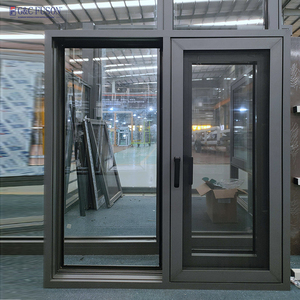
Fuson Thermal Break Aluminum Double/Triple Glazed French Casement Windows
PA66 Nylon Strip
Double/Triple Glazed
Get Catalog
Engineered to custom submittal drawings with continuous PA66 polyamide thermal strips, low-emissivity glass packages, and structural sigma-welded joints.
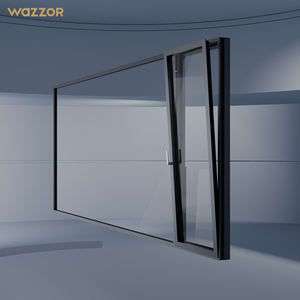
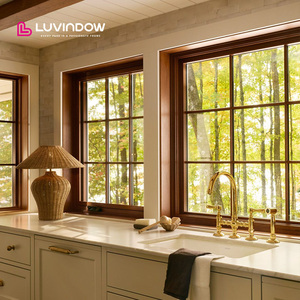
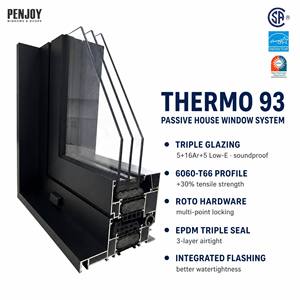
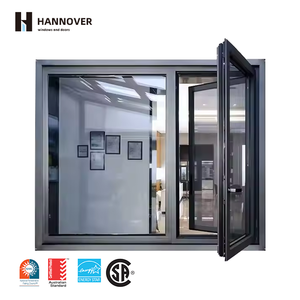
In high-performance commercial and luxury residential fenestration, solid non-insulated aluminum profiles present a fundamental physical vulnerability: excessive thermal conductivity. With raw aluminum alloys exhibiting high thermal transmittance ($\approx 160\text{ to }200\text{ W/m}\cdot\text{K}$), uninsulated frame profiles act as thermal bridges that rapidly transfer heat, induce interior frame condensation ("sweating"), and drive up building HVAC energy consumption. Premium Chinese thermal break suppliers resolve this physical limitation through advanced mechanical insertion of non-conductive thermal barrier struts—most notably Polyamide PA66 GF25 (25% Glass Fiber Reinforced Nylon).
The insertion of a structural polyamide thermal strip effectively fractures the thermal bridge between exterior and interior metal frame members. Because PA66 GF25 exhibits a thermal conductivity of merely $0.3\text{ W/m}\cdot\text{K}$—over 500 times lower than structural aluminum—the overall frame U-factor is reduced exponentially. Leading original equipment manufacturers (OEMs) in China employ two principal thermal break technologies: Technoform-style Polyamide Strip Crimping and Pour-and-Debridge (P&D) Polyurethane Systems.
Glass-fiber reinforced nylon strips offer identical thermal expansion coefficients to aluminum ($2.3 \times 10^{-5}/\text{K}$), eliminating shear failure and structural debonding under extreme ambient temperature fluctuations.
Architectural aluminum extruded strictly from 6063-T6 virgin metal billets, yielding exceptional ultimate tensile strength ($\ge 205\text{ MPa}$) and yield strength ($\ge 170\text{ MPa}$) for hurricane-grade wind pressure deflection.
Unlike cheap mechanically screwed joints that loosen and leak over operational lifespans, full structural sigma-welding creates continuous, monolithic frame corners that permanently seal against air and water penetration.
When evaluated according to international thermal performance standards (such as NFRC 100/200 and ISO 10077-2), a properly engineered thermal break aluminum profile paired with double or triple Low-E insulated glass units (IGUs) routinely achieves whole-window thermal transmittance values below $0.8\text{ W/m}^2\cdot\text{K}$ ($U \le 0.14\text{ BTU/h}\cdot\text{ft}^2\cdot^\circ\text{F}$), qualifying for stringent Passive House (PHI) certifications in North America, Europe, and Australia.
The global facade and fenestration industry is undergoing a structural transformation. Architectural specifiers, real estate developers, and commercial contractors are shifting their supply chain strategies toward verified tier-1 Chinese manufacturers. Key market drivers reshaping thermal break window procurement include:
With environmental regulations like the European Union's Carbon Border Adjustment Mechanism (CBAM) coming into force, top-tier Chinese aluminum factories are transitioning from coal-fired power to hydroelectric-powered aluminum billet smelting. Procuring low-carbon recycled and virgin 6063-T6 aluminum profiles ensures compliance with international scope 3 emissions targets while providing substantial carbon credit advantages for LEED-certified architectural builds.
Modern architectural design trends demand high window-to-wall ratios (WWR) with minimalist frame profiles. Chinese engineering teams have pioneered multi-cavity thermal break extrusions that maintain slim profile sightlines ($\le 50\text{mm}$) while integrating internal steel or composite structural reinforcement stiffeners. This enables floor-to-ceiling glass curtain walls and oversized casement sashes capable of carrying triple-pane glass units weighing up to $300\text{ kg}$ per sash.
Legacy off-the-shelf inventory models are being replaced by direct-from-factory custom OEM/ODM production. Advanced Chinese manufacturing facilities leverage BIM (Building Information Modeling) and 5-axis CNC processing centers to execute fully customized submittal drawings down to millimeter tolerances. Opening-by-opening labeling, pre-punched installation flange configurations, and modular factory-glazed packages reduce jobsite installation labor by up to 40%.
| Profile Metric / Engineering Parameter | Standard Non-Thermal Aluminum | Conventional Thermal Break (14.8mm PA66) | Next-Gen Multi-Cavity Thermal Break (24-34mm PA66) |
|---|---|---|---|
| Frame Thermal Conductivity ($U_f$) | $6.8 - 7.5\text{ W/m}^2\cdot\text{K}$ | $2.8 - 3.5\text{ W/m}^2\cdot\text{K}$ | $0.9 - 1.4\text{ W/m}^2\cdot\text{K}$ |
| Acoustic Isolation Index ($Rw$) | $25 - 28\text{ dB}$ | $32 - 38\text{ dB}$ | $42 - 48\text{ dB}$ (Triple Glass) |
| Air Infiltration Rating (ASTM E283) | $\ge 0.30\text{ cfm/ft}^2$ | $\le 0.10\text{ cfm/ft}^2$ | $\le 0.01\text{ cfm/ft}^2$ (Air Tight) |
| Structural Corner Assembly | Mechanical Screws / Corner Keys | Crimped Aluminum Corner Keys | Full Sigma-Welded Monolithic Joint |
| Coastal Salt Spray Durability | Standard Powder Coating (500 hrs) | AAMA 2604 Fluoropolymer (1500 hrs) | AAMA 2605 PVDF / Anodized (3000+ hrs) |
To maintain a global competitive edge, China’s leading thermal break factories invest heavily in cutting-edge metallurgical and mechanical innovations. Key technical advancements include:
Moving beyond simple single-bar thermal strips, state-of-the-art profiles incorporate complex multi-cavity PA66 GF25 insulation chambers. The internal chambers are engineered with micro-cellular polyolefin foam or silica aerogel inserts. This design virtually eliminates radiative and convective heat transfer within the extrusion cavity, enabling frame U-values that rival wood-clad systems while retaining the structural strength and low-maintenance profile of architectural aluminum.
Exposure to coastal salt spray, extreme ultraviolet radiation, and industrial pollutants causes surface degradation in standard painted aluminum windows. Leading Chinese exporters utilize automated vertical electro-coating and electrostatic PVDF (Polyvinylidene Fluoride) powder lines compliant with AAMA 2605 specifications. Featuring 70% resin fluoropolymer coatings, these finishes undergo rigorous 3,000-hour continuous salt spray testing under ASTM B117, guaranteeing color retention, chalk resistance, and zero film adhesion loss over a 25-year operational lifespan.
The glass perimeter accounts for significant perimeter thermal bridging in fenestration assemblies. Chinese suppliers have integrated Thermo Plastic Spacer (TPS) technology and continuous stainless steel warm-edge spacer bars into automated IGU production lines. Combined with double-silver or triple-silver Low-E magnetron sputter coatings (such as Solarban 60/70 equivalents) and 90%+ pure Argon gas filling, these units reflect long-wave infrared thermal energy while maintaining luminous visible light transmittance (VLT).
Built on 60+ years of collective metal fabrication expertise, our partner facilities manufacture precision aluminum windows and doors to exact architectural submittals.
Every frame sash and structural member is sigma welded at every corner, then hand-dressed smooth. Welded corners operate as a unified monolithic piece of metal, eliminating joint separation and water pathways.
We work from your architect’s shop drawings and rough opening schedules. Profile depth, glass bite, hardware mounting, and egress requirements are approved on paper before any raw metal is cut.
Our fenestration lines undergo third-party laboratory testing for wind load resistance (ASTM E330), water penetration (ASTM E331), structural air tightness, and NFRC thermal performance ratings.
Heavy-duty, ocean-freight plywood crating with corner edge-guards, protective film, and desiccant packs ensures units arrive at job sites undamaged and ready for field installation.
Selecting a reliable thermal break aluminum window manufacturer in China requires systematic evaluation beyond price-per-square-meter quotes. Sourcing directors and procurement engineers should evaluate potential suppliers against this 5-stage qualification framework:
Verify mill test reports (MTR) confirming 6063-T6 composition. Ensure raw material is not contaminated with excessive scrap metal that compromises structural shear strength.
Inspect automated knurling, strip insertion, and crimping machinery. Mechanical shear testing (EN 14024) must be conducted regularly to prevent strip slippage under dynamic loads.
Confirm dual-seal IGU fabrication using primary butyl sealant and structural secondary silicone. Automated gas-fill verification must ensure Argon concentration exceeds 90%.
Audit multi-point locking hardware, heavy-duty stainless steel 304/316 friction hinges, and rollers. Components should be cycle-tested to 50,000+ opening/closing operations without sag.
Clear, direct answers regarding structural engineering, thermal breaks, coastal performance, and international ordering.