Explore our export-grade architectural door frames, thermally broken interior dividers, and heavy-duty structural entrance profiles fabricated to submittal drawings.
A rigorous B2B guide on material selection, thermal break integration, structural deflection limits, and modern factory manufacturing benchmarks in China.
In modern commercial and high-end residential construction, door frames and jambs are no longer treated as passive structural openings. They represent the primary mechanical interface between structural wall loads, thermal envelopes, fire safety barriers, and interior finish aesthetics. As global procurement managers, architects, and multi-family developers seek direct sourcing channels from China, differentiating between low-spec commodity extrusions and specification-grade structural door jamb systems has become vital to long-term asset value.
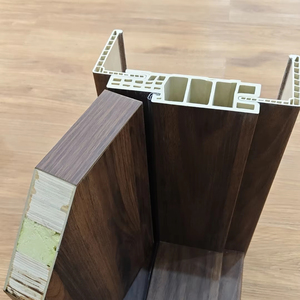
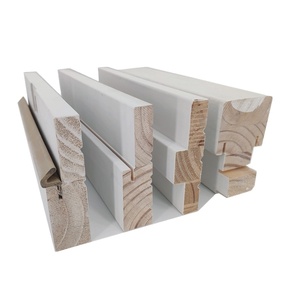
Leading manufacturing operations in China have evolved beyond simple cutting and assembly. Modern production lines incorporate 6063-T6 architectural aluminum alloy extrusions, high-density wood-plastic composite (WPC) formulations engineered for zero water absorption (<0.5%), and finger-jointed kiln-dried Radiata Pine cores coated in automated dual-gesso priming lines. Understanding the mechanical behavior of these materials under real-world building movement and environmental exposure is key to writing leak-proof purchase contracts.
Standard architectural frames rely on mechanical corner cleats and screw crimping, which inevitably rack and loosen over time due to thermal expansion cycles. Premium China door frame manufacturers utilize full continuous Sigma (shielded inert gas metal arc) welding across all primary stress corners, fusing aluminum extrusions into a monolithic metal unit that guarantees zero water entry and absolute structural integrity.
Built upon six decades of continuous metal and timber fabrication lineage, delivering structural precision across North American, European, and Asia-Pacific project sites.
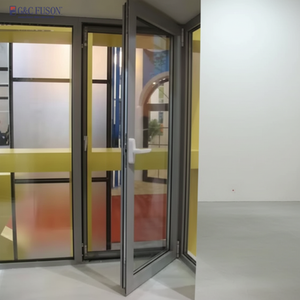
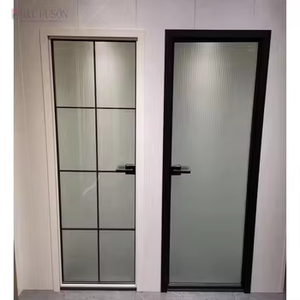
Our aluminum door jamb profiles are extruded strictly from virgin 6063-T6 billet, providing superior tensile strength (≥205 MPa) and yield strength (≥170 MPa) compared to cheap recycled scrap profiles. Ideal for massive glass French doors and structural curtain wall entryways.
To prevent frame sweating and HVAC energy loss in cold and humid zones, our thermal break frames integrate glass-fiber reinforced Polyamide (PA66GF25) thermal barriers. This isolates exterior metal from interior spaces and fulfills stringent building energy codes (Title 24 & ASHRAE 90.1).
We apply high-performance PVDF (Fluorocarbon 3-Coat System) andQualicoat Class 2 powder coatings engineered to withstand over 3,000 hours of ASTM B117 salt spray exposure without blistering or chalking—essential for coastal villa projects.
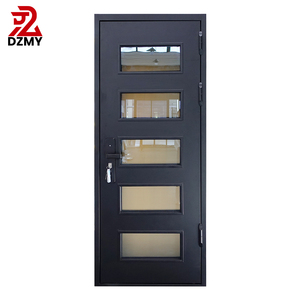
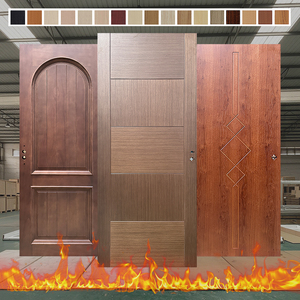
Our heavy-duty commercial steel and aluminum jamb assemblies feature integrated intumescent seal channels. Under thermal load, seals expand up to 25 times their initial volume, blocking smoke, toxic gas, and flames according to BS 476 and UL 10C standards.
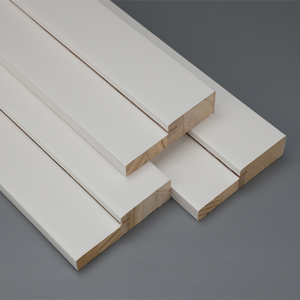
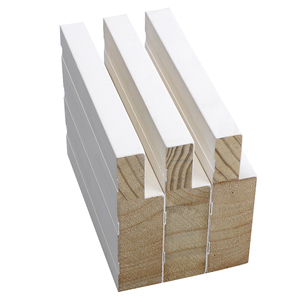
For classical timber interior projects, we source FSC-certified New Zealand Radiata Pine. Wood is kiln-dried to an exact 8%–12% moisture content and finger-jointed under high pressure to cancel natural grain tension and prevent warping.
No metal or wood is cut without sign-off on detailed shop drawings. Our dedicated architectural engineering team converts architectural elevations into full unit-by-unit submittal packages with exact glass bite, frame depth, and fastener placement specs.
Evaluate key physical and mechanical parameters to select the correct door jamb material for your project conditions.
| Material Classification | Structural Load Rating | Moisture & Water Resistance | Fire Resistance Potential | Thermal Insulation (U-Factor) | Optimal Application Segment |
|---|---|---|---|---|---|
| 6063-T6 Aluminum (Thermally Broken) | Extremely High | 100% Waterproof (Zero Swell) | 30 - 60 Mins (Configurable) | High (U ≈ 1.8 - 2.2 W/m²K) | Luxury Villas, Coastal Hotels, High-Traffic Commercial |
| High-Density Polymer WPC | Moderate to High | 100% Waterproof | B1 Flame Retardant (Self-Extinguishing) | Excellent Thermal Insulator | Bathrooms, High-Humidity Resorts, Multi-Family Units |
| Primed Finger-Jointed Pine | Moderate Structural | Requires Factory Sealing | 20 Mins Standard | Good Natural Insulation | Residential Interior Bedrooms, Standard Apartments |
| Heavy Stainless / Galvanized Steel | Ultra Heavy Duty | High (When Powder Coated) | Up to 120 Mins (UL/BS Certified) | Moderate (Without Break) | Main Entrance Entrances, High Security, Public Infrastructures |
Key shifts shaping international B2B supply chains, building energy codes, and modern material specifications over the next decade.
With global job-site labor costs escalating, tier-1 general contractors are shifting away from traditional field-built door frames. China's top manufacturers now ship fully prefabricated, pre-mitered 45° quick-assembly door jamb kits featuring snap-in architraves and pre-machined hardware mortises. This reduces field installation labor by up to 60% per unit.
Commercial specifiers are increasingly prioritizing environmental product declarations (EPDs). Aluminum door frames are leading this movement due to their infinite recyclability without property degradation. Our factory utilizes low-carbon aluminum billets smelted using hydroelectric power, aligning with LEED v4 and BREEAM sustainability standards.
Contemporary residential architecture favors invisible or flush-to-wall door frame profiles. Micro-narrow aluminum profiles (16mm to 25mm visible sightlines) with concealed pivot hinges are rapidly replacing bulky traditional trims in upscale modern apartment towers and luxury boutique hotels.
As extreme weather events become more frequent, hybrid door jambs combining high-density WPC exterior casings with internal galvanized steel cores are gaining rapid market share. This provides 100% moisture immunity alongside structural stability across 3000mm tall door openings.
Continuous innovation in protective finishes, structural joint integrity, and thermal barrier efficiency.
The manufacturing benchmark for door frames imported from China has risen dramatically over the last five years. Far from simple profile cutting, our engineering department focuses on three critical technology pillars:
Direct technical answers to common questions asked by project procurement teams, specifiers, and importers.
Solid 6063-T6 aluminum frames hold precise dimensions under heat, humidity, and high structural load. They will not swell, warp, rot, or split over time, unlike timber. Additionally, aluminum offers vastly higher structural strength than vinyl (PVC), allowing for substantially narrower sightlines and support for heavy double- or triple-glazed glass panels. When paired with a premium factory finish, aluminum frames eliminate costly ongoing maintenance, painting, and field sealing budgets.
A thermal break is a continuous insulating barrier made from low-conductive polyamide (PA66GF25) inserted between the interior and exterior aluminum profiles. It stops heat from conducting through the metal frame, drastically improving thermal efficiency and preventing internal frame condensation (sweating) in cold or highly air-conditioned environments. Thermally broken frames are required for exterior building envelopes to satisfy energy code standards like Title 24 or Passive House requirements.
Standard architectural door frames use mechanical corner cleats with screw crimping, which can loosen over time and open water leakage paths. All high-load frame members and swing door panels produced in our factory are full continuous Sigma welded at every corner joint and dressed smooth. A welded corner behaves as one continuous piece of structural metal, ensuring it never sags, racks out of square, or leaks water over decades of heavy commercial use.
Yes. Aluminum does not rust like steel. However, to prevent atmospheric oxidation in oceanfront settings, we recommend specifying our high-performance PVDF (Fluorocarbon) factory finish or Qualicoat Class 2 architectural powder coating paired with 316 stainless steel hardware components. Our coastal frames pass 3,000+ hours of continuous salt spray testing under ASTM B117 standards.
Absolute customization is standard procedure for our factory. We do not restrict projects to stock catalog dimensions. Send us your rough opening schedules, wall assembly details, or submittal drawings, and our engineering shop will verify frame depths, architrave reveals, glass bites, hardware mortises, and swing directions before any metal or timber is cut.
High-density Wood-Plastic Composite (WPC) combines natural wood fibers with eco-friendly thermoplastic polymers. The result is a 100% waterproof jamb that has zero water absorption (<0.5%), meaning it will never swell or rot even if installed in wet bathroom spaces or submerged in standing water. It is naturally resistant to termites, carries a B1 fire-retardant rating, and installs with standard woodworking tools.
Every batch undergoes strict multi-stage quality checks: First, incoming extruded billets undergo spectrographic alloy verification. Second, CNC milling and cutting machinery operate within tight ±0.5mm tolerances. Third, test assemblies are completed on our factory floor to confirm squareness, hinge pocket alignment, lock mortise depth, and perimeter gasket seating prior to export crating.
Knocked-Down (KD) frames are individual profile-wrapped in protective polyethylene film, corner-protected with heavy corrugated caps, and bundled in custom fumigated plywood crates. Pre-hung door frame units are crated in fully enclosed rigid wooden boxes with internal foam block bracing, preventing shifting or surface abrasion during transit.