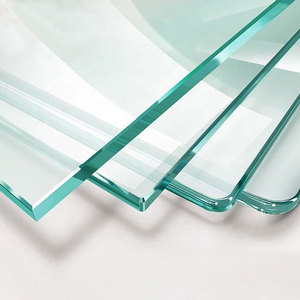
Direct factory supply of certified safety, structural, and decorative glass compliant with CE, SGCC, and AS/NZS standards.
A comprehensive technical deep dive into manufacturing precision, material science, and global structural compliance.
All safety glass products adhere to rigorous testing standards including SGCC (ANSI Z97.1) for North America, CE (EN 12150 & EN 14449) for Europe, and AS/NZS 2208 for Australasia.
State-of-the-art Bottero CNC cutting, waterjet internal cutouts, and Intermac double-edging machinery ensure tight dimensional tolerances within ±0.5mm on jumbo glass sizes.
To eliminate spontaneous breakage caused by NiS inclusions in toughened glass, our factory utilizes EN 14179-1 calibrated Heat Soak Testing ovens for guaranteed stability.
Key thermal, mechanical, and optical performance parameters across our architectural glass portfolio.
| Glass Configuration | VLT (%) | SHGC | U-Value (W/m²K) | Acoustic (Rw dB) | Primary Application |
|---|---|---|---|---|---|
| 6mm Low Iron Tempered | 91% | 0.87 | 5.7 | 31 dB | Interior partitions, storefronts |
| 6mm + 1.52SGP + 6mm Extra Clear Laminated | 89% | 0.78 | 5.3 | 37 dB | Structural balustrades, overhead glazing |
| 6mm Low-E + 12Ar + 6mm Clear IGU | 70% | 0.38 | 1.4 | 35 dB | Commercial office curtain walls |
| 6mm Triple Silver Low-E + 16Ar + 6mm Low Iron | 62% | 0.28 | 1.1 | 38 dB | Passive house windows, high-rise facades |
| 8mm Anti-Reflective Laminated (AR) | 97% | 0.82 | 5.1 | 36 dB | Museum vitrines, luxury retail displays |
How decarbonization, structural interlayers, and dynamic solar control are reshaping global glazing specifications.
Structural engineers are increasingly specifying SentryGlas (SGP) interlayers over conventional Polyvinyl Butyral (PVB) for open-edge frameless balustrades and skylights. SGP offers 5 times the tear strength and 100 times the rigidity of standard PVB, preventing post-breakage collapse even under severe hurricane wind loads or seismic events.
With global building codes enforcing stringent carbon reduction targets, specifiers demand vacuum-sputtered triple-silver Low-E coatings. These nanometer-thin metallic layers reflect infrared radiation while allowing maximum visible light, drastically cutting HVAC loads in tropical and temperate climates alike.
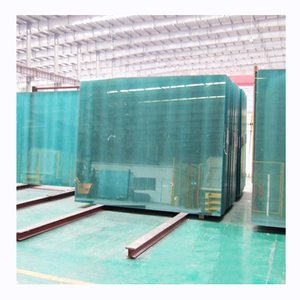
Architectural design favors seamless visual continuity. Advanced Chinese float lines and tempering furnaces can now process jumbo glass panels exceeding 12 to 18 meters in length, enabling dramatic flagship retail facades without horizontal mullion interruptions.
Top China exporters are adopting oxy-fuel firing systems and increasing the proportion of recycled glass cullet in raw batch formulations. This reduces furnace energy consumption by up to 20%, satisfying international LEED v4 and BREEAM sustainability standards.
From monolithic annealed sheets to high-performance multi-functional composite envelope systems.
Over the past three decades, Chinese glass manufacturing has evolved from basic soda-lime float glass production into ultra-precise structural engineering. Modern architectural envelope design relies on optimizing three fundamental glass properties:
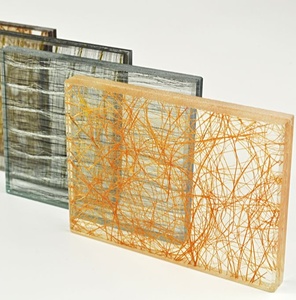
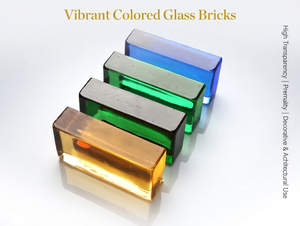
Furthermore, solid structural glass elements—such as 200x100x50mm crystal glass bricks—are manufactured via precision casting and annealing processes. These components deliver extreme compressive load resistance while acting as light-guiding architectural elements for contemporary exterior facades.
Addressing engineering specifications, ocean packaging, quality control, and international building compliance.
Solid 6063-T6 extruded aluminum frames hold strict dimensional tolerances under extreme wind loads and humidity without warping, rotting, or expanding. When paired with high-flatness low-iron tempered glass, aluminum systems provide vastly slimmer sightlines, greater structural spans, and decades of maintenance-free service life compared to vinyl or timber frames.
Heat Soak Testing according to EN 14179-1 exposes tempered glass to 290°C temperatures for several hours. This accelerates the phase transformation of potential Nickel Sulfide (NiS) inclusions embedded in the glass matrix, causing contaminated panes to break inside the factory chamber rather than spontaneously exploding post-installation on a high-rise curtain wall.
PVB (Polyvinyl Butyral) is a flexible interlayer ideal for general safety glazing and sound dampening. SGP (SentryGlas) is an ionoplast interlayer that is 100 times stiffer and 5 times tougher than PVB. SGP maintains structural rigidity if both glass plies shatter, preventing glass fall-out in skylights and structural fins.
Export-grade glass is packaged in customized heavy-duty wooden crates with steel strapping. Panes are separated using anti-fungal lucite powder or cork pads. Desiccant bags are sealed inside airtight plastic wrapping to prevent moisture condensation (white haze oxidation) during multi-week maritime transit.
For North America, glass must bear SGCC certification meeting ANSI Z97.1 and CPSC 16 CFR 1201 standards. For Europe, CE marking according to EN 12150 (tempered) and EN 14449 (laminated) is required. For Australia/New Zealand, compliance with AS/NZS 2208:1996 is mandatory. Our facility holds active certification across all three regulatory jurisdictions.
Yes. Our engineering shop produces unit-by-unit AutoCad submittal drawings specifying net dimensions, edge work profiles, hole placement tolerances, glass bite depth, and hardware preparation prior to cutting metal or glass.
Consult directly with our engineering team to review shop drawings, request sample kits, or receive a competitive factory-direct quote.
Get Catalog