Explore our export-ready architectural aluminum window and door systems, featuring high-micron anodic surface protection, structural thermal breaks, and sigma-welded joinery.
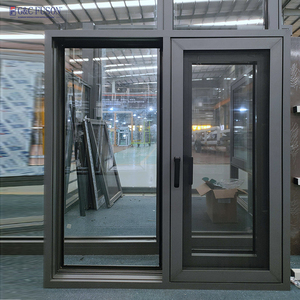
Multi-chamber thermal barrier casement system crafted from 6063-T6 extruded alloy. Optimized for energy-efficient modern residential facades.
Get a Quote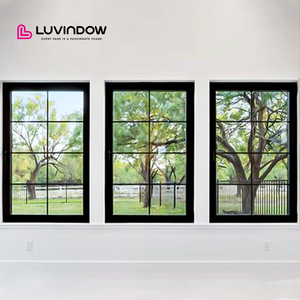
Ultra-narrow sightline impact casement system certified for severe coastal wind zones, complete with Class I anodic electro-coat finishes.
Get a Quote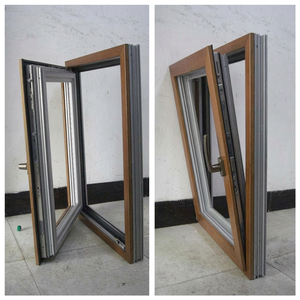
Acoustic-rated triple-glazed system featuring heavy-gauge extruded frames and continuous EPDM weather sealing for luxury hospitality developments.
Get a Quote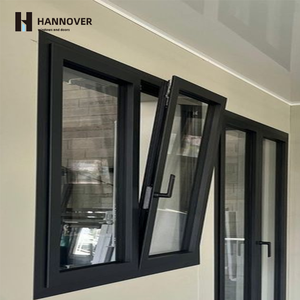
High-performance double-glazed swing window with polyamide thermal isolation strips preventing condensation and heat transfer.
Get a Quote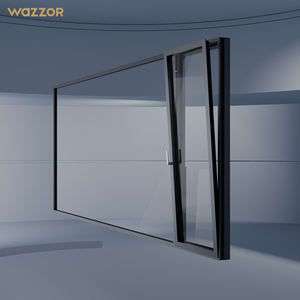
Heavy-duty structural profile engineered to withstand peak wind loads and extreme weather events, verified via rigorous physical mock-up testing.
Get a Quote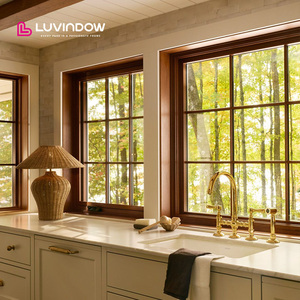
Hybrid structural design combining exterior heavy-anodized aluminum weather shielding with interior solid timber architectural aesthetics.
Get a Quote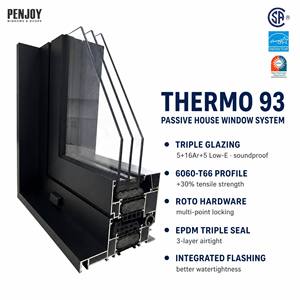
Energy Star certified passive house window system incorporating low-emissivity warm-edge spacers and multi-point perimeter locking hardware.
Get a Quote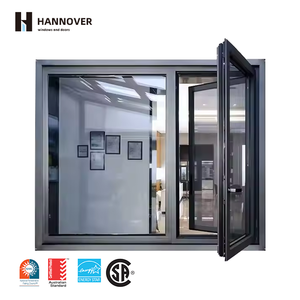
NFRC tested commercial tilt-and-turn fenestration unit tailored to architect submittal drawings for high-density modern developments.
Get a QuoteA comprehensive analysis of metallurgical structural integrity, surface treatment science, and joinery engineering.
We strictly utilize primary-melt 6063-T6 aluminum alloy for all structural profiles. Unlike secondary scrap extrusions, 6063-T6 provides optimal yield strength, superior dimensional stability under extreme wind loads, and flawless anodic response during electro-chemical conversion tanks.
Our sulfuric acid anodizing process converts the raw aluminum surface into an integral, sapphire-hard aluminum oxide film. Operating at Class I specifications (≥ 0.7 mil / 18 microns film thickness), our finishes are immune to salt spray corrosion, severe atmospheric pollution, and chalking.
Where standard fabricators rely on mechanical screws and crimped corner cleats that loosen over seasonal expansion cycles, we sigma weld every joint and corner smooth. A welded aluminum corner becomes a continuous structural unit that permanently blocks water ingress.
As international energy codes tighten and green building standards like LEED v4.1 and BREEAM dictate strict carbon performance parameters, commercial procurement teams are fundamentally re-evaluating material selection. Standard vinyl (PVC) frames suffer from high thermal degradation and structural creep under solar radiation, while wood fenestration demands perpetual repainting cycles and chemical sealing.
Anodized aluminum extrusions represent the premier choice for zero-maintenance facade longevity. Anodizing is not an applied surface layer; it is an electro-chemical growth process that transforms the outer alloy matrix into a porous crystalline aluminum oxide layer, sealed with hydrated metal salts. Because no organic resins are involved, anodized profiles emit zero VOCs and are 100% infinitely recyclable at product end-of-life without alloy contamination.
1. Decarbonized Alloy Tracing (CBAM Compliance): Global buyers are insisting on Environmental Product Declarations (EPDs). Sourcing from manufacturers utilizing hydro-powered primary smelting minimizes embodied carbon duty liabilities under Europe's Carbon Border Adjustment Mechanism.
2. Structural Thermal Isolation Advances: Modern facade profiles utilize multi-cavity polyamide thermal breaks (PA66 GF25 reinforced with 25% glass fiber) inserted between inner and outer extruded profiles. This design achieves U-factors under 0.20 Btu/h·ft²·°F while maintaining structural shear strength.
3. Custom Submittal Engineering: Off-the-shelf standard sizes require aggressive site trimming and filler panels. Modern procurement prioritizes custom-fabricated units built precise to millimeter tolerance from submittal shop drawings.
Understanding the engineering methodologies behind high-performance architectural metal export products.
The anodic coating process takes place in precise chemical baths. The clean 6063-T6 aluminum extrusion acts as the anode in a sulfuric acid electrolyte bath. When direct electrical current is applied, hydrogen is released at the cathode, and oxygen ions migrate to the aluminum surface, forming a microscopic hexagonal cell layer of pure aluminum oxide (Al₂O₃).
For architectural colors (Champagne, Bronze, Deep Black, and Clear Anodized), our production lines utilize secondary two-step electrolytic coloring. Tin or nickel salts are electro-deposited into the microscopic pores of the anodic film. Because color is imparted by stable inorganic metal deposits trapped within the oxide structure, it is physically impossible for the color to fade due to UV exposure or salt spray oxidation.
Raw anodized extrusions are transferred to 5-axis automated CNC milling stations where weep holes, hardware pockets, hinge cutouts, and drainage slots are machined into the profiles with 0.05mm repeatability. This automated milling ensures seal integrity and perfect hardware alignment across multi-unit commercial orders.
Following CNC milling, frame corner joints are joined via high-frequency sigma welding (Shielded Inert Gas Metal Arc). This process fuses the internal wall thickness of the 6063-T6 alloy directly, producing a continuous metallurgical bond. The exterior face is then hand-dressed to present an invisible, leak-proof miter joint that withstands decades of structural racking forces without opening micro-gaps.
Direct answers to engineering, structural performance, and export compliance questions.
The primary distinction lies in anodic oxide film thickness and long-term weathering endurance. AAMA 611 Class I requires a minimum coating thickness of 0.7 mil (18 microns) or greater, engineered specifically for exterior architectural exposures prone to salt air, chemical pollutants, and heavy foot traffic. AAMA 611 Class II specifies a thinner coating of 0.4 to 0.7 mil (10 to 17 microns), intended primarily for interior applications or mild exterior environments. For international commercial facade exports, we exclusively utilize Class I processing to guarantee lifetime durability.
Solid 6063-T6 aluminum frames exhibit exceptional dimensional stability under wide temperature swings (thermal expansion coefficient of ~23×10⁻⁶/K). Unlike wood, aluminum will never swell, rot, warp, or support fungal growth. Unlike vinyl (PVC), which softens under high thermal loads and cracks in extreme cold, 6063-T6 aluminum retains structural tensile capacity across all climate zones. Furthermore, aluminum's superior modulus of elasticity allows for ultra-thin profile sightlines carrying massive glass weights that vinyl simply cannot support without severe frame sagging.
Aluminum is naturally a high-conductivity thermal conductor. A structural thermal break is a low-conductivity polymer barrier—typically glass-fiber reinforced polyamide (PA66 GF25)—mechanically crimped into internal channels between the exterior and interior aluminum extrusion profiles. This creates a continuous insulation break that dramatically reduces frame U-factors, prevents interior frame sweating (condensation) in humid environments, and ensures strict compliance with modern energy standards such as NFRC, ASHRAE 90.1, and Energy Star.
Mechanically crimped or screwed corners rely on rubber gaskets, butyl sealants, and metal cleats to hold frame members together. Over time, wind load vibration and differential thermal movement break down these internal sealants, creating microscopic gaps that allow water penetration into building envelopes. Sigma welding physically melts and fuses the aluminum profile corners into a seamless, continuous structural monolith. A sigma-welded corner cannot loosen, rack out of square during transport, or develop water leaks over its lifetime.
Yes. Aluminum natively forms a protective oxide layer, but our AAMA 611 Class I anodizing enhances salt-spray corrosion resistance exponentially, passing thousands of hours of continuous neutral salt spray (ASTM B117) testing without pitting or oxidation. For typhoon and hurricane zones, our systems incorporate reinforced internal steel stiffeners, heavy-duty stainless steel (316 grade) multi-point locking hardware, and high-performance structural silicone glazing bite options engineered to withstand extreme positive and negative wind pressures.
Our export workflow is standardized for global project execution: 1. Review & Takeoff: Our engineering team reviews architect elevations and opening schedules. 2. Shop Drawing Submittal: We generate precise unit-by-unit CAD drawings establishing net opening sizes, profile depths, glass specifications, and hardware placements for formal sign-off. 3. CNC & Anodizing Fabrication: Metal is cut, machined, anodized, and sigma-welded under strict ISO quality control. 4. Glazing & Crating: Units are factory-glazed, sealed, labeled by elevation mark, and crated in fumigated hardwood containers designed for safe ocean transit.
Whether you are specifying custom architectural fenestration for luxury villa developments, high-density residential towers, or commercial hotel projects, our technical sales team provides full engineering support from submittal drawings to final jobsite delivery.