Specification-grade thermal break casement, tilt & turn, and impact-resistant systems engineered for global luxury residential and commercial projects.
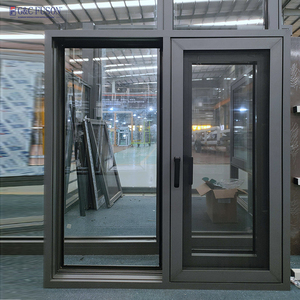
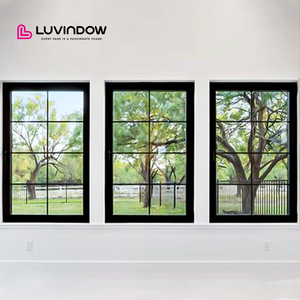
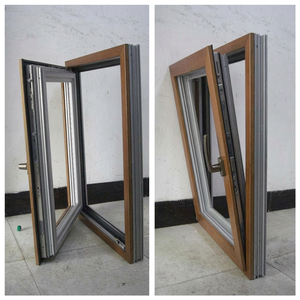
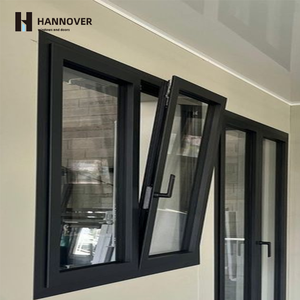
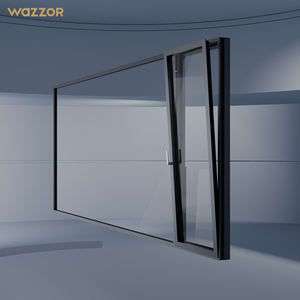
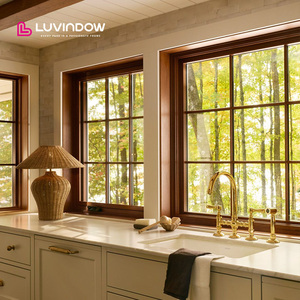
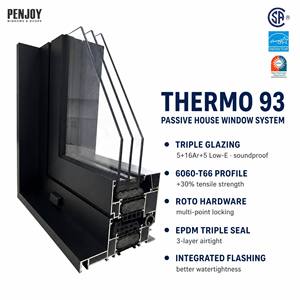
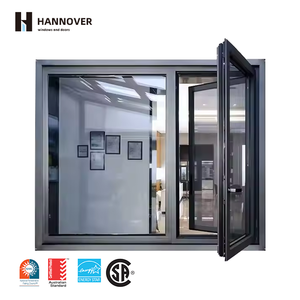
A rigorous examination of core manufacturing benchmarks that separate tier-one structural window factories from mass-market suppliers.
Every frame member is extruded precisely from virgin 6063-T6 aluminum alloy. Unlike lower-grade recycled billets, T6 tempering yields exceptional ultimate tensile strength, preventing thermal bowing, racking, or frame warping even under severe building settlement and wind pressure.
Frame and sash profiles feature 100% sigma-welded corner joinery dressed perfectly flush. Mechanically screwed or crimped corners inevitably open up water paths over years of micro-expansion. A welded seam behaves as a single continuous metal envelope, ensuring lifetime structural seal integrity.
Our thermally broken profile systems integrate high-density Polyamide (PA66 GF25) insulating struts. This thermal break disconnects the exterior metal skin from the interior profile, eliminating frame sweating, condensation damage, and thermal conductivity in coastal or extreme freezing zones.
When sourcing custom architectural aluminum windows for multi-family residential developments, passive houses, or luxury coastal villas, procurement managers face a crowded global marketplace. Distinguishing high-capacity OEMs and precision custom fabricators from simple assemblers requires evaluating structural metallurgy, corner joinery protocols, glass package engineering, and certified environmental durability.
A window's long-term lifecycle cost is governed primarily by profile alloy integrity and corner joinery technique rather than initial purchase price. Solid 6063-T6 aluminum frames with welded corner joints eliminate maintenance cycles associated with frame flexing, seal failure, and structural water intrusion.
Aluminum frame selection often comes down to balancing ultra-thin sightlines with structural deflection resistance. The table below outlines how 6063-T6 thermal break aluminum compares against alternative commercial framing materials:
| Material / Tech Spec | 6063-T6 Thermal Break Aluminum | Standard Non-Break Aluminum | Architectural Timber / Wood | Rigid Vinyl (uPVC) |
|---|---|---|---|---|
| Structural Tensile Strength | 205 MPa (Very High) | 145 MPa (Moderate) | 40 - 80 MPa (Variable) | 40 - 55 MPa (Low) |
| Corner Joinery Method | Sigma Welded / Monolithic | Crimped / Screwed | Mortise & Tenon / Glue | Heat Welded Plastic |
| Thermal Insulation (U-Factor) | 0.16 – 0.24 Btu/h·ft²·°F | 0.80 – 1.10 (Poor) | 0.22 – 0.30 (Good) | 0.26 – 0.32 (Moderate) |
| Coastal Salt-Air Resistance | Exceptional (PVDF / AAMA 2605) | Moderate (Anodized) | Poor (Rot / Peeling Risk) | Moderate (UV Chalking) |
| Sightline Width Ratio | Ultra-Narrow (Maximum Glass) | Ultra-Narrow | Bulky / Wide | Bulky / Thick Profile |
As international building codes tighten around energy efficiency targets and extreme weather resilience, commercial fenestration procurement is undergoing four major structural shifts:
Global architectural standards increasingly demand total window assembly U-factors below 0.18. Manufacturers are transitioning to multi-chamber polyamide thermal struts combined with warm-edge glass spacers and krypton/argon-filled triple glazing to meet strict zero-carbon building mandates.
Coastal and hurricane-prone regions (such as Florida HVHZ and typhoon-susceptible Asian coastlines) demand windows rated under ASTM E1886/E1996 standards. Tier-1 factories now offer integrated thin-profile aluminum profiles reinforced with heavy-wall internal ribs and laminated impact glass packages.
Leading B2B aluminum window factories have replaced standard catalogue size offerings with fully digitized BIM (Building Information Modeling) workflows. Custom fenestration units are fabricated strictly from architectural submittal drawings, guaranteeing 100% fit accuracy on site without costly field trimming.
Finishing technologies have advanced from standard powder coating to fluoropolymer PVDF coatings meeting AAMA 2605 specifications. These finishes withstand 10+ years of intense coastal salt fog, high humidity, and extreme UV exposure without chalking, color fading, or substrate oxidation.
Technical clarity on thermal break engineering, non-standard sizing, surface finishes, and factory lead times.
Solid 6063-T6 aluminum maintains precise structural dimensions under extreme thermal expansion, moisture, and wind load pressures. It will not swell, warp, rot, or crack over time. Furthermore, its superior tensile strength allows for significantly narrower profile sightlines and larger glass apertures than vinyl or wood can support.
A thermal break is a continuous insulating barrier (typically glass-fiber reinforced polyamide PA66) positioned inside the inner and outer aluminum extrusion profiles. It acts as a thermal dam, dramatically slowing conductive heat transfer. Thermal break frames are mandatory for climate-controlled buildings in cold, hot, or humid regions to satisfy energy codes and eliminate frame condensation.
Sigma welding fuses the profile corners into a single continuous metallic structure, completely dressing the outer joint smooth. Mechanically crimped or screwed corners rely on internal cleats and liquid sealant, which can gradually loosen due to building vibration and thermal expansion, creating hidden paths for water leaks.
Yes. Custom fabrication is our standard manufacturing protocol. Every window unit, sash, mullion, and glass lite is cut, welded, and assembled directly from approved submittal drawings. There are no rigid stock limits, allowing custom radii, angled heads, and specialized hardware positioning.
Aluminum inherently naturally resists oxidation compared to ferrous metals. For marine or oceanfront exposure, we apply heavy-duty anodized finishes or multi-coat PVDF fluoropolymer finishes complying with AAMA 2605 standards, combined with 316-grade stainless steel operator hardware for zero-corrosion performance.
We manufacture two high-durability insect screen styles: Flat Frame and Long Leg Frame designs. Both utilize rigid roll-formed aluminum framing fitted with 16x18 mesh fiberglass screens. They incorporate traditional clip mechanisms, allowing effortless removal, washing, and reinstallation by building maintenance staff.
Send us your project elevations, window schedules, or opening sizes. Our engineering shop team will review your specifications and provide factory-direct pricing, thermal analysis, and shop drawings.