Engineered for global B2B procurement, high-rise passive performance, hurricane resistance, and custom OEM/ODM structural submittals.
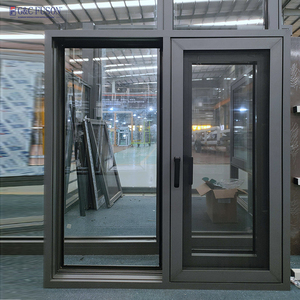
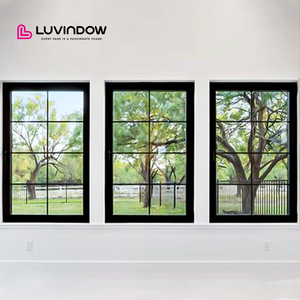
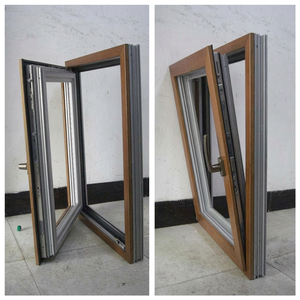
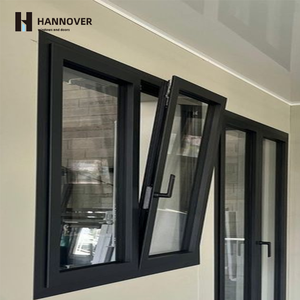
For over six decades, our shop floor has bridged the gap between complex architectural blueprints and structural metal fabrication. Here is how our extrusion, welding, and screening processes deliver non-compromised field performance.
Unlike standard architectural tubing, our screen frames and window extrusions utilize virgin 6063-T6 aluminum alloy. Exhibiting a ultimate tensile strength of at least 241 MPa and yield strength of 214 MPa, these frames maintain absolute dimensional squareness under heavy wind loading, heat, and humidity without twisting, sagging, or binding operational screens.
Mechanical screws and plastic corner crimps inevitably loosen, leak water, and rack out of square over thermal cycles. All our window sashes, screen channels, and door panels feature 100% full-penetration Sigma welding at every mitred joint. Hand-dressed smooth, welded corners function as one monolithic structure, eliminating seal degradation permanent water pathways.
We produce flat-frame and long-leg aluminum screen profiles equipped with roll-formed tension channels. Paired with 16 x 18 charcoal fiberglass mesh or high-tensile stainless wire retained by UV-stabilized vinyl splines, screens withstand wind pressure while facilitating tool-free removal for quick seasonal maintenance.
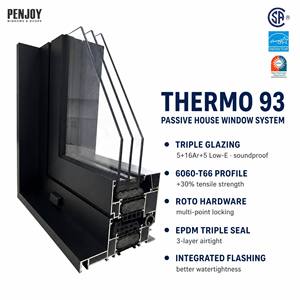
To meet strict global energy codes (including Title 24, NFRC, and Passive House criteria), our thermal-break systems utilize structural polyamide (PA66 GF25) insulating bars. By isolating the exterior metal extrusion from the interior metal sash, thermal bridging is effectively eliminated, resolving frame condensation (sweating) and lowering overall HVAC loads.
Standard architectural powder coatings break down in saline environment conditions within 24 to 36 months. Our export-grade finishes meet AAMA 2605 specifications—incorporating 70% fluoropolymer (PVDF) resin systems designed to endure 10,000 hours of continuous salt spray testing without chalking, flaking, or substrate pitting.
We eliminate expensive jobsite rework by operating entirely off custom submittal drawings. Every opening schedule, profile cross-section, glass bite tolerance, and hardware anchoring detail is digitized and approved in writing prior to profile cutting and CNC machining.
A clear engineering comparison showing why custom extruded 6063-T6 aluminum fenestration outlasts roll-formed vinyl and hollow steel alternatives in structural applications.
| Performance Attribute | OEM/ODM 6063-T6 Welded Aluminum | Standard Vinyl (PVC) Systems | Light-Gauge Hollow Steel |
|---|---|---|---|
| Corner Joint Construction | Sigma Welded Monolithic | Heat Welded / Weak Plastic | Screwed / Spot Welded (Rust Risk) |
| Structural Yield Strength | 214 MPa (High Load Capacity) | 35 - 55 MPa (Prone to Deflection) | 140 - 180 MPa |
| Thermal Expansion Coeff. | Low & Stable (23x10^-6 /K) | High (Expands & Warps in Sun) | Very Low (12x10^-6 /K) |
| Coastal Corrosion Resistance | AAMA 2605 PVDF (Immune to Rot) | Good Chemical Resistance | Poor (Severe Oxidation Risk) |
| Mesh Screening Options | 316 Stainless / 16x18 Fiberglass | Standard Light Netting Only | Limited Custom Integration |
| Expected Service Lifecycle | 40+ Years (Zero Rot/Swell) | 10 - 15 Years | 15 - 20 Years (Requires Painting) |
As building envelopes demand elevated thermal efficiency, acoustic insulation, and hurricane protection without compromising indoor-outdoor visual continuity, the global architectural screening industry is undergoing a structural transformation. OEM/ODM manufacturers are pivoting from passive insect barriers to high-performance structural dynamic screening solutions.
Traditional 18x14 mesh wires are increasingly being replaced by high-tensile 316 marine-grade stainless steel wire woven at micron-level tolerances. Measuring wire diameters down to 0.80mm to 0.50mm, these screens function simultaneously as forced-entry protection barriers, hurricane impact protection shields, and insect screens. By leveraging black powder-coated non-reflective finishes, optical clarity is maximized, rendering the screen virtually invisible from a distance of two meters.
In high-performance passive housing, standard screen sub-frames often act as uninsulated thermal bridges that bleed energy along the window perimeter. Next-generation OEM design integrates dual-extrusion thermal breaks directly into the screen retention frame. By matching the thermal conductivity of the primary fenestration system, interior frame surface temperatures remain uniform, eliminating condensation risks during cold winter months.
Modern architectural design trends favor wide-open spans, sliding glass walls, and multi-slide patio assemblies spanning up to 12 meters in width. Traditional fixed screens cannot serve these expansive openings. ODM suppliers are leading the development of motorized retractable zip-line mesh systems and pleated accordion screens engineered with high-strength Kevlar tension cords to resist blow-outs under heavy wind loads.
Global general contractors, window distributors, and real estate developers are shifting their procurement strategies away from stock inventory sourcing toward submittal-driven direct-factory custom fabrication. Navigating global supply chain volatility requires an understanding of key strategic procurement trends:
Eliminating field modification labor costs by providing CAD submittals and full BIM modeling prior to cutting metal ensures zero margin for error when units land on active job sites.
Leading international markets (EU, North America, Oceania) strictly enforce EPD (Environmental Product Declaration) verification. Sustainable procurement prioritizes recycled aluminum billets melted using clean hydropower energy sources.
Sea freight conditions demand marine-grade ply-wood fully enclosed crating with moisture-absorbing desiccants, protective low-tack plastic film wrapping, and reinforced corner protection to survive multi-modal container transport.
Everything architects, specifiers, and commercial importers need to know before initiating an OEM/ODM mesh screen order.