Explore our certified OEM/ODM architectural window and facade solutions engineered for extreme wind loads, thermal efficiency, and acoustic isolation.
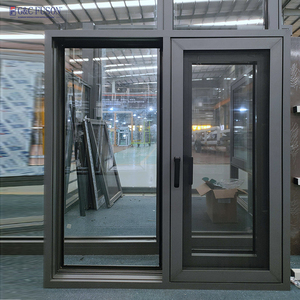
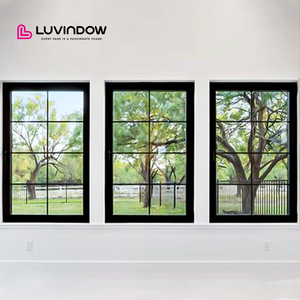
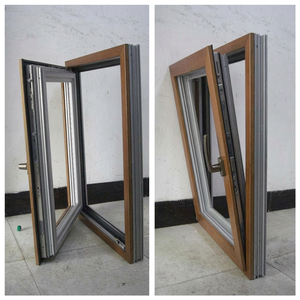
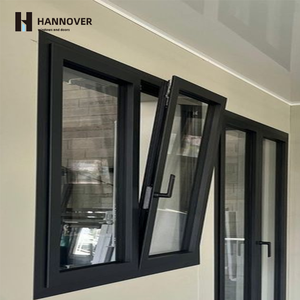
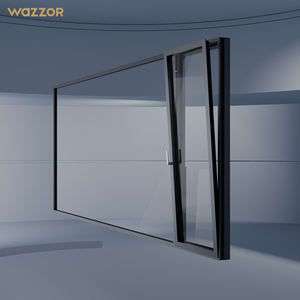
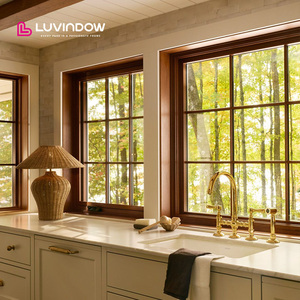
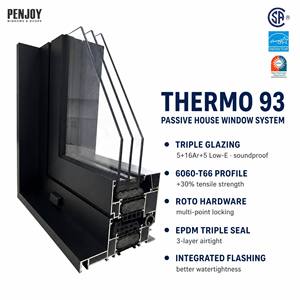
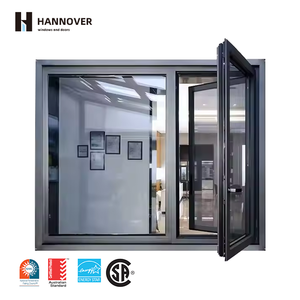
For over six decades, our fabrication floor has served as a benchmark for high-performance architectural metalwork. As a premier OEM/ODM curtain wall manufacturer and global exporter, we eliminate the operational risks associated with commercial facade procurement. Unlike standard mass-market fabricators that rely on mechanical crimping and low-tier alloys, every single curtain wall mullion, transom, casement frame, and sliding assembly leaving our plant is custom-manufactured from solid 6063-T6 aluminum alloy.
To overcome these structural vulnerabilities, our OEM/ODM manufacturing facility integrates specialized Sigma-welded joint technology. Every frame joint, transom connection, and sash member is sigma welded at every corner and dressed meticulously smooth. A sigma-welded joint behaves as a continuous, monolithic piece of structural metal. It permanently prevents water migration paths, eliminates corner joint opening caused by building settlement, and ensures the structural envelope maintains absolute squareness under severe seismic loading and extreme wind pressure.
Formulated for structural rigidity, superior surface finish, and maximum yield strength under continuous wind loads exceeding 5.0 kPa.
Continuous welded frame integrity that eradicates the mechanical loosening typical of screwed and crimped structural corners.
Dimension-by-dimension fabrication matched precisely to architect shop drawings with zero stock size limitations or filler panels.
The global facade engineering landscape is undergoing a massive transformation driven by carbon neutrality mandates, severe weather frequency, and advanced building energy performance codes. As an experienced OEM/ODM exporter, we actively track and pioneer key developments shaping modern envelope design:
Modern building performance codes (such as ASHRAE 90.1, IECC, and European Passive House specifications) require curtain wall assemblies to achieve overall U-factors well below 0.8 W/m²K (0.14 BTU/h·ft²·°F). Traditional aluminum profiles are highly conductive. The industry standard has shifted permanently toward multi-chambered Technoform Polyamide (PA66 GF25) thermal break strips. By mechanically insulating exterior aluminum extrusions from interior profiles, thermal bridging is effectively eliminated, preventing frame sweating and dramatically cutting HVAC building energy consumption.
Commercial construction is moving rapidly away from stick-built curtain walls assembled on-site toward prefabricated Unitized Curtain Wall Systems. Manufactured and sealed under strict factory-controlled cleanroom conditions, Unitized systems utilize two-part structural silicone sealants (e.g., Dow Corning 983 / 995) to bond glass units directly to aluminum frames. This off-site approach eliminates weather delays, reduces field labor costs by up to 40%, and guarantees structural adhesion integrity capable of withstanding severe seismic drift and typhoon-force pressures.
High-rise building envelopes are transforming from static weather barriers into dynamic energy generators. Modern OEM/ODM curtain wall engineering seamlessly incorporates BIPV vision glass and spandrel panels, as well as Electrochromic (EC) smart glass systems. Integrated wiring channels within extrusions allow smart facades to modulate solar heat gain coefficient (SHGC) dynamically based on real-time solar radiation intensity.
Global commercial procurement for curtain walls and fenestration products is evolving beyond basic unit-price comparisons. B2B buyers, facade consultants, and general contractors now prioritize comprehensive lifecycle value, risk mitigation, and digital integration:
Procurement teams expect OEM/ODM exporters to deliver precise Building Information Modeling (BIM) components at Level of Development (LOD) 400. Our engineering team provides detailed Revit models containing exact thermal properties, structural anchor points, and mechanical tolerances prior to extrusion cutting.
Environmental Product Declarations (EPDs) are becoming mandatory in North American and European tenders. Global buyers actively specify curtain walls utilizing low-carbon recycled aluminum billets, reducing embodied carbon by up to 60% across the facade lifecycle.
Future procurement workflows demand total supply chain visibility. From spectrographic alloy testing of 6063-T6 extrusions to air/water/structural chamber testing (AAMA 501 / ASTM E283, E330, E331), overseas clients require real-time digital QC reports before crating.
Addressing critical technical, compliance, and logistical inquiries from facade consultants, structural engineers, and commercial procurement directors.
Partner directly with a seasoned architectural aluminum manufacturer. Submit your structural drawings, performance criteria, or bid schedules to receive detailed submittal proposals and factory-direct pricing.