As a leading China wholesale rubber seals exporter, our manufacturing ecosystem pairs high-precision elastomeric extrusion (EPDM, TPE, Silicone) with factory-engineered aluminum window and door assemblies. Explore our OEM/ODM export range designed for stringent thermal, acoustic, and weatherproofing standards.
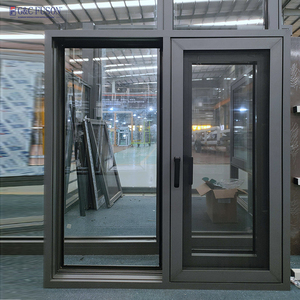
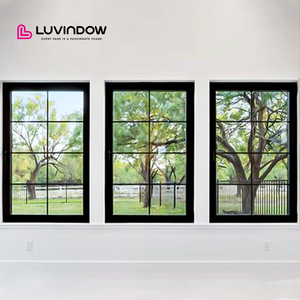
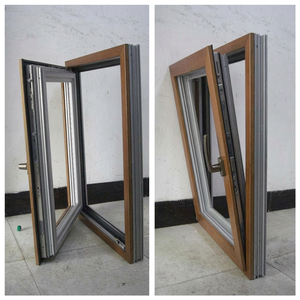
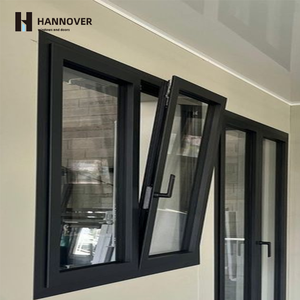

In modern architectural fenestration, automotive engineering, and industrial fluid containment, sealing profiles serve as critical barriers against thermal transfer, moisture ingress, dynamic wind pressures, and structural vibration. As a premier China wholesale rubber seals exporter, our chemical engineering teams specialize in formulating custom elastomeric compounds engineered to exceed international standards such as ASTM C864, DIN 7863, EN 12365, and ISO 3302-1 Precision Class E1 tolerances.
Selecting the optimal polymer matrix requires balancing mechanical elasticity, chemical stability, UV longevity, and wholesale manufacturing costs. Below is an empirical breakdown based on our laboratory tensile, ozone, and thermal degradation testing:
| Elastomer Type | Tensile Strength (MPa) | Elongation at Break (%) | Compression Set (22h @ 70°C) | Ozone & UV Resistance | Optimal Temperature Range |
|---|---|---|---|---|---|
| Peroxide-Cured EPDM | 9.5 - 15.0 | 350% - 550% | 12% - 18% (Superior) | ★ ★ ★ ★ ★ (Class-Leading) | -45°C to +130°C |
| Organosilicon (Silicone) | 7.0 - 10.5 | 400% - 700% | 15% - 22% (Excellent) | ★ ★ ★ ★ ★ (Exceptional) | -60°C to +230°C |
| Thermo-Plastic Vulcanizate (TPV/TPE) | 6.0 - 12.0 | 300% - 500% | 22% - 30% (Moderate) | ★ ★ ★ ★ ☆ (High) | -40°C to +110°C |
| Polychloroprene (Neoprene) | 11.0 - 18.0 | 250% - 400% | 25% - 35% (Fair) | ★ ★ ★ ☆ ☆ (Moderate) | -35°C to +100°C |
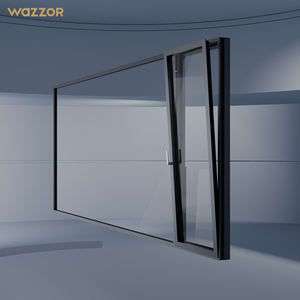
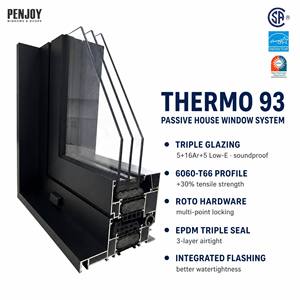
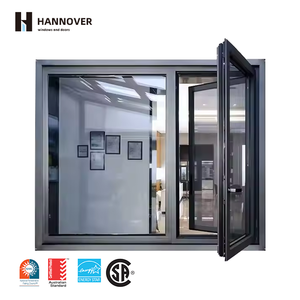
State-of-the-art rubber extrusion utilizes co-extrusion technologies that combine two or three distinct material layers in a single pass. For architectural aluminum windows (such as thermal break casement and tilt-and-turn systems), we utilize:
As carbon neutral mandates tighten globally, procurement directors for major construction firms, facade contractors, and industrial original equipment manufacturers (OEMs) are fundamentally shifting their rubber seal sourcing criteria. Understanding these structural shifts is vital for maintaining supply chain resilience and regulatory compliance.
The transition toward LEED v4.1 and BREEAM Outstanding green building standards is driving demand for recyclable Thermoplastic Vulcanizates (TPVs) and bio-attributed EPDM polymers. Importers are requesting Life Cycle Assessments (LCAs) and Environmental Product Declarations (EPDs) to verify carbon offsets during bulk rubber extrusion.
Manual calipers are obsolete for high-volume export lines. Global buyers now mandate continuous 360-degree inline laser scanning during profile extrusion to catch micro-wall thickness variations in real time, guaranteeing zero-defect shipments for automated window assembly lines.
To eliminate surface blooming, discoloration of surrounding paint/coatings, and unpleasant sulfur degassing, premium export buyers specify peroxide-cured EPDM. This technique creates stronger carbon-carbon crosslinks, resulting in superior thermal resistance and longevity.
Our custom rubber extrusion profiles cater to demanding architectural, transportation, and heavy industrial applications. Each environment requires specialized elastomer compounding:
Heavy-duty EPDM wedge gaskets, structural silicone glass seals, frame expansion joints, and corner-molded vulcanized boots for high-rise curtain walls and thermal break aluminum windows.
Door seal weatherstrips, windshield edge trims, vibration damping pads, and flocking-coated glass run channels compliant with IATF 16949 automotive quality management standards.
High-salinity coastal seals, UV-stabilized neoprene hatch cover gaskets, and fluorosilicone seals resistant to diesel fuel, saltwater corrosion, and extreme wave impacts.
Technical guidance for procurement engineers, specification specialists, and international buyers evaluating elastomeric seals and custom extrusions.
Sourcing directly from a specialized Chinese manufacturer grants access to advanced multi-layer co-extrusion technology, extensive custom tool-making capabilities, and economies of scale. High-grade EPDM formulations manufactured in China conform to ISO 3302-1 E1 precision tolerances and international standards like DIN 7863, delivering 30-40% cost efficiency without sacrificing polymer density, tensile strength, or UV longevity.
Solid aluminum profiles are high conductors of thermal energy. Co-extruded EPDM seals feature internal multi-chamber sponge cores with very low thermal conductivity ($\lambda \approx 0.035 \text{ W/m}\cdot\text{K}$). Placed between the aluminum frame and the double/triple glazed glass package, they break the heat conduction path, eliminating internal condensation ("frame sweating") and lowering overall window U-values.
For architectural fenestration and precision machinery, we recommend specifying ISO 3302-1 Class E1 (High Precision). Class E1 enforces tight cross-sectional dimensional limits (e.g., ±0.15mm to ±0.25mm), ensuring that rubber profiles fit smoothly into aluminum extrusion channels without loose gaps or excessive insertion friction.
Compression set measures the permanent deformation remaining in a rubber seal after a compressive force is released. Tested under ASTM D395 standards (e.g., 22 hours at 70°C), a low compression set value (under 18%) indicates that the rubber will spring back to its original shape over decades of opening and closing windows or doors, preserving air tightness and water impermeability.
Peroxide-cured EPDM forms direct carbon-carbon bonds during vulcanization, yielding higher thermal stability (up to 150°C), superior compression set recovery, and zero sulfur blooming (white powdery film on the surface). Sulfur-cured EPDM is more economical but prone to premature hardening, sulfur degassing, and potential staining of adjacent vinyl or powder-coated aluminum finishes.
Yes. Our tooling department fabricates custom extrusion dies based on DWG, STEP, IGES, or PDF technical drawings, as well as physical rubber samples. We provide initial 3D optical profile verification, followed by rapid die cutting and sample extrusion within 5 to 7 business days for customer sign-off prior to bulk production.
We supply continuous linear extrusion rolls alongside injection-molded corner boots (90-degree L-corners, T-joints, and 135-degree angle pieces). Utilizing cold-bonding cyanoacrylate adhesives or heated vulcanization presses, these molded corners form an unbroken, watertight seal around the perimeter of glass and window frames.
Standard profile MOQs start at 1,000 to 3,000 meters depending on die complexity. Rubber seal export shipments are packaged in heavy-duty polybags, spooled onto plastic/cardboard reels (100m–500m per reel), and enclosed in reinforced corrugated export cartons stacked on fumigated ISPM-15 wooden pallets for safe ocean container transit.
All our virgin EPDM, Silicone, TPE, and Neoprene compounds strictly comply with EU REACH (SVHC chemical candidate list), RoHS 3 (Directive 2015/863), and California Proposition 65 requirements. We do not use polycyclic aromatic hydrocarbons (PAHs) or restricted heavy metal plasticizers.
EPDM and Silicone are inherently immune to salt-air oxidation and chemical breakdown caused by ocean spray. By formulating our compounds with high carbon black reinforcement and specialized antioxidant additives, our coastal-grade window gaskets maintain elasticity without cracking, shrinking, or chalking under intense marine UV exposure for over 30 years.