Q:
Why specify 6063-T6 aluminum profile extrusions over traditional timber or PVC/vinyl framing?
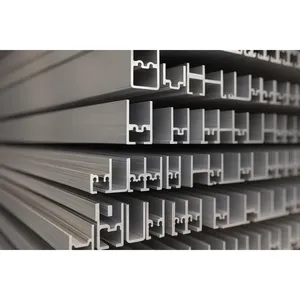
Solid 6063-T6 aluminum structural profiles hold exact dimensions under extreme ambient heat, humidity, and high structural loads. Unlike timber, aluminum will never rot, swell, warp, or crack, eliminating costly repainting maintenance. Compared to vinyl/PVC, aluminum exhibits vastly superior tensile strength, allowing for ultra-slim sightlines and significantly larger glass panels without thermal sagging.
Q:
What is a thermal break profile, and when is it mandatory for project specifications?
A thermal break is a continuous insulating barrier (usually high-strength structural polyamide resin) locked inside the aluminum extrusions. It physically decouples the exterior metal profile from the interior metal profile, dramatically slowing conductive heat transfer. You should specify thermally broken profiles for any conditioned building envelope in cold or hot/humid climates to satisfy energy codes and prevent frame sweating/condensation.
Q:
How do Sigma-welded joints compare to traditional mechanical crimping?
Mechanically screwed or crimped corners rely on gaskets and sealant plugs that degrade over time due to structural wind-load racking and thermal expansion. Sigma-welded joints melt the profile members into a unified continuous piece of metal at the corners, dressed smooth for seamless aesthetics. Welded profiles cannot open water paths or rack out of square over decades of continuous use.
Q:
Can your factory produce custom multi-cavity extrusions according to non-standard architectural drawings?
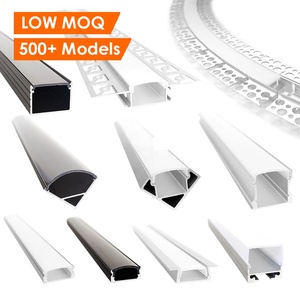
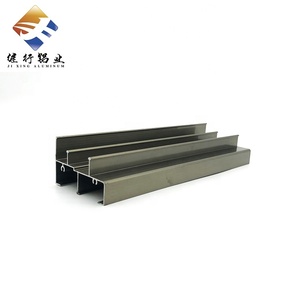
Yes. Every unit is engineered to order based on submittal CAD drawings or architectural elevations. Our tooling department creates custom die configurations for complex hollow shapes, radius heads, historic replications, and integrated LED channels. Detailed shop drawings are submitted for formal engineering sign-off prior to billet cutting.
Q:
How do your metal profiles perform in highly corrosive coastal and salt-air environments?
Aluminum naturally forms a protective oxide layer that resists rust completely. For oceanfront installations, we recommend specifying Class I Anodizing (25+ microns) or AAMA 2605 compliant PVDF fluorocarbon coatings, paired with 316 stainless steel fasteners to prevent galvanic corrosion.
Q:
What is the standard lead time and export packaging standard for international wholesale orders?
Die creation and sample validation typically require 10–14 days, with bulk profile extrusion completed in 20–25 days. All finished metal profiles are labelled to project schedules, wrapped in protective surface film, cushioned with corner guards, and fully crated in reinforced wooden cases for international ocean freight.