Explore our engineering-grade fiberglass mesh, thermal break window assemblies, and specialized architectural screening systems manufactured to international standards.
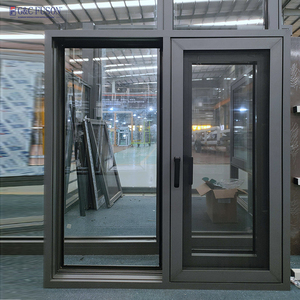
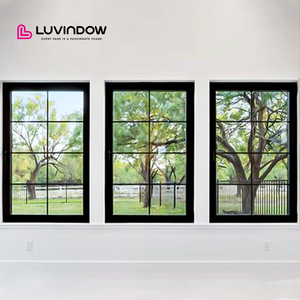
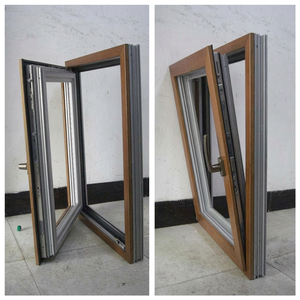
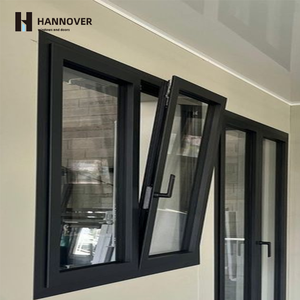
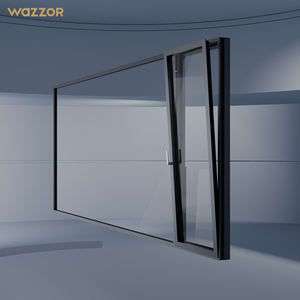
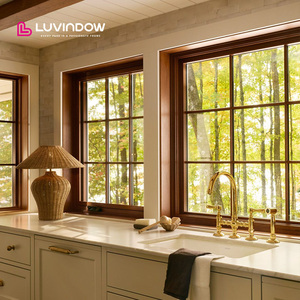
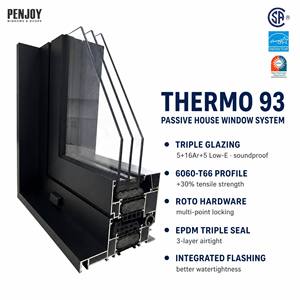
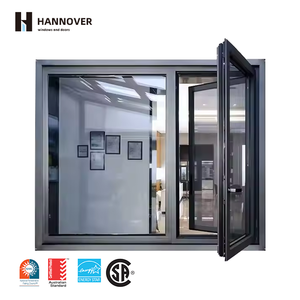
In contemporary building construction, civil engineering, and high-performance architectural fenestration, fiber mesh serves as an indispensable material foundation. From alkali-resistant (AR) fiberglass mesh used in Exterior Insulation and Finish Systems (EIFS) and concrete reinforcement, to precision-woven 16x18 charcoal fiberglass insect screens integrated into 6063-T6 aluminum window systems, selecting an authoritative Chinese manufacturer requires rigorous evaluation of tensile strength, yarn coating chemical formulas, dimensional stability, and thermal integration capabilities.
As global construction standards lean heavily toward decarbonization, high thermal efficiency (U-factors < 0.20 BTU/hr·ft²·°F), and hurricane-rated resilience, international procurement teams cannot treat fiber mesh as a simple commodity. Micro-cracking in stucco, UV-induced degradation of window insect screening, and thermal bridging in metal profiles are direct consequences of substandard mesh sourcing. China's top tier fiber mesh manufacturers have evolved beyond basic weaving; they operate fully automated vertical supply chains incorporating platinum crucible filament drawing, polymer latex dipping, roll-forming, and sigma-welded frame assembly.
When issuing Requests for Quotation (RFQs) to Chinese suppliers, structural engineers and procurement heads must categorize fiber mesh applications into three primary technical domains:
Engineering properties of premier fiber mesh variants produced by leading Chinese industrial manufacturers.
| Mesh Classification | Material Composition | Gram Weight (GSM) | Tensile Strength (N/50mm) | Coating / Finish Type | Primary Industrial Application |
|---|---|---|---|---|---|
| Insect Screening Mesh | E-Glass Filament (16x18 count) | 110 - 130 g/m² | Warp: ≥600 / Weft: ≥550 | PVC / Vinyl Flexible Dip Coating | Windows, Doors, Patio Screens |
| EIFS Wall Reinforcement | C-Glass with >16.5% ZrO2 | 145 - 160 g/m² | Warp: ≥1400 / Weft: ≥1400 | Alkali-Resistant Acrylic Polymer | Exterior Insulation & Stucco Facades |
| Heavy-Duty Security Mesh | 304/316 Stainless / Woven Glass | 250 - 450 g/m² | Warp: ≥3200 / Weft: ≥3000 | Thermosetting Powder / Epoxy Coating | Hurricane & Burglar Resistant Screen |
| Thermal Break Structural Strip | Polyamide PA66 + 25% Glass Fiber | N/A (Rigid Profile) | Transverse Tensile ≥80 MPa | Extruded Solid Strip Composite | Thermally Broken Aluminum Profiles |
Combining 60+ years of metal window experience with state-of-the-art fiber mesh weaving and frame welding technology.
Our structural aluminum profiles utilize prime 6063-T6 alloy billets, ensuring strict dimensional tolerance under mechanical stress, wind loads, and thermal expansion cycles.
Unlike cheap mechanically screwed joints that rack or open water paths over time, every corner joint is continuous sigma welded and dressed smooth for seamless strength.
Available in flat frame and long-leg frame profiles, specifically roll-formed to house 16x18 fiberglass mesh held securely by heavy-duty UV-stabilized vinyl splines.
Incorporating glass-fiber reinforced insulating thermal breaks inside aluminum profiles to halt thermal transfer, eliminate interior frame sweating, and cut HVAC loads.
Zero stock size limitations. Every unit is manufactured dimension-by-dimension according to approved architect submittal drawings, avoiding jobsite modifications.
Factory powder coatings and anodized finishes tested to pass 3,000-hour neutral salt spray (ASTM B117) exposure, providing maintenance-free operational longevity.
As international supply chains shift toward carbon neutrality and stricter building energy ratings, procurement directors sourcing fiber mesh and window systems from China must adapt to three key structural trends:
European and North American building codes (such as EU Green Deal and US Buy Clean initiatives) increasingly require suppliers to produce EPD verification. Leading Chinese mesh manufacturers are replacing traditional phthalate-heavy PVC coating latex with bio-based acrylics and zero-VOC waterborne polyurethanes. Sourcing managers must prioritize manufacturers whose production lines utilize closed-loop heat recovery and solar-powered dipping lines.
Modern architectural design emphasizes optical transparency without sacrificing pest barrier protection. Traditional 0.28mm strand diameter mesh is rapidly giving way to 0.18mm high-tenacity PET and glass micro-filaments. These advanced weaves boost airflow by up to 35% and increase visible light transmittance beyond 82%, while retaining equal tensile strength.
To reduce expensive on-site labor in western markets, B2B importers are requesting complete window-and-mesh assemblies pre-cut, pre-punched, and pre-glazed in China. By ordering unitized 6063-T6 aluminum frames with pre-installed fiberglass roll-screens directly from factory floors, contractors reduce jobsite installation times by up to 60%.
The material science of fiber mesh has advanced rapidly beyond basic glass-filament weaving. Key technological breakthroughs driving product specifications include:
Essential guidance for international buyers, architectural specifiers, and factory auditors.
Solid 6063-T6 aluminum frames maintain structural dimension under heat, humidity, and intense physical loads. They will not swell, warp, rot, or split like timber, nor do they turn brittle under UV rays like PVC/vinyl. When combined with 16x18 coated fiberglass insect mesh, an aluminum frame supports dramatically larger glass sightlines without sagging. A factory powder-coated finish removes routine scraping, sealing, and repainting from building lifecycle budgets.
A thermal break is a low-conductive insulating barrier (typically glass-fiber reinforced polyamide PA66) positioned between the exterior and interior aluminum extrusions. It disrupts the natural conductive flow of heat through metal, drastically improving U-factors and preventing interior frame condensation (sweating). You must specify thermally broken frames for conditioned residential or commercial spaces, cold climates, high-humidity interiors, and projects adhering to Energy Star or Passive House energy codes.
All frame members, sashes, and door panels are sigma welded at every joint and dressed completely smooth. A welded joint integrates the aluminum into one continuous seamless structure. It cannot loosen, twist out of square, or open water penetration paths over decades of thermal cycling, unlike mechanically screwed or crimped corners that rely on perishable sealant gaskets.
We manufacture two primary configurations: Flat Frame and Long-Leg Frame. Both variants are fabricated from roll-formed structural aluminum framing, housing 16x18 charcoal fiberglass mesh retained by a flexible vinyl spline. Screens are secured using traditional screen clips, allowing homeowners to detach, clean, and re-hang screen panels in minutes without specialized tools.
Yes. Custom manufacturing is our baseline operational standard. Every unit is fabricated to order directly from customer elevation schedules, shop drawings, or field dimensions. There are no fixed stock limitations. Our engineering shop confirms profiles, glass bites, mesh densities, hardware placements, and swing directions on detailed submittal drawings prior to metal cutting.
Aluminum and fiberglass naturally resist rust and oxidation. For aggressive coastal salt-air exposures, we specify fluoropolymer (PVDF) or high-durability architectural powder coatings, 316-grade stainless steel hardware, and marine-grade vinyl splines. A simple freshwater rinse routine several times a year keeps weep holes clear and finish integrity intact for decades.
Need custom submittal drawings, material testing certificates, or competitive FOB/CIF container pricing? Contact our technical engineering department today for rapid inquiry processing.
Inquire Now