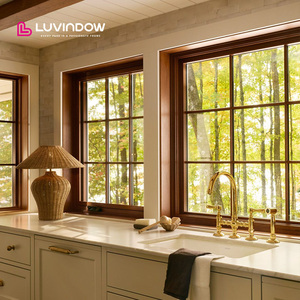
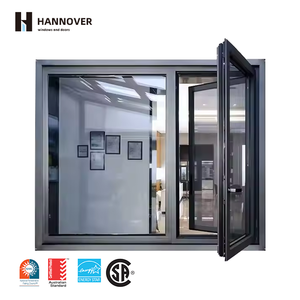
Featured Fenestration Systems & Handle Configurations Custom Engineered for Global Commercial and Luxury Residential Developments
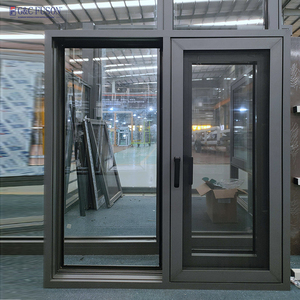
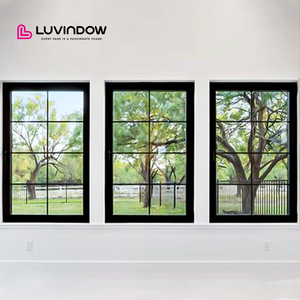
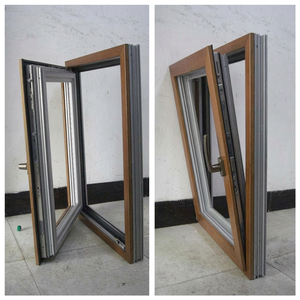
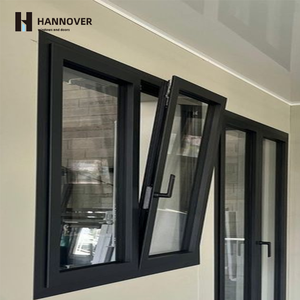
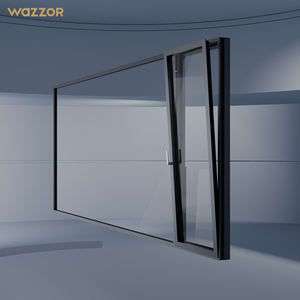
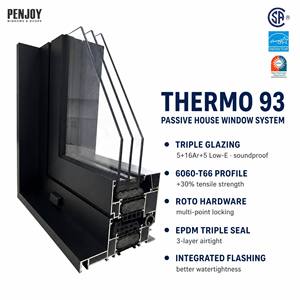
Why Tier-1 Architectural Firms & General Contractors Specify Our Door Handles and Framing Hardware
Fabricated using high-purity 6063-T6 extruded aluminum profiles. Ensures structural integrity, extreme dimensional stability under thermal load, and lifetime resistance against shear fracture.
Every corner, joint, and chassis mount undergoes precision sigma welding and seamless hand-dressing. Eliminates structural racking, micro-gaps, and moisture ingress permanently.
Surface treatments tested past 3,000 hours of continuous salt spray (ASTM B117). Multi-layer fluoropolymer (PVDF) and hard-coat anodizing prevent micro-pitting, corrosion, and UV discoloration.
Executive Summary: As modern architectural fenestration demands larger structural glass openings, minimalist sightlines, and tighter thermal envelope performance, the mechanical integrity of door handles, locks, hinges, and operator hardware has become a primary engineering consideration. This procurement guide evaluates China's premier door handle factories, examining manufacturing standards, metallurgical specifications, and quality verification methodologies.
When specifying door hardware for high-traffic commercial installations or luxury passive house projects, selecting the appropriate base alloy determines the component’s operational lifespan. China's top door handle manufacturers utilize three primary material classes:
A fundamental failure point in commercial door handles is mechanical backlash (slop) and joint separation under repeated rotational fatigue. Premium China door handle factories mitigate this through automated CNC milling, spline-fit spindles, and specialized welding technologies.
For integrated door handle and window sash assemblies, sigma-welded corner jointing ensures that the handle mounting plate becomes an integral extension of the 6063-T6 internal profile. Unlike mechanically screwed or crimped assemblies that loosen over seasonal thermal expansion cycles, welded and dressed structural joints maintain absolute squareness, preventing water intrusion and latch misalignment.
The visual impact and tactile experience of architectural door handles depend entirely on surface engineering. Leading Chinese exporters apply rigorous finishing protocols conforming to international standards:
Quality Assurance Tip for Buyers: Always request a certified ASTM B117 Salt Spray Test Report and a 500,000-Cycle Mechanical Endurance Certificate (EN 1906 Grade 4) prior to issuing purchase orders for large-scale commercial developments.
Modern architectural design continues to prioritize invisible frame sightlines and expansive glass surface areas. As a result, door handle manufacturers in China are pivoting heavily toward flush-mounted pull handles, rosette-less lever handles, and fully concealed tilt-and-turn window gearings. Handle escutcheons are being recessed directly into the thermally broken profile, delivering a seamless aesthetic profile without sacrificing mechanical leverage or structural grip strength.
The traditional mechanical lock cylinder is rapidly evolving into electro-mechanical hybrid systems. Next-generation door handle manufacturing incorporates:
With global green building certifications (LEED, BREEAM, Passive House Institute) imposing stringent carbon accounting rules, China’s tier-1 hardware factories are adopting closed-loop sustainability models:
Key Technical Criteria for Auditing Door Handle Manufacturers and Fenestration Suppliers in China
Every order must be backed by full shop submittal drawings detailing profile cross-sections, hardware cutout dimensions, glass bite specs, and thermal break alignments prior to raw metal cutting.
Verify that lever springs and internal spindle sleeves undergo cyclic fatigue testing (minimum 200,000 cycles for residential; 500,000 cycles for EN 1906 Category of Use Grade 4 commercial rating).
Hardware components must feature individual anti-scratch protective film, corner edge bumpers, moisture-absorbing desiccant packs, and heavy-duty ocean freight plywood crating.
Direct Answers from Engineering Leads to Common B2B Buyer Inquiries
Solid extruded 6063-T6 aluminum provides superior mass density, solid hand-feel, and absolute structural rigidity without excessive weight. It allows for integrated anodic surface coloring that cannot chip off like electroplated thin-wall stainless steel, guaranteeing decades of maintenance-free service.
A thermal break is a polyamide (PA66 reinforced with 25% glass fiber) insulating bar placed between exterior and interior metal frames to stop conductive heat loss. Door handles must be mounted using thermal isolation fasteners so that metallic screws do not bridge the interior and exterior metal, preserving full energy compliance.
Top factories utilize full sigma welding across all frame joints and mounting plates, followed by mechanical dressing. Unlike mechanically crimped or glued joints that loosen over time, a sigma-welded joint behaves as one continuous piece of metal, preventing sagging, handle droop, and water leakage.
Yes. OEM/ODM customization is standard practice. Factories can extrude custom handle profiles, machine custom hole patterns to match specific lock bodies (HOPO, Siegenia, Roto, GU), and produce custom architectural finishes based on submittal CAD drawings or physical control samples.
For coastal installations within 5 miles of salt water, specify AAMA 2605 fluoropolymer liquid coating or AAMA 611 Class I anodizing, paired with 316-grade stainless steel internal springs and fasteners. Assemblies should pass a minimum 3,000-hour ASTM B117 salt spray fog test.
Two primary styles are manufactured: flat frame and long-leg frame, constructed from roll-formed aluminum framing with 16 x 18 charcoal fiberglass mesh. They are engineered to clear handle operators seamlessly and mount with quick-release stainless steel clips for effortless tool-free cleaning.