Fabricated from prime structural aluminum alloy with sigma-welded joinery, precision thermal barriers, and tested performance against severe weather and acoustic loads.
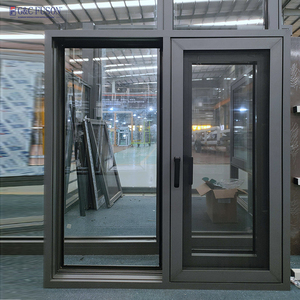
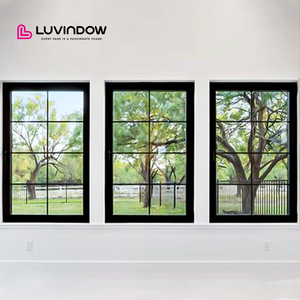
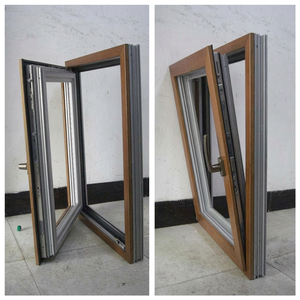
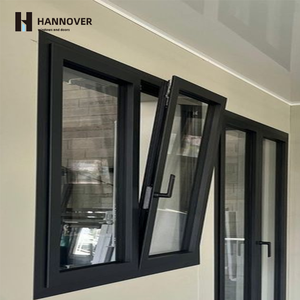
Why specifying precision-extruded aluminum profiles determines decades of building envelope integrity, energy conservation, and structural safety.
Our glazing profile series exclusively utilizes virgin 6063-T6 aluminum alloy. Controlled Mg-Si phase precipitation provides exceptional tensile strength (≥205 MPa) and yield strength (≥170 MPa), eliminating frame deflection under negative wind pressure while preserving sharp radius definitions and flawless surface anodization clarity.
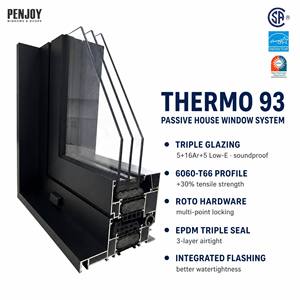
Thermal bridging is systematically mitigated using 25% glass fiber reinforced Polyamide (PA66-GF25) thermal break strips. This structural barrier matches the thermal expansion coefficient of aluminum, preventing shear separation across extreme temperature differentials from -40°C to +80°C.
Unlike traditional mechanically crimped corner keys that loosen and leak over operational lifespans, our custom sash and frame joints undergo continuous inert gas sigma welding. Corner joints function as single monolithic structural metal elements, completely water-sealed and immune to structural racking.
Detailed comparative metrics evaluating structural, thermal, and acoustic performance parameters across major profile framing classifications.
| Profile Specification Factor | Standard Non-Break Aluminum | Polyamide Thermal Break (PA66) | Aluminum-Clad Timber Profile |
|---|---|---|---|
| Thermal Conductivity (Uf Frame) | 5.8 - 6.5 W/m²K | 1.1 - 1.8 W/m²K | 0.9 - 1.3 W/m²K |
| Acoustic Isolation (STC Rating) | 28 - 32 dB | 38 - 48 dB (with Triple IGU) | 40 - 50 dB |
| Wind Pressure Resistance | Class 4 (2500 Pa) | Class 5+ (≥5000 Pa Typhoon Grade) | Class 4 (3000 Pa) |
| Frame Corner Construction | Screwed / Mechanical Crimped | Monolithic Sigma Welded | Dovetail Mortise & Mechanical Clad |
| Maintenance & Lifecycle Cost | Moderate (Gaskets wear out) | Ultra-Low (50+ Year Operational Span) | High (Interior wood refinishing) |
| Coastal Corrosion Resistance | Requires Powder Coating | PVDF / AAMA 2605 Fluoropolymer | Exterior PVDF Anodized Barrier |
Strategic forecast for real estate developers, commercial architects, and global procurement managers sourcing from Chinese manufacturing hubs.
Global carbon taxation frameworks (such as Europe's CBAM) are compelling Tier-1 project specifiers to demand certified low-embodied-carbon aluminum extrusions. China's leading suppliers are transitioning to hydro-powered smelting and post-consumer recycled aluminum scrap integration, reducing Scope 1 and Scope 2 emissions by up to 75% while maintaining strict ASTM B221 mechanical tolerances.
As energy codes enforce strict target U-factors below 0.8 W/m²K for net-zero and Passive House buildings, traditional thermal break strips are evolving. Next-generation profile extrusions incorporate nanoporous aerogel cavity infills and multi-chamber polyamide foam bars, enabling slim profile frames to achieve foam-like insulation performance without expanding visual sightlines.
Architectural preferences are heavily shifting toward minimal frame footprints and maximum daylight harvest ratios. Sourcing focus has centered on structural interlocking profiles where the glass pane functions as a load-bearing stiffener. Expect increased demand for continuous concealed hinges, sub-frame drainage paths, and invisible frame sashes that disappear flush into surrounding masonry.
Leading Chinese exporters have fully digitized submittal workflows. Direct transformation of architect Revit BIM models into automated 5-axis CNC extrusion cutting centers eliminates field modification errors. Importers now receive mill-certificate digital twins, ensuring 100% precision alignment with project structural openings before crating.
To ensure seamless international delivery and long-term serviceability, our export profiles pass six fundamental quality inspection gates prior to dispatch.
Verification of chemical element composition ensuring precise balance of Silicon, Magnesium, and Iron to guarantee T6 temper strength.
ASTM B117 salt fog testing exceeding 3,000 hours without surface blistering, ideal for harsh marine salt-air exposure.
ISO 2409 cross-cut tape testing verifying zero coating delamination across anodized or PVDF fluoropolymer finished extrusions.
Destructive corner strength testing certifying that the sigma-welded joint withstands higher forces than the profile walls.
Static water head pressure testing up to 700 Pa ensuring zero moisture penetration through weep channels and corner seals.
Heavy-duty fumigated wooden cases lined with corrosion-inhibiting VCI film and protective edge guards for safe maritime freight.
Clear answers to critical technical, custom manufacturing, and international logistics questions.
6063-T6 architectural aluminum profiles offer unmatched dimensional stability, high strength-to-weight ratios, and extreme resistance to thermal warping or rotting. Unlike vinyl (uPVC) which degrades under high solar ultraviolet radiation and lacks structural integrity for expansive glass spans, 6063-T6 aluminum supports massive glass panels with thin, modern sightlines. Paired with advanced factory finishes (like PVDF or anodizing), aluminum eliminates ongoing scraping and repainting maintenance costs over a 50+ year service life.
A thermal break profile utilizes a rigid, low-conductive polyamide strip (such as PA66-GF25) inserted between the inner and outer aluminum extrusion walls. This physical barrier stops thermal conduction through the metal frame. Thermal break profiles are mandatory for conditioned commercial and residential spaces in extreme cold or hot climates to comply with energy performance codes (NFRC, Title 24, CE, Passive House). They prevent interior condensation ("frame sweating") that damages surrounding drywall, wood trim, and indoor air quality.
Mechanical corners rely on internal aluminum corner cleats held by screws or crimped edges, sealed with liquid silicones. Over years of thermal expansion, wind flexing, and building movement, mechanical seams can separate slightly, creating micro-gaps for water leakage. Sigma welding fuses the aluminum extrusion members at continuous high temperature, making the corner joint structurally seamless. A sigma-welded frame functions as a continuous ring of solid aluminum, eliminating corner water ingress permanently.
Yes. 100% of our production is manufactured to custom project submittal drawings. We do not enforce standard stock limitations. Our engineering team reviews your architectural CAD/BIM elevations, confirms profile depth, glass pocket dimensions, wind load requirements, and egress specifications, and provides detailed shop submittals for architect sign-off prior to extrusion cutting and fabrication.
For coastal projects exposed to salt spray and high atmospheric moisture, we recommend specifying a PVDF (Fluoropolymer) 3-coat coating meeting AAMA 2605 specifications, or a 25-micron Class 1 anodic oxide finish. These surface treatments resist salt crystallization pitting, chalking, and UV discoloration, backed by comprehensive multi-decade warranty performance.
Standard lead times range from 25 to 35 business days following final shop drawing approval and sample color sign-off. For specialized custom die extrusions or rare powder coat colors, an additional 7-10 days may be required for tooling production and metallurgical testing.
Consult directly with our engineering team for profile takeoff reviews, custom die extrusion design, physical sample requests, and competitive global export pricing.
Get a Quote