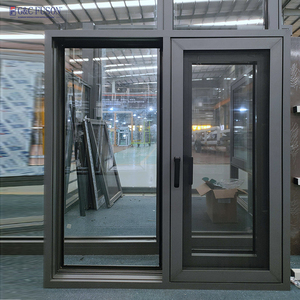
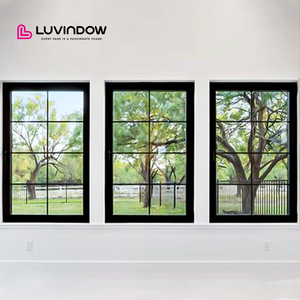
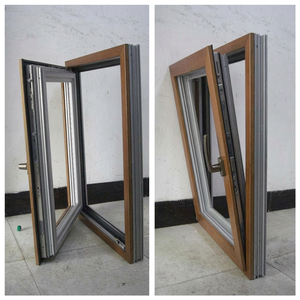
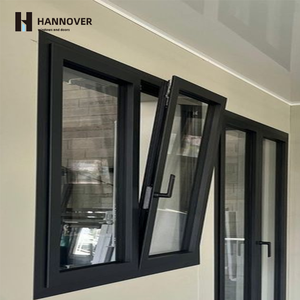
Direct from China's leading OEM/ODM extrusion factory. Sigma-welded frames, nano-silicate fire-resistant glass, and certified thermal barrier systems manufactured strictly to your submittal drawings.
Understanding the critical differences between standard aluminum fenestration and fire-rated integrity systems.
Our profile frames are extruded strictly from prime 6063-T6 aluminum alloy. T6 heat treatment yields exceptional tensile strength (≥210 MPa) and yield strength (≥170 MPa), ensuring window assemblies resist extreme thermal expansion and physical distortion under thermal load.
Unlike standard windows assembled with mechanical crimping or screw fasteners that loosen and crack under heat, our factory sigma-welds every corner joint. The frame behaves as a continuous monolithic structure, preventing joint separation and flame breach.
Engineered perimeter channels house graphite-based intumescent gaskets. When exposed to temperatures exceeding 180°C, these seals expand up to 25 times their original volume, forming an impenetrable barrier against toxic smoke, hot gases, and radiant heat energy.
Direct comparison of international test standards (BS EN 1364-1, ASTM E119, GB 16809) for fire-rated aluminum window assemblies.
| Rating Class | Integrity (E) | Insulation (EI) | Glass Technology | Primary Application |
|---|---|---|---|---|
| E 30 / EI 30 | 30 Minutes | 30 Minutes | Monolithic Intumescent Gel / Toughened | Residential Light Wells, Interior Fire Separation Walls |
| E 60 / EI 60 | 60 Minutes | 60 Minutes | Multi-Layer Nano-Silicate Interlayer | Commercial High-Rise Exterior Walls, Refuge Floors |
| E 90 / EI 90 | 90 Minutes | 90 Minutes | Insulation Composite Nano Gel Glass | Industrial Plants, Hospital Escape Corridors |
| EI 120 (Max) | 120 Minutes | 120 Minutes | Multi-Cavity Fire Gel Glazing Package | Critical Infrastructure, Data Centers, Chemical Labs |
In modern high-density urban developments and luxury architectural projects, fenestration is no longer merely an envelope for daylighting and ventilation. Windows have evolved into critical life-safety barriers designed to contain localized fires, prevent vertical thermal radiation jump between exterior curtain walls, and maintain structural integrity during emergency evacuation windows. As China’s premier fireproof windows manufacturer and factory, we integrate heavy-duty metallurgical science, thermal barrier innovation, and advanced fire-resistant glazing technology into factory-customized fenestration solutions.
When specifying fire-rated windows for B2B procurement, architects and fire safety engineers must differentiate between Fire Integrity (Classification E) and Fire Insulation (Classification EI):
Achieving true EI-rated performance requires a holistic engineering approach: utilizing specialized multi-chambered 6063-T6 aluminum profiles embedded with high-density ceramic cooling inserts, coupled with nano-potassium silicate or fire-gel insulated glass units (IGU).
The structural backbone of any metal window is its extrusion alloy composition. Standard commercial windows often utilize lower grade, recycled aluminum alloys with uncontrolled impurities, leading to low structural yield points and rapid thermal degradation under fire stress.
Our manufacturing facility strictly processes prime 6063-T6 architectural-grade aluminum. The T6 temper treatment involves solution heat treatment followed by artificial aging, aligning the molecular crystalline matrix of the alloy. This provides:
As global building energy codes converge with strict municipal life-safety laws, procurement trends for fire-rated windows are undergoing three major transformations:
A. Hybrid Fire-Protection & Passive House Thermal Efficiency
Historically, fireproof windows suffered from terrible U-factors (high thermal transmittance) because steel or solid aluminum frames acted as continuous thermal bridges. The future of B2B fenestration lies in Thermally Broken Fireproof Systems. By incorporating PA66-GF25 (25% fiberglass-reinforced polyamide) thermal break strips filled with non-combustible aerogel insulation inside the frame cavity, our modern fire-rated windows achieve low U-values (U < 1.1 W/m²K) while simultaneously providing up to 90 minutes of fire integrity.
B. Intelligent Fire-Linkage Hardware & Egress Automation
Modern smart commercial buildings require fenestration that interfaces directly with Building Management Systems (BMS). In non-fire conditions, windows operate normally (tilt-and-turn, casement, or sliding). Upon receiving a signal from central smoke detectors or fire alarms, integrated 24V DC electric chain actuators automatically close and latch open windows within 15 seconds, securing the perimeter against stack-effect smoke propagation.
C. Ultra-Thin Sightlines with High-Transmittance Fire-Resistant Glass
Architects continuously demand narrow sightlines and maximum daylighting. Older fire glass relied on wire mesh embedded in glass, which obscured visibility. Today, our factory utilizes zero-wire, high-transmittance nano-silicate composite glass, offering over 86% visible light transmittance (VLT) alongside EN 12600 Class 1 safety impact resistance.
Direct OEM/ODM production capability backed by rigorous laboratory testing and global export logistics.
Every order is manufactured 100% to order. Our engineering team converts your architectural floor plans and elevation schedules into detailed CAD/BIM submittal drawings—confirming rough openings, frame depths, glass bite, and weep hole placement prior to cutting metal.
International freight demands rugged protection. All finished window units undergo strict quality control checks, followed by corner guard installation, shrink wrapping, and packing into fully sealed, ISPM 15 compliant fumigated plywood crates to eliminate transit damage.
Decades of specialized aluminum fenestration production allow our factory to solve complex structural, acoustic, and thermal challenges for luxury residential villas, high-rise apartments, passive houses, and light commercial projects worldwide.
Direct technical answers for general contractors, architectural specifiers, and procurement directors.
Submit your project schedules, opening sizes, or architectural submittal drawings to receive a comprehensive itemized quote within 24 hours.