Custom fabricated from 6063-T6 structural aluminum alloy featuring 100% sigma-welded joints, thermal barrier technology, and NFRC/Energy Star structural compliance.
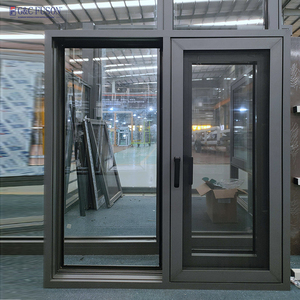
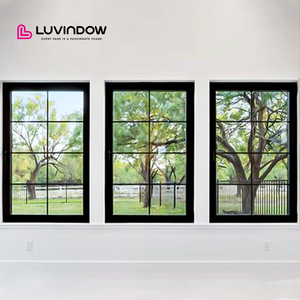
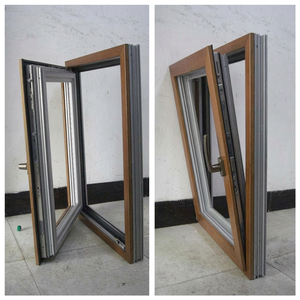
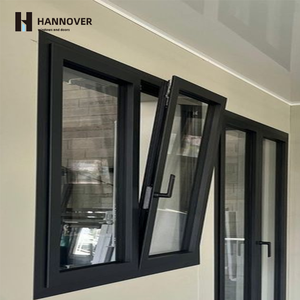
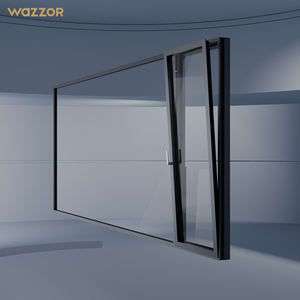
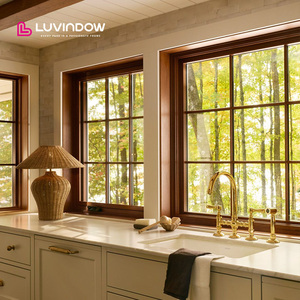
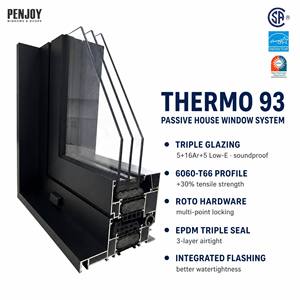
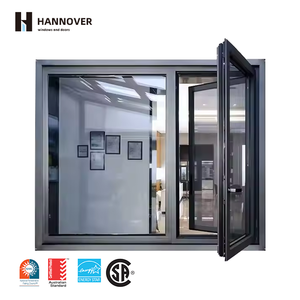
A rigorous examination of material selection, corner joint metallurgy, thermal break performance, and surface weatherability for commercial & high-end residential Fenestration.
Commercial window frames produced by premier Chinese factories utilize exclusively primary-grade 6063-T6 aluminum alloy extrusions. Unlike recycled scrap or secondary billet metal, 6063-T6 offers superior ultimate tensile strength (≥ 205 MPa) and yield strength (≥ 170 MPa).
This structural rigidity permits architects to specify ultra-thin sightlines while maintaining extreme deflection resistance against heavy wind pressure (up to 5.0 kPa), ensuring zero frame racking or structural glass breakage during storm surges.
Standard commercial suppliers rely on mechanical corner key crimping paired with temporary liquid sealants. Over seasonal expansion cycles, crimped joints inevitably loosen, creating water infiltration channels and structural frame play.
Leading Chinese OEM facilities employ 100% Sigma Welding (TIG/MIG inert gas shielding welding) across all perimeter frame and sash miter joints. The metal fuses into a seamless, continuous structural monolith. Welded joints eliminate frame corner separation and form a lifetime watertight seal.
To comply with modern international energy codes (such as Energy Star and NFRC ratings), double glazing frames incorporate structural polyamide thermal breaks. High-tier Chinese factories utilize PA66GF25 (Polyamide 66 reinforced with 25% glass fiber) imported thermal barrier strips.
PA66GF25 matches the thermal expansion coefficient of aluminum extrusions (2.3 x 10⁻⁵ /K), preventing internal shear stress, strip separation, or structural degradation under extreme seasonal heat differentials.
For coastal and high-salinity marine environments, double-glazed window profiles undergo multi-stage pre-treatment (chromate-free conversion) followed by automated Fluorocarbon PVDF (Kynar 500) or Architectural Grade Powder Coating (AAMA 2605 compliant).
This finishing barrier endures over 3,000 hours of continuous neutral salt spray testing (ISO 9227 standards) without pitting, chalking, or blistering, ensuring pristine exterior aesthetic longevity across decades of exposure.
Comparing China's top-tier double glazing factory specifications against standard market offerings for project submittal optimization.
| Engineering Parameter | China Premier Factory Spec | Standard Commodity Supplier | Building Code Benchmark |
|---|---|---|---|
| Aluminum Alloy Grade | 6063-T6 Primary Billet | 6063-T5 or Recycled Secondary | ASTM B221 Compliance |
| Corner Assembly Tech | Sigma Welded & Dressed Smooth | Screwed & Crimped Corner Cleats | Structural Integrity Load |
| Thermal Barrier Material | PA66GF25 Polyamide Bar | PVC or Low-Grade Polyurethane | GB/T 23615.1 / EN 14024 |
| Insulated Glass Unit (IGU) | Dual/Triple Low-E + Argon + TPS Spacer | Clear Float + Aluminum Spacer | IGCC / SGCC Certified |
| Thermal Transmittance (U-Factor) | 0.14 - 0.24 BTU/h·ft²·°F (0.8 - 1.4 W/m²K) | 0.45 - 0.60 BTU/h·ft²·°F | IECC 2024 Energy Code |
| Acoustic Insulation (STC) | STC 38 dB to STC 48 dB | STC 28 dB to STC 32 dB | ASTM E90 Acoustic Test |
| Water Penetration Resistance | 700 Pa to 1050 Pa (Class 9A) | 250 Pa to 350 Pa | ASTM E331 Test Pressure |
Strategic shifts in international procurement, supply chain digital validation, and total cost of ownership analysis for commercial developers and distributors.
The global B2B procurement model has transitioned from off-the-shelf standard sizes to full digital integration. Premium Chinese manufacturers now work directly from architect-provided CAD schedules and Building Information Modeling (BIM Level LOD 350+) files.
Before metal extrusion cutting occurs, shop drawings are generated detailing exact profile wall thicknesses, anchor location points, glass bite depths, and perimeter clearance allowances. This zero-defect submittal process eliminates field adjustment delays and ensures seamless job-site installation.
With environmental regulations accelerating globally (such as the EU's CBAM and US Green Building LEED v4.1 mandates), procurement directors are scrutinizing embodied carbon in building envelopes. Chinese factories are rapidly adopting hydro-electric powered aluminum smelting and publishing Environmental Product Declarations (EPD).
Specifying low-carbon 6063-T6 extrusions coupled with fully recyclable warm-edge glass spacers allows general contractors to earn critical carbon-neutral building certifications without inflating material budgets.
International freight challenges have driven Chinese suppliers to innovate unitized protective packaging. Finished double-glazed window and door assemblies are no longer shipped in basic wooden crates susceptible to moisture warping.
Modern export protocol dictates heavy-duty custom steel frame crating featuring interstitial foam dividers, desiccated shrink wrapping, and container shock monitoring. Units arrive fully factory-glazed, labeled per elevation drawing schedule, and ready for immediate crane hoisting.
Experienced buyers realize that initial unit price represents less than 50% of total fenestration lifecycle cost. Sub-standard aluminum windows suffer from frame corner sealant decay, seal failure causing inner pane fogging, and hardware corrosion within 3 to 5 years.
Investing in China's top-tier factory direct supply—utilizing sigma-welded corners, stainless steel 304/316 operating hardware, and dual-sealed silicone IGUs—delivers a 30+ year service lifespan with zero maintenance overhead.
Emerging technology standards transforming energy conservation, smart tinting, acoustic isolation, and structural glass architecture.
While traditional double glazing relies on 12mm to 16mm argon gas gaps to reduce thermal conductivity, the industry is shifting toward Vacuum Insulated Glass (VIG). VIG evacuates the interstitial air cavity down to 0.1 Pa, eliminating conductive and convective heat transfer entirely inside a ultra-thin 0.3mm vacuum space.
Chinese double glazing factories lead the commercial production of Hybrid VIG units—combining a outer VIG laminate with a secondary Low-E cavity—achieving unprecedented thermal resistance values down to U = 0.40 W/m²K (U-0.07).
Dynamic building envelopes are replacing static solar shading solutions. Advanced double glazing factories in China are integrating Electrochromic (EC) smart film and Building Integrated Photovoltaics (BIPV) directly inside the insulated glass unit.
Occupants can adjust light transmittance from 60% down to 1% tint via building management systems, reducing HVAC cooling loads by up to 40% while capturing solar energy along high-rise building facades.
Addressing core technical questions raised by architectural specifiers, developers, and global glazing importers.
Connect with our senior engineering team to review architectural submittal drawings, request factory direct pricing schedules, or receive custom glass performance analysis for your upcoming commercial or residential project.
Contact Us