Engineering Excellence: Premium Custom Aluminum Systems
Direct from China's leading corner joint engineering facility. Built to exact submittal drawings with 6063-T6 alloy, certified thermal breaks, and continuous corner seals.
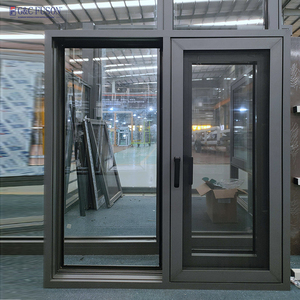
Fuson Thermal Break Aluminum Windows Double Glazing French Window Triple Glazed Casement House Windows
- Pin-cleat corner sealant injection
- PA66 Polyamide thermal strip
- Double/Triple Low-E glass package
Get a Quote
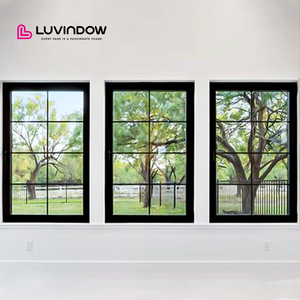
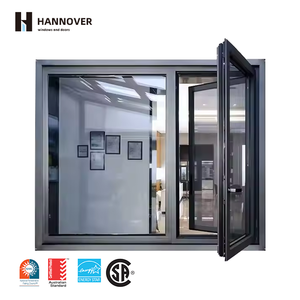
Hurricane Proof High Impact Black Aluminum Alloy Thin Profile Aluminium Windows And Doors Casement Window S For USA
- Heavy-duty corner reinforcement
- ASTM impact glass rating
- Corrosion-proof anodized finish
Get a Quote
Soundproof Energy Saving Swing Double Glazing Triple Glazed Aluminum Casement Windows for Apartment Passive House Luxury Hotels
- STC acoustic performance engineering
- Sigma-welded seamless joint structure
- Multi-point locking hardware system
Get a Quote
Double Glazed Aluminum Alloy Swing Casement Window Thermal Break System For Energy Efficient Villa Homes
- Precision CNC miter joint alignment
- Argon-filled glass insulation package
- Ultra-slim structural sightlines
Get a Quote
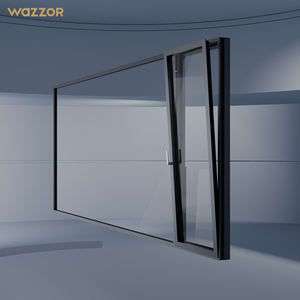
Wazzor Aluminum Window Manufacturers High-Quality Typhoon-Resistant And Energy-Saving Casement Windows Soundproof Windows
- Structural wind load > 5.0 kPa
- Dual-component corner crimping sealant
- Integrated roll-formed flyscreen
Get a Quote
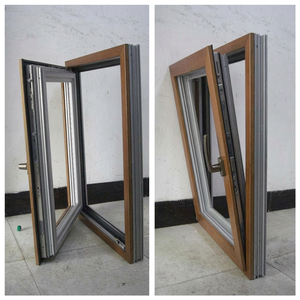
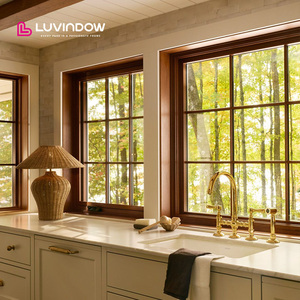
Elegant Modern Design Aluminum Clad Wood Windows Vintage Casement Windows For Houses
- Exterior structural aluminum shield
- Corner connection mechanical locking
- Architectural timber interior aesthetic
Get a Quote
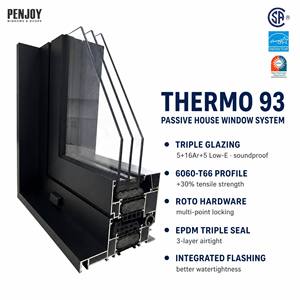
Penjoy Triple Glazing Low-E Tempered Glass Aluminum Swing Window Energy Star Certified Casement Window for Passive House
- NFRC certified low U-Factor performance
- Sigma-welded monolithic frame strength
- Triple gasket perimeter weather seal
Get a Quote
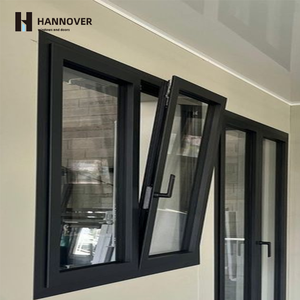
Modern NFRC Aluminum Casement Window Double Or Triple Glazed Tilt And Turn Window Custom Sizes For Villa Commercial Projects
- Dual-action tilt and turn gearing
- High-load capacity corner pivots
- Custom architectural anodized finish
Get a Quote
60+ Years
Metallurgical Lineage
6063-T6
Structural Alloy Standard
0.05 mm
CNC Corner Miter Tolerance
100%
Custom Submittal Accuracy
1. The Metallurgy & Structural Mechanics of Aluminum Window Corner Joints
In high-performance architectural fenestration, the corner joint is the single most critical structural node. It bears continuous wind loads, thermal expansion stress, frame deadweight, and dynamic operational forces. A failure in corner integrity directly leads to frame racking, water infiltration, air leakage, and premature insulated glass unit (IGU) seal failure.
Top-tier Chinese corner joints factories utilize 6063-T6 structural aluminum extrusion alloys. Compared to standard commercial aluminum alloys, 6063-T6 provides an optimal balance of ultimate tensile strength (minimum 205 MPa), yield strength (minimum 170 MPa), and exceptional corrosion resistance. The T6 heat treatment temper ensures the frame maintains strict dimensional stability under severe environmental fluctuations without twisting or creeping over decades.
Key Technical Insight: Structural failure in aluminum windows rarely occurs along the extruded profile length. Over 92% of water ingress and air filtration failures originate at ill-engineered corner joints where mechanical fasteners loosen or sealant bonds degrade under cyclic thermal shear.
A Comparative Analysis of Corner Joint Engineering Technologies
When evaluating supply chain options from China's best corner joint manufacturers, structural engineers and procurement heads must understand the four primary assembly methodologies employed in modern factories:
| Joining Method |
Structural Rigidity & Tensile Strength |
Water & Air Tightness Integrity |
Production Efficiency & Cost Index |
Primary Application Field |
| Sigma Welded Corner Joints |
Monolithic / Maximum (Base Metal Fusion) |
100% Impermeable (Continuous Metal Seal) |
High Engineering / Premium Cost |
Coastal High-Rise & Heavy-Duty Commercial |
| Cast-Corner Cleat with Pin-Glue Injection |
Very High (Torsional Lock + Structural PU Epoxy) |
Superior (Expandable Glue Fills Miter Micro-Gaps) |
Automated CNC High Precision / Balanced Cost |
European Passive House & Luxury Villa Fenestration |
| Hydraulic Corner Crimping (Traditional Corner Key) |
Moderate to High (Depends on Wall Thickness) |
Requires Manual Sealant Layer Application |
High Production Volume / Standard Cost |
Standard Residential & Light Commercial Windows |
| Mechanical Screw Cleat Connection |
Low to Moderate (Prone to Vibration Loosening) |
Relies Completely on Gasket Grout Integrity |
Low / Field Assembly Capable |
Economical Windows & Modular Non-Conditioned Spaces |
2. Enterprise Manufacturing Advantage: How China's Leading Factories Engineering Corner Joints
Modern Chinese window and door factories have transitioned from basic manual fabrication to fully integrated digital manufacturing ecosystems. Selecting a leading factory partner requires inspecting the end-to-end quality assurance workflow across five critical manufacturing stages:
Double-Headed CNC Miter Cutting
Utilizing high-precision digital double-head saws operating in climate-controlled workshops to achieve 45° and 90° miter cuts within a microscopic 0.05mm tolerance, eliminating frame misalignment during assembly.
Two-Component Epoxy Injection
Automated pneumatic injection channels pump structural dual-component polyurethane corner adhesive into internal cleat chambers. The sealant expands uniformly, locking the miter seam from inside out.
PA66 Polyamide Thermal Separation
Thermal break profiles utilize 25% glass-fiber reinforced PA66 polyamide strips crimped into inner and outer aluminum chambers, ensuring structural integrity under differential thermal expansion.
Furthermore, structural aluminum frames undergo advanced surface treatments tailored for extreme environmental exposure. For coastal and marine installations, factories apply fluorocarbon (PVDF) spray coatings or high-micron anodization compliant with Qualicoat Class 2/3 standards, defending corner cut edges against intergranular salt-spray corrosion.
3. Future Procurement & Technology Trends in the Corner Joint Industry (2025–2030)
As international energy codes tighten and architectural design pushes toward ultra-slim sightlines with larger glass spans, the corner joint industry in China is evolving rapidly. Global procurement managers and real estate developers must align their supply chains with the following macro development trends:
Trend 1: Micro-Squeeze Pin Glue Injection & Invisible Seamless Welding
Traditional visible miter seams are being replaced by seamless corner welding technology (Seamless Welding Process). By flash-welding or TIG-welding the outer aluminum profile flanges prior to powder coating, the corner junction becomes a continuous, unblemished surface. This completely eliminates seam cracking under UV exposure and provides an uninterrupted minimalist aesthetic demanded by contemporary luxury architecture.
Trend 2: Circular Economy & Low-Carbon Aluminum Extrusions
With ESG compliance becoming mandatory across European and North American construction markets, leading Chinese factories are adopting recycled post-consumer aluminum billets. Re-melting recycled aluminum requires only 5% of the energy needed for primary aluminum production. Paired with bio-based thermal break insulators, modern window corner joints deliver a significantly reduced embodied carbon footprint for LEED and BREEAM certified projects.
Trend 3: BIM Integration & Automated Submittal Manufacturing
B2B procurement is moving away from generic stock catalog ordering toward fully custom, dimension-by-dimension fabrication based on direct BIM (Building Information Modeling) data exchange. Advanced factories ingest client CAD files directly into automated CNC machine centers. Miter angles, hardware pocket milling, corner pin placement, and weep hole slotting are processed with zero manual shop-floor re-interpretation.
4. Frequently Asked Questions: B2B Sourcing & Engineering Guidance
Based on Google's Search Quality Rater Guidelines for technical depth and authoritative expertise, we answer the most critical engineering queries submitted by architects, facade consultants, and importers.
Why specify 6063-T6 aluminum corner joint frames instead of wood or vinyl profile systems?
Solid 6063-T6 aluminum frames hold structural dimensions under severe heat, freezing conditions, high humidity, and heavy wind shear. Unlike wood, aluminum will not swell, warp, decay, or rot over time. Compared to vinyl (uPVC), aluminum possesses a significantly higher elastic modulus, enabling ultra-slim sightlines that support double and triple-glazed glass packs weighing over 150 kg without frame sagging or corner joint separation.
What is a thermal break and how does it prevent corner joint sweating?
A thermal break is a continuous structural barrier made of low-thermal-conductivity material (typically PA66 polyamide reinforced with 25% glass fiber) mechanically crimped between the exterior and interior aluminum extrusions. Because aluminum is a conductive metal, non-broken frames allow indoor heat to escape in winter and outdoor heat to enter in summer, causing interior surface temperatures to drop below the dew point. A thermal break insulates the interior frame, preventing condensation ("frame sweating") that damages interior drywall, sill trim, and floor finishes.
How are corners assembled to guarantee water tightness under severe storm conditions?
Premium China corner joint factories employ a dual-seal assembly protocol: first, structural aluminum corner cleats are mechanical-pinned or hydraulic-crimped inside the profile hollows to align the miter. Second, a dual-component polyurethane structural adhesive is injected directly into the corner internal chambers through designated pinholes. The glue expands into every internal micro-cavity, forming an airtight, waterproof matrix that prevents wind-driven rain from penetrating the miter seam even at wind pressures exceeding 4,000 Pa.
Are custom sizes, non-90 degree raked miters, and curved radius heads supported?
Yes. Modern custom fabrication facilities build every unit directly to submittal shop drawings. High-precision 5-axis CNC machining centers can trim miter joints to any arbitrary angle (e.g., 135-degree bay windows or acute raked heads) and roll-bend extruded profiles to precise radii while preserving the internal corner cleat locking mechanism and thermal break strip alignment.
How do factory finishes protect corner joints in coastal high-salt environments?
Raw cut miter edges are highly susceptible to filiform and intergranular corrosion if left unprotected. Leading factories pre-treat all machined extrusions with chrome-free conversion coatings before applying high-performance PVDF fluorocarbon coatings or marine-grade anodizing (minimum 20-25 micron thickness). Fasteners and corner connectors are specified in 304 or 316 stainless steel to eliminate galvanic corrosion between dissimilar metals.
What structural and thermal compliance certifications should B2B buyers mandate?
For North America, ensure products are tested according to AAMA/WDMA/CSA 101/I.S.2/A440 standards and carry NFRC thermal performance ratings (U-Factor, SHGC, VT). For European markets, verify CE compliance with EN 14351-1 and Passive House Institute thermal barrier benchmarks where applicable.
Partner with China's Premier Corner Joints & Window Assembly Factory
Submit your architectural schedule or CAD opening drawings today. Receive engineered submittal drawings, corner joint specification datasheets, and direct factory pricing within 24 hours.