
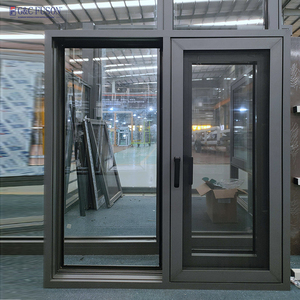
Fuson Thermal Break Aluminum Double & Triple Glazed Awning Window
Precision engineered thermal barrier system with multi-chamber profile design. Features triple-glazed low-E insulated glass units for maximum energy efficiency.
Explore our flagship thermal break aluminum awning and casement window systems. Built strictly to architectural submittal drawings with sigma-welded joints, multi-point lock hardware, and high-performance insulated glass packages.
Precision engineered thermal barrier system with multi-chamber profile design. Features triple-glazed low-E insulated glass units for maximum energy efficiency.
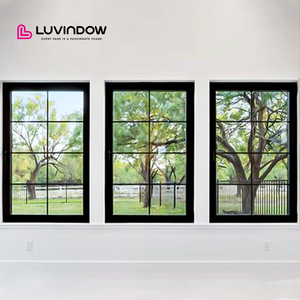
Designed for extreme weather regions. Ultra-narrow sightlines combined with heavy-duty 6063-T6 structural alloy and SGP laminated safety glass.
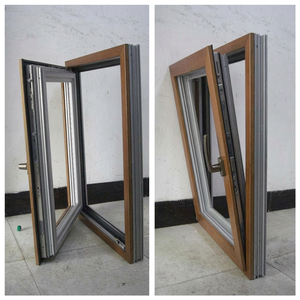
Certified acoustic isolation up to STC 45dB. Integrates polyamide thermal breaks and EPDM weather-stripping for luxury residential and commercial projects.
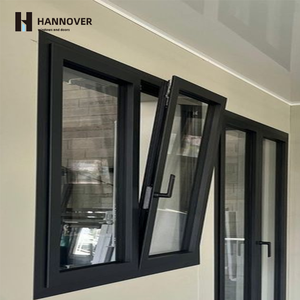
Heavy-duty structural framework tailored for high-end luxury residences. Smooth scissor-arm operators and multi-point perimeter locking controls.
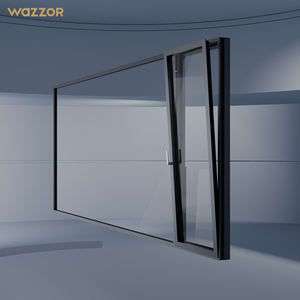
Tested for design pressure ratings up to 5000 Pa. Ideal for coastal high-rises requiring continuous top-hinged ventilation during wet weather.
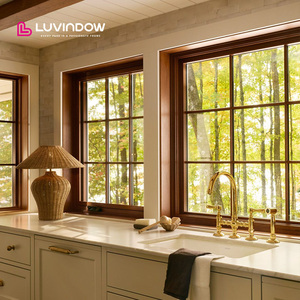
Blends exterior zero-maintenance 6063-T6 aluminum shielding with rich interior hardwood aesthetics. Engineered for upscale heritage and luxury builds.
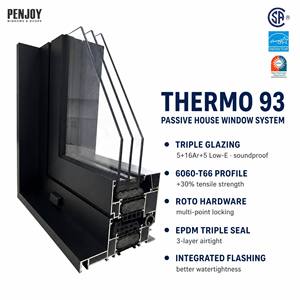
Features warm-edge spacers, argon gas fill, and durable sigma-welded corners. Delivers exceptional U-factors required for northern cold climates.
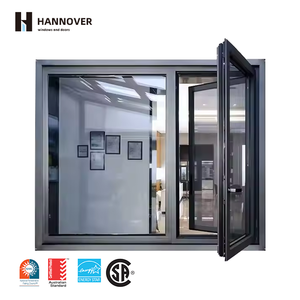
Fully customizable frame depths and glazing options. Certified to NFRC and ASTM standards for commercial curtain wall and punch window applications.
Why leading general contractors, architects, and facade consultants specify our Chinese OEM manufacturing facility over standard off-the-shelf window distributors.
We utilize primary 6063-T6 billet aluminum extrusions. Unlike re-melted scrap alloys, our frames possess superior tensile strength (≥ 205 MPa) and yield strength (≥ 170 MPa), resisting structural deflections under hurricane-force wind pressure.
Standard window fabricators rely on mechanical corner cleating or plastic corner keys that warp and leak over time. Every frame and sash corner in our factory undergoes continuous sigma welding, dressed flush for seamless structural unity.
Our profiles incorporate imported 25.4mm Polyamide (PA66 GF25) reinforced thermal break strips. This effectively breaks the conductive metal pathway, preventing winter heat loss and stopping interior frame condensation cold.
A comparative evaluation of material properties showing why heavy-duty aluminum awning windows represent the lowest lifecycle cost for modern building envelopes.
| Performance Metric | Our 6063-T6 Welded Aluminum | Standard Vinyl / PVC | Architectural Timber |
|---|---|---|---|
| Structural Integrity & Deflection | High (Modulus 69 GPa - Minimal Flex) | Low (Prone to heat sagging & twisting) | Medium (Expands/contracts with ambient RH) |
| Corner Joint Construction | Sigma-Welded (100% Water Tight) | Melt-welded (Brittle at sub-zero temp) | Mortise & Tenon (Swells and rots over time) |
| Coastal Salt-Spray Resistance | PVDF Fluorocarbon (AAMA 2605 compliant) | Chalks and turns yellow under high UV | Requires bi-annual sanding and re-sealing |
| Acoustic Isolation (STC) | STC 38 - 45 (Triple-seal system) | STC 26 - 32 | STC 30 - 36 |
| Lifecycle Expectancy | 50+ Years (Zero structural degradation) | 10 - 15 Years | 15 - 20 Years (High maintenance) |
In modern fenestration engineering, the top-hinged awning window has evolved from a simple residential utility fixture into an architectural cornerstone for contemporary building envelopes. Driven by global decarbonization mandates, tightening energy performance building codes (such as ASHRAE 90.1, IECC, and Title 24), and an increasing frequency of severe weather events, structural engineers and architects require window systems that deliver uncompromising weather tightness, exceptional structural load resistance, and superior thermal insulation.
As a premier China Awning Windows Factory and OEM/ODM Supplier, our manufacturing philosophy is rooted in precision metallurgy, advanced joinery, and custom fabrication tailored to exact architectural submittal drawings. This technical whitepaper delves into the engineering principles, manufacturing workflows, performance metrics, and procurement trends that govern world-class aluminum awning window production.
The structural backbone of any high-performance aluminum window is its extrusion alloy composition. While commodity manufacturers frequently utilize secondary recycled aluminum or lower-spec 6063-T5 alloys to reduce production costs, our facility exclusively processes prime 6063-T6 aluminum alloy.
The 'T6' heat-treatment tempering process involves solution heat treating followed by artificial aging. This mechanical treatment transforms the microscopic crystalline structure of the alloy, yielding:
A primary point of water infiltration in window construction occurs at the corner joints. Traditional aluminum windows utilize mechanical assembly—crimping aluminum profile corner keys held together with screws and topical silicone sealants. Over years of thermal expansion and structural flexing, these mechanical joints inevitably loosen, breaking the silicone seal and opening direct pathways for rain penetration into interior wall cavities.
Our factory eliminates this vulnerability through Sigma Continuous Corner Welding. In our automated production lines, mitered frame and sash profiles are fused together using shielded arc welding techniques. The resulting corner joint is dressed flush and finished seamless. A welded joint behaves as one monolithic piece of metal:
Aluminum is inherently a conductive material with high thermal conductivity (~200 W/m·K). To achieve modern energy code compliance, our awning window systems feature dual structural polyamide strips (PA66 GF25 with 25% glass fiber reinforcement). This structural barrier splits the exterior aluminum profile from the interior frame, dramatically dropping frame thermal transmittance.
Pairing our thermally broken frames with high-performance Insulated Glass Units (IGUs) unlocks industry-leading U-factors:
As global construction demands shift toward net-zero operational carbon and rapid modular construction, B2B buyers—including distributors, developers, and commercial general contractors—must adapt their procurement strategies. Key trends shaping the future of window manufacturing include:
Modern architectural aesthetics favor minimal framing and maximum daylight harvest. Future awning window designs rely heavily on structural silicone glazing (SSG) and concealed four-bar stainless steel friction hinges. By hiding operating arms and locking gear within the rebate channel, profiles achieve sightlines under 50mm without sacrificing wind load resistance.
Awning windows are naturally suited for natural ventilation strategies due to their top-hinged geometry, which sheds rain outward even while open. B2B procurement is rapidly shifting toward integrated 24V DC chain actuators concealed inside the frame profile. These actuators connect directly to Building Management Systems (BMS) or smart home hubs, automatically opening for night-purge cooling and snapping shut upon detecting rain or high winds.
International buyers in Europe and North America now demand Environmental Product Declarations (EPDs) to satisfy LEED v4.1 and BREEAM certifications. Our manufacturing facility is transitioning toward hydro-powered aluminum smelting sources, lowering embedded carbon footprints to under 4.0 kg CO2e per kg of aluminum extruded.
Operating out of our specialized factory in China, we combine 60+ years of collective engineering heritage with advanced CNC machining centers. Every order is managed with strict quality control protocols:
We do not cut metal based on rough guesses. Our engineering office generates detailed 2D submittal shop drawings and 3D BIM models for sign-off, verifying frame depths, glass bites, flashing details, and wall anchor placement before production begins.
For coastal installations exposed to salt spray and high UV radiation, we offer 70% PVDF (Fluorocarbon) liquid coatings and high-durability architectural powder coatings certified to AAMA 2605 standards, guaranteed against chalking and fading for up to 20 years.
We utilize continuous, non-aging EPDM gaskets along three sealing planes (outer, center, and inner). This creates a pressure-equalized rain-screen chamber within the window profile, preventing water entry even under severe storm conditions.
To eliminate ocean transit damage, all windows are fully assembled or knock-down packed in fully enclosed plywood crates with edge protectors, foam interleaving, and desiccant packs to prevent condensation damage during container shipping.
Direct answers to the most crucial technical, logistical, and commercial queries when sourcing custom aluminum awning windows from our China factory.
A: Awning windows open outward from the bottom, creating a protective glass umbrella over the opening. This allows for continuous natural ventilation even during rainstorms. Additionally, when closed, wind pressure pushes the awning sash tighter against the frame weather-stripping, creating an exceptional compression seal that outperforms sliding window weather-stripping in air-tightness and water-tightness tests.
A: Standard lead time for custom aluminum extrusions, powder coating, double/triple glazing, and full assembly is 25 to 35 calendar days. For complex architectural projects requiring custom extrusion dies or specialized PVDF color matches, initial lead times are approximately 40 days.
A: Every unit leaving our factory is 100% custom made-to-order. We do not restrict architects to catalog standard dimensions. You provide the rough opening sizes, unit schedule, or CAD elevations, and our drafting team engineers the exact frame widths, transom divisions, and glazing configurations required.
A: We specify glass from globally recognized brands including Xinyi Glass, CSG Holding, and Taiwan Glass, processed with Low-E coatings from Solutia or PPG. For structural glazing and IGU primary seals, we exclusively use Dow Corning (DOWSIL) and Tremco silicone sealants for long-term weatherability.
A: Yes. Our awning window series undergo rigorous third-party lab testing for air infiltration (ASTM E283), water resistance (ASTM E331), structural wind load (ASTM E330), and thermal transmittance (NFRC 100/200). We provide full test reports and CE documentation upon request.
A: We build using standardized European groove (Euro-Groove) profile dimensions and partner with premium hardware manufacturers like Siegenia, Hoppe, CMECH, and Truth Hardware. Replacement operators, friction stays, handles, and lock gear can easily be sourced globally or directly dispatched from our factory spare-parts inventory.
Partner directly with China's leading aluminum awning windows manufacturer. Submit your project schedule, window elevations, or CAD drawings today for a detailed technical proposal.