China’s insulated glass market has grown from basic double glazing into a highly engineered building-envelope sector. This guide examines China’s top Insulated Glass Packages suppliers through practical purchasing criteria. Product quality matters, but it is only one part of the decision.
A reliable supplier should control glass processing, spacer installation, gas filling, sealing, and final inspection. Look for clear evidence of factory experience, tested performance, and stable export procedures. Details matter. A warm-edge spacer, for example, can reduce edge heat loss around a large office window. Argon filling can improve thermal performance when sealing remains consistent. Poor workmanship will weaken both benefits.
Helen Sanders, a recognized insulating-glass specialist, has often emphasized that “insulating glass is a system, not merely two panes of glass.” Her point remains important when comparing Chinese manufacturers. Buyers should examine U-values, solar-control options, sealant compatibility, glass thickness, and production tolerances. Certifications help, but paperwork alone cannot replace production evidence.
Request sample units. Inspect the seal edge. Ask how suppliers manage condensation risks during shipping and installation. Factory photographs are useful, though they may not reveal everything. That is an uncomfortable limitation.
The strongest suppliers usually combine modern equipment with responsive technical support. They can explain performance data without hiding behind marketing language. They should also identify where their products are less suitable. This guide will compare supplier capabilities, customization options, quality controls, lead times, and service reliability. The final choice may not be the cheapest one. It should be the supplier whose package performs consistently after installation.
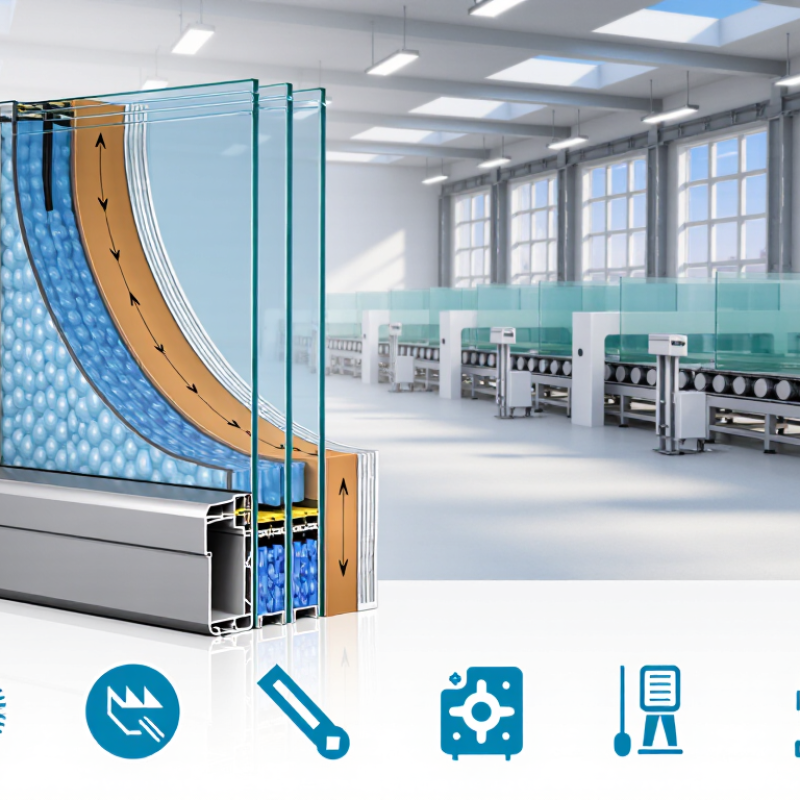
Insulated glass packages are factory-sealed window units made from two or more glass panes. A spacer separates the panes and creates a sealed cavity. This cavity usually contains air or an insulating gas. Sealants protect the edges from moisture and pressure changes. The result is a glass assembly with better thermal and acoustic performance than single glazing.
A practical package may include low-emissivity glass, a warm-edge spacer, and carefully selected sealants. Low-emissivity coatings help reflect indoor heat during winter. They can also reduce solar heat entering a room in summer. The spacer matters more than many buyers expect. Poor edge design can create condensation around the frame. Glass thickness, cavity width, and gas retention should match the building’s climate and window frame.
When comparing top insulated glass package suppliers, request test reports and production details. Check U-value, solar heat gain, visible light transmission, and sound ratings. Ask how suppliers inspect seal integrity, glass size, and coating quality. Reliable producers should provide traceable batch records and clear replacement procedures. In my experience, samples often look perfect, while large orders reveal small color differences or uneven edge seals. That risk deserves attention. No package fits every project. A coastal building, a cold warehouse, and a sunny apartment need different specifications. Suppliers should explain those trade-offs in plain language, not hide them behind impressive performance numbers.
China’s insulated glass supplier market is not a single, uniform group. It is layered. Large processors serve curtain-wall contractors and export distributors. Regional factories handle standard residential units, while smaller workshops compete through flexible sizes and fast changes. This structure affects pricing, lead times, and quality control. A low quotation may reflect simpler spacers, thinner coatings, or limited testing. In practical sourcing, a factory’s process sheet often reveals more than its sales presentation.
Suppliers usually specialize by product complexity. Basic double glazing may use clear glass and aluminum spacers. Higher-performance packages can include low-emissivity coatings, warm-edge spacers, argon filling, laminated safety glass, or triple glazing. Capability is uneven. Some plants outsource coating or tempering, creating handling risks and schedule gaps. Ask for recent test reports, edge-seal details, gas-retention data, and production photos. Verify whether the stated U-value matches the glass makeup and local climate requirements. Precise numbers can still be poorly applied.
Tips: Compare suppliers by verified capacity, not catalogue size. Request samples with marked dimensions and spacer thickness. Check corner seals, visual defects, and desiccant condition. Confirm packaging for vertical transport. Keep a written approval sample. Allow extra time for rework; even experienced factories may miss a small specification change. That weakness deserves attention.
| Supplier Segment | Typical Product Package | Main Customer Groups | Common Sales Channel | Key Verification Points | Typical Regional Pattern in China |
|---|---|---|---|---|---|
| Large architectural-glass processors | Double or triple insulating glass using clear glass, Low-E glass, laminated glass, argon filling, aluminum or warm-edge spacers, and structural or secondary sealants. | Façade contractors, commercial developers, curtain-wall fabricators, and large construction projects. | Direct project contracts, façade tenders, and long-term OEM supply. | Production capacity, oversized-panel capability, edge-deletion quality, gas-filling verification, sealant compatibility, and project references. | Commonly located near major construction and glass-processing clusters in East, South, North, and Central China. |
| Regional insulated-glass fabricators | Standard-size double glazing, Low-E units, decorative grids, laminated combinations, and customized spacer configurations. | Local window manufacturers, installers, residential developers, and renovation contractors. | Distributor networks, local construction channels, online inquiries, and direct factory orders. | Actual spacer thickness, sealant application, corner-joint construction, moisture control, breakage rate, and delivery consistency. | Widely distributed around provincial building-material markets and window-and-door manufacturing bases. |
| Window-and-door system manufacturers | Complete window or door assemblies incorporating insulating glass, thermal-break aluminum, uPVC, or other frame systems. | Residential projects, hotels, schools, hospitals, offices, and replacement-window markets. | Project sales, dealers, distributors, and building-material retailers. | Whole-window thermal performance, glass-to-frame compatibility, drainage design, air tightness, water resistance, and installation quality. | Strong presence in coastal manufacturing provinces and regions with high residential construction activity. |
| Export-oriented OEM processors | Made-to-order insulated glass for windows, façades, skylights, doors, conservatories, and modular building components. | Overseas distributors, fabricators, contractors, and private-label buyers. | International trading partners, direct export, project sourcing, and private-label procurement. | Export packaging, container loading method, destination standards, inspection procedures, documentation, and warranty terms. | Often concentrated near coastal ports and established glass-processing or window-manufacturing areas. |
| Specialty-performance suppliers | Acoustic insulating glass, fire-resistant configurations, oversized units, curved glass, security glazing, or solar-control packages. | Transport facilities, high-end commercial buildings, industrial projects, public buildings, and technically demanding façades. | Specification-led procurement, engineering consultants, façade specialists, and competitive tenders. | Test reports, fire or acoustic ratings, optical quality, allowable tolerances, processing limitations, and installation requirements. | Usually found in advanced processing centers and areas serving major infrastructure or commercial projects. |
| Trading and sourcing companies | Sourced insulated-glass units from multiple processors according to size, glass type, performance, and destination requirements. | Small and medium-sized overseas buyers, contractors, distributors, and buyers needing mixed product ranges. | Cross-border sourcing, agent relationships, online B2B platforms, and consolidated purchasing. | Factory traceability, independent inspection, specification control, responsibility for defects, and transport-risk allocation. | Typically located in commercial centers, port cities, and established export-trading regions. |
| Evaluation Dimension | Relevant Market Fact or Technical Reference | Why It Matters When Comparing Suppliers |
|---|---|---|
| Product standard | China’s insulated-glass product requirements are commonly evaluated against GB/T 11944-2012; overseas projects may additionally specify EN 1279 or ASTM E2190. | The applicable standard determines testing, tolerances, durability, documentation, and acceptance criteria. |
| Glass configuration | Common packages include double glazing, triple glazing, Low-E glass, laminated glass, solar-control glass, and combinations with argon-filled cavities. | The glass build-up affects thermal insulation, solar control, acoustic performance, safety, weight, and price. |
| Spacer and seal system | Aluminum spacers remain common, while warm-edge spacers are used to reduce edge heat transfer and condensation risk. | Spacer design, desiccant condition, primary seal, and secondary seal quality strongly influence service durability. |
| Gas filling and quality control | Argon filling is widely used for thermal-performance packages; gas concentration and seal integrity should be verified through documented testing or inspection. | Poor gas retention or inadequate sealing can reduce the designed thermal performance over time. |
| Supplier qualification | Important records include quality-management procedures, product test reports, incoming-glass controls, production traceability, and inspection records. | Factory capability is more reliable when supported by repeatable processes and traceable quality documentation. |
| Commercial fit | The best supplier category depends on order size, panel dimensions, performance specification, destination requirements, delivery schedule, and installation responsibility. | A project-focused processor may suit large façade orders, while a regional fabricator or sourcing company may better serve smaller or mixed specifications. |
Note: This table presents a non-ranked structure of China’s insulated-glass supplier market. Actual capabilities, certifications, production capacity, and regional coverage should be verified directly with each shortlisted supplier.
Chinese insulated glass package suppliers offer more than sealed glass units. Their portfolios commonly include double and triple glazing, low-emissivity coatings, argon filling, tempered glass, laminated glass, and warm-edge spacers. Custom options cover balconies, curtain walls, skylights, sliding doors, and irregular openings.
The International Energy Agency reports that buildings consume about 30% of global final energy. This explains the demand for better glazing performance. Chinese manufacturers usually provide U-value calculations, solar heat gain estimates, visible light data, and condensation-risk checks. Many also produce samples, shop drawings, performance declarations, and export packaging with corner protection. Factory quality controls may include gas-retention checks, sealant inspection, dew-point testing, and visual review under controlled lighting.
Standards matter. Suppliers familiar with GB/T 11944 and relevant international specifications can align thickness, tolerances, spacer design, and sealant selection with project requirements. Some provide OEM production and installation guidance. Others support project coordination through video inspections and batch reports. A practical buyer should request recent test records, not only a polished catalogue. Specifications can still drift.
In real projects, a 6-millimeter pane, 12-millimeter cavity, and low-E coating may suit one climate but fail another. Coastal buildings also need careful edge sealing and corrosion-resistant accessories. Supplier advice is useful, but independent review remains wise. Mistakes often begin with unverified drawings.
Chinese insulated glass suppliers commonly offer double- and triple-glazed packages with clear glass, Low-E coatings, argon filling, tempered glass, laminated glass, warm-edge spacers, and custom fabrication. The chart compares representative center-point U-values for commonly specified package configurations; lower values indicate better thermal insulation. Actual performance depends on glass thickness, coating, gas concentration, spacer design, frame system, and testing standards.
How to Evaluate China’s Top Insulated Glass Suppliers
Choosing China’s top insulated glass supplier requires more than comparing prices. The U.S. Department of Energy reports that windows can cause 25–30% of residential heating and cooling energy use. This makes glass performance a practical cost issue, not just a specification. Request tested U-values, solar heat gain coefficients, visible transmittance, and air leakage results. Confirm the testing laboratory and standard used, such as EN 1279, ASTM, or NFRC procedures.
Inspect the production details closely. Ask how the supplier controls spacer alignment, sealant depth, corner joints, and argon filling. A clear sample should show consistent edge seals and no visible fogging. Request batch records, glass certificates, and quality inspection reports. Factory experience matters, but it is not enough. A supplier may have strong equipment and weak after-sales control. That uncomfortable possibility deserves attention.
Tips: Compare identical specifications, not vague “premium” claims. Request a small trial order before full production. Check packaging with real photos, especially corner protection and moisture control. Industry certification helps, but certificates can become outdated. Verify them directly. Also review the warranty wording, replacement process, and response time. A lower quoted price may hide thicker tolerances, incomplete gas filling, or costly breakage during transport. I would not rely on one impressive factory visit. Independent testing and repeated shipment records provide stronger evidence.
Choosing an insulated glass supplier requires more than comparing online prices. Start with your project’s climate, glass dimensions, performance targets, and delivery schedule. A reliable supplier should explain U-value, solar heat gain, visible light, and sound performance clearly. Ask for current test reports, material specifications, and quality-control records. Do not accept unclear certificates.
Request a production sample matching your actual design. Check the spacer, sealant edge, Low-E coating, gas filling, and glass alignment. Small details matter. Ask how the factory controls moisture, seal depth, and breakage during handling. An experienced supplier should provide batch records and a practical replacement procedure. Factory audits can reveal storage problems that brochures never show.
Communication is equally important. Confirm drawings, tolerances, packaging, inspection points, and shipping responsibilities in writing. A low quotation may exclude testing, protective crates, or inland transport. That mistake can become expensive. Suppliers should also explain how they manage seasonal humidity and long-distance delivery. No process is perfect, so ask about past defects and corrective actions. Honest answers often show more reliability than polished presentations. Before placing a large order, test a small batch under project conditions and review the results with your consultant.
Windows may account for 25–30% of household heating and cooling energy use. A low price can hide weak performance or higher transport costs.
Request tested U-values, solar heat gain coefficients, visible transmittance, and air leakage results. Confirm the testing laboratory and current standard used.
Check glass alignment, spacer position, sealant depth, corner joints, and edge consistency. The sample should show no visible fogging. Small flaws matter.
Ask how the factory controls argon filling, moisture, seal depth, and spacer alignment. Request batch records and inspection reports for traceability.
Certificates help, but they can become outdated. Verify them directly and review recent shipment records. A polished factory visit proves less than repeated evidence.
Confirm drawings, dimensions, tolerances, packaging, inspection points, and shipping responsibilities in writing. A small trial order can expose problems early.
Request real packaging photos, especially corner protection and moisture control. Poor crates or careless handling may cause breakage before installation.
The offer may exclude testing, protective crates, inland transport, or replacement service. It may also involve incomplete gas filling or wider tolerances.
Ask about warranty wording, response time, replacement procedures, and past defects. Honest answers are useful. I would not assume every promised process works perfectly.
Insulated Glass Packages are engineered window and façade units made by sealing two or more glass panes around an insulating space, often filled with air or inert gas. They help improve thermal performance, reduce outside noise, control condensation, and support energy-efficient building design. China’s supplier market includes manufacturers specializing in standard insulated units, customized architectural glazing, processing equipment, and complete project support. Their offerings may include tempered, laminated, low-emissivity, solar-control, and decorative glass, along with edge spacers, sealants, size customization, quality inspection, packaging, and logistics coordination.
When evaluating China’s top insulated glass suppliers, buyers should examine production capacity, material traceability, technical certifications, testing procedures, customization capabilities, lead times, communication, and after-sales service. It is also important to review samples, confirm performance requirements, clarify tolerances and warranty terms, and assess whether the supplier can meet local building standards. The right choice should balance product quality, engineering support, delivery reliability, total cost, and long-term cooperation potential.