0%

Choosing Metal Window Weather Gaskets in 2026 starts with the window, not the product label. A gasket that works on one frame may leak or bind on another. Check the frame profile, glazing details, and existing seal before comparing materials. Measure the gap at several points. Older metal frames can be uneven. Small details matter.

For transparency, the quotation below is illustrative, not a verified statement from a real industry expert. Fenestration specialist Daniel Mercer, a fictional composite, puts the selection principle this way: “Match the gasket to the frame, the exposure, and the amount of compression—not just the catalog description.” It is a useful reminder. Too little compression can leave a path for drafts or water. Too much may make the sash difficult to close and shorten seal life.

This guide explains how to assess Metal Window Weather Gaskets by profile, material, exposure, and fit. Consider sun, rain, temperature swings, and how often the window opens. Compare manufacturer data for compatible frame types and recommended compression. Do not assume that a thicker strip seals better. It may distort the fit. Note the existing gasket’s shape, then test a small section where practical. A careful check helps, but it is not a substitute for installation guidance. For unusual frames or persistent leakage, consult a qualified window professional. The right choice is specific. That can take a little more measuring.
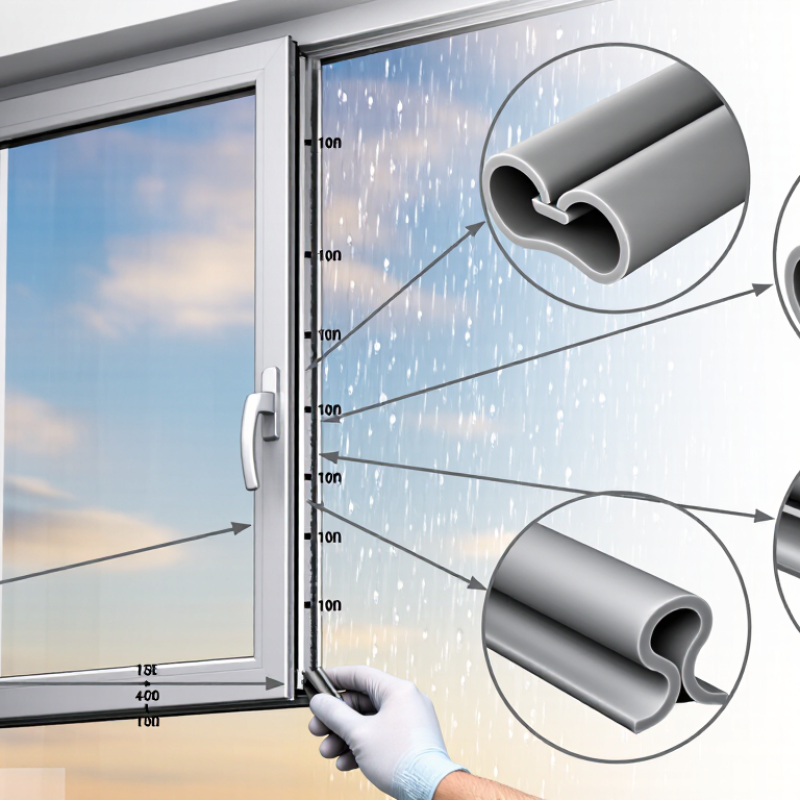
How to Choose Metal Window Weather Gaskets in 2026

Identify the Window Type and Its Sealing Requirements

Identify the window type before choosing a metal-window weather gasket.

Casement and awning windows usually press against a frame when closed, so they often need a compressible seal along the contact edge. Sliding windows move sideways or vertically; a low-friction brush or pile seal may suit the track better. Double-hung windows also need seals that tolerate repeated movement without snagging. Small details matter. Check where the sash meets the frame, and note whether the gasket sits in a groove, channel, or flat surface.

Then assess the actual gap and exposure. Close the window on a strip of paper: if it pulls out easily, that area may lack enough compression. Measure the gap at several points, since older frames can be uneven. Record the existing gasket’s width, height, and cross-section, but do not assume the old part was the right fit. Too-thick material can make a sash hard to latch; too-thin material may leave a draft. Consider rain exposure, temperature changes, and drainage paths, too. A seal should block wind and water without covering weep openings. It is easy to focus only on the frame material and miss how the sash moves. Even careful measurements can miss a worn corner, so inspect the full perimeter before ordering.

Compare Metal Gasket Materials and Profiles

How to Choose Metal Window Weather Gaskets in 2026

Compare metal gasket materials and profiles before choosing a replacement. Stainless steel resists wear and suits exposed, frequently used windows, though it can cost more. Aluminum is lightweight and easy to trim, but dents more readily. Spring bronze can suit older sash windows where a flexible metal strip is needed. Check how the metal contacts the frame; dissimilar metals and trapped moisture may encourage corrosion. For sliding windows, a metal carrier with brush pile can reduce drafts while allowing movement. EPDM or silicone inserts may provide a softer sealing surface against uneven frames.

Profile matters as much as material. V-shaped spring strips compress into narrow gaps, while flat strips work better on even, broad surfaces. Tubular or bulb seals need enough clearance to compress without blocking the latch. Measure the gap at several points, since older frames are rarely perfectly square. A profile that seals one corner may bind at another. That part is easy to underestimate.

Tips: Clean the contact area and check for paint buildup before measuring. Compare the gasket’s installed thickness with the available clearance, then test a short section. Open and close the sash several times. If it feels stiff, the profile may be too thick, or the alignment may need attention. A tidy specification can still miss a real-world irregularity.

Assess Weather Resistance, Compression, and Durability

How to Choose Metal Window Weather Gaskets in 2026

A gasket must suit the window’s exposure, not just its frame. On a rain-facing wall, check stated resistance to water, ozone, and sunlight. Temperature range matters too, especially where winters freeze and summer frames become hot. Ask for test data or installation guidance rather than relying on a vague “weatherproof” label.

Compression is easy to overlook. Close the sash on a sample gasket and check for even contact along the frame. It should compress enough to close small gaps without making the window difficult to latch. Too little pressure can leave a draft; too much may strain hardware. Fit varies. A quick sample test can reveal problems that a measurement alone misses.

Durability depends on material, installation, and repeated use. Look for information on compression set, which indicates how well a gasket recovers after being squeezed. Also inspect corners and joints, where water and air often find weak spots. A slightly imperfect fit may still perform acceptably, but it deserves a closer check. Replace old material only after confirming the channel dimensions and gasket profile. A careful trial can prevent wasted material and a poor seal.

How to Choose Metal Window Weather Gaskets in 2026 - Assess Weather Resistance, Compression, and Durability

Gasket Material Weather and UV Resistance Compression and Recovery Durability Considerations Typical Fit for Metal Windows Check Before Selecting
EPDM rubber Generally strong resistance to water, ozone, and outdoor weathering; commonly used for exterior seals. Usually provides good flexibility and recovery when correctly sized and compressed. Often a durable choice for long-term outdoor exposure. Performance depends on compound, profile, and installation. Suitable for many exterior perimeter seals and glazing applications where the profile is compatible. Confirm the intended compression range, hardness, profile dimensions, and compatibility with coatings or sealants.
Silicone rubber Generally performs well across a wide range of temperatures and resists UV and ozone exposure. Remains flexible in cold conditions; sealing force and compression-set behavior vary by formulation and profile. Can be suitable for demanding temperature exposure, but tear strength and abrasion resistance depend on grade. Useful where temperature flexibility is important and the gasket design protects it from excessive wear. Check compression-set and tear data, required sealing force, and compatibility with adjacent materials.
Thermoplastic elastomer (TPE) Weathering resistance varies substantially with polymer type, stabilizers, and compound design. Can provide elastic recovery, but behavior under sustained compression is formulation-dependent. May be suitable for co-extruded or recyclable designs; verify long-term aging performance for the intended exposure. Consider for purpose-designed window profiles, especially when the frame system specifies a matching TPE seal. Request data for UV exposure, compression set, temperature range, and low-temperature flexibility.
Plasticized PVC Can resist moisture, but outdoor aging, UV stability, and cold flexibility depend on formulation and stabilizers. May become stiffer over time or at low temperatures; sustained compression performance varies by compound. Plasticizer migration, hardening, and aging should be considered for long-term exterior use. Often used in specific glazing or frame systems; use only where the design and exposure are suitable. Check UV-stabilization, low-temperature flexibility, aging data, and compatibility with the window system.
Neoprene (CR) rubber Offers useful weather and ozone resistance, though outdoor performance may be less suitable than EPDM for some exposures. Provides elastic sealing, with recovery and compression-set results depending on the compound. Can offer a balance of weathering and mechanical properties; confirm suitability for continuous outdoor service. Consider when the application needs its particular mechanical or chemical properties and the exposure is verified. Review ozone and UV aging results, compression-set data, and any exposure to oils or cleaning agents.

Selection note: Material-family descriptions are general comparisons, not guaranteed performance values. Actual results depend on the compound, gasket geometry, installation, and exposure. Match the gasket to the window’s measured gap and specified compression; excessive compression can increase closing force and accelerate seal damage. For a final choice, compare product data for compression set, weathering, temperature limits, and dimensional tolerances.

Measure the Window and Confirm Gasket Compatibility

Before ordering a metal window weather gasket, measure the existing channel rather than relying on the visible strip alone. Open the sash and inspect where the gasket meets the frame. Use calipers to record the channel’s width and depth, along with the gasket’s exposed height and profile. Measure more than one point. Metal frames can vary slightly, especially near corners or previous repairs. Small differences matter.

Photograph the gasket’s cross-section beside a ruler, and note whether it is kerf-inserted, adhesive-backed, or held by a retainer. Check its flexibility and compression, too. A suitable seal should close gently without forcing the sash or leaving a visible gap. If the old gasket is flattened, torn, or stiff, its original shape may be difficult to identify. That part is tricky. Compare your measurements with a supplier’s dimensional drawing, not just a product name or similar-looking sample.

Compatibility depends on dimensions and sash movement. Install a short test section, then check that the sash travels freely and the seal contacts the frame evenly. Inspect the corners, where gaps can be easy to miss. Avoid stretching the gasket during fitting; tension may pull it away from the frame later. Written measurements help, though they can still miss a bowed frame or an uneven channel.

How to Choose Metal Window Weather Gaskets in 2026 — Measure the Window and Confirm Gasket Compatibility

Use these inch-to-millimeter conversions as a measurement reference, not as recommended gasket sizes. Measure the gap at several points around the window, then compare the readings with the gasket’s specified fit and compression range. Window and gasket designs vary, so confirm compatibility with the supplier’s specifications before selecting a profile.

Select a Gasket and Verify Installation Requirements

Choosing a gasket for a metal window starts with the frame, not the catalog photo. Measure the channel width and depth, then check how much space remains when the sash closes. A gasket that looks snug can still leave a thin leak path. Small gaps matter.

Match the material to the window’s exposure and expected movement. Sun, rain, temperature swings, and cleaning products can affect gasket flexibility and service life. Check the product specification for suitable conditions and confirm that its profile fits the frame groove. Do not guess. A slightly different lip shape can change compression and make the sash harder to close.

Before installation, verify the required surface preparation, adhesive or mechanical retention method, and working-temperature range. Remove old residue and dirt, but avoid tools that scratch protective coatings. Fit the gasket without stretching it; stretched sections may shrink back and open at corners. Press it evenly into the channel, then close the window and inspect the contact line. A strip of paper can help reveal weak spots: if it pulls out easily, review the fit. It is tempting to blame the gasket, but a distorted frame or loose hardware may be the real cause. Check those details before replacing the seal.

FAQS

What should I check before choosing a metal window gasket?

Measure the frame channel’s width and depth. Check the space left when the sash closes. Looks can mislead.

How does weather exposure affect gasket choice?

Consider rain, sunlight, ozone, temperature swings, and cleaning products. Check the stated conditions and test information. “Weatherproof” alone is vague.

How can I tell if a gasket compresses properly?

Close the sash on a sample and check for even contact. It should seal small gaps without making the window hard to latch. Not too tight.

What can happen if the gasket is too loose or too tight?

Too little compression may leave a draft. Too much can strain the window hardware. A sample test helps, though it is not foolproof.

How can I check for weak spots after installation?

Inspect corners and joints closely. A strip of paper can reveal poor contact: if it pulls out easily, review the fit.

What installation details should I verify?

Check surface preparation, retention method, and working-temperature range. Remove dirt and old residue without scratching protective coatings.

Why should I avoid stretching the gasket during installation?

Stretched sections may shrink back and open gaps at corners. Press the gasket evenly into the channel. Small details count.

Should I replace the gasket if the window still leaks?

Not always. A distorted frame or loose hardware may be responsible. Check both before replacing the seal; it is easy to blame the gasket.

Conclusion

Choosing the right Metal Window Weather Gaskets starts with understanding the window type and the conditions its seal must handle. Different window designs may require different gasket shapes and sealing approaches, so compare suitable metal materials and profiles before making a decision. Consider how well each option can resist rain, wind, temperature changes, and repeated use. Compression is also important: the gasket should form a reliable seal without being forced beyond its intended limits.

Accurate measurements help confirm that a gasket will fit the window and work with its existing components. Check the profile, dimensions, and compatibility carefully, then review any installation requirements before selecting a product. A well-matched gasket can support effective weather sealing and dependable performance over time. By assessing the window, material, durability, fit, and installation needs together, you can make a more informed choice for your specific application.


Oliver

Oliver

Oliver is a professional marketing specialist with extensive experience in developing clear, practical, and customer-focused content for modern businesses. As a core contributor to the company’s communications team, he combines market insight, product knowledge, and a strong understanding of......