Choosing a window frame is not just a style decision. It affects daylight, comfort, maintenance, and energy use. The U.S. Department of Energy’s Energy Saver guidance estimates that windows account for about 25%–30% of residential heating and cooling energy use. That figure makes frame performance worth examining, though glass, installation, and climate also matter.
The choice is not simple. Aluminum is lightweight and resists corrosion, but conducts heat readily; thermal breaks can reduce that transfer. Steel offers strength and slender sightlines, yet it also needs careful thermal design and protection against corrosion. Compare whole-window U-factors and air-leakage ratings, not frame material alone. The National Fenestration Rating Council’s certified ratings help make those comparisons more consistent. Details matter.
Building scientist Joseph Lstiburek, founder of Building Science Corporation, writes, “The perfect wall is a wall that has all of the control layers on the exterior.” His point concerns enclosure design broadly, not a direct aluminum-versus-steel ranking. Still, it is a useful reminder: a frame performs as part of an assembly, alongside glazing, flashing, insulation, and installation. Sometimes the best-looking option is not the best-performing one.
This guide to Aluminum vs Steel Window Framing will compare durability, thermal performance, cost, appearance, and upkeep. It will also explain which questions to ask suppliers, from thermal-break details to finish warranties. No material wins everywhere. The right choice depends on the building, the exposure, and the performance you need.
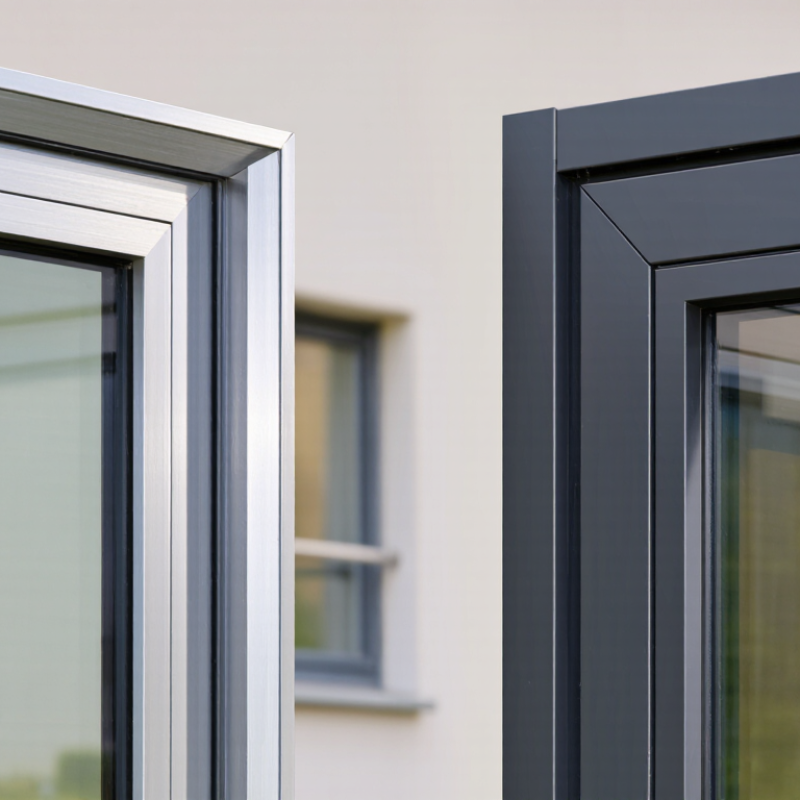
Aluminum and steel can both create narrow, modern window frames, but they achieve stiffness differently. Aluminum is relatively light and resists corrosion, making large sliding panels easier to handle. Its main weakness is heat transfer: metal conducts outdoor temperatures indoors. A thermal break, usually a non-metal section within the frame, helps reduce that transfer. Not every system performs equally.
Steel is heavier and generally stronger, so a well-designed frame can support slim profiles and large panes. The trade-off is weight; installation may require stronger supports and careful handling. Steel also needs a durable protective finish. If that coating is scratched and moisture reaches the metal, rust may develop. Aluminum finishes can also be damaged, so neither material is maintenance-free. A trade-off.
On a cold morning, a poorly insulated metal frame may feel chilly to the touch. Yet the frame material alone does not determine comfort. Glazing, seals, spacers, frame design, and installation all affect heat loss and condensation. Compare tested whole-window performance figures, not just claims about the metal. That distinction can mislead, though: ratings depend on the complete window assembly, not a bare frame sample. The right comparison should reflect the opening size, local weather, and how the window will be used.
Aluminum and steel differ most noticeably in weight and stiffness, and those differences affect installation as much as daily use. Aluminum is lighter, so large frames are easier to handle and place without adding as much load to the surrounding structure. Steel is denser and generally stiffer, which can support narrow sightlines or larger glass panels when the design calls for them. Strong, but heavy.
That strength has a practical cost: steel frames need careful lifting, secure fixing, and hardware suited to their weight. Aluminum’s lower mass can simplify handling, though frame profiles and reinforcement still matter; light does not mean flimsy.
Not always. Durability depends on exposure and upkeep, not just the metal. Aluminum naturally forms a protective oxide layer, but coastal salt and poor drainage can still damage finishes over time. Steel can last for decades when its protective coating stays intact; scratches or neglected joints may allow rust to develop.
For a real comparison, inspect corner joints, coating quality, drainage paths, and the frame’s stated load capacity. Ask how the system performs in your climate, especially where rainwater collects or temperatures swing sharply. I would not assume the heavier frame automatically lasts longer. Installation quality can shorten the service life of either material, and that detail is easy to overlook. Some projects benefit from steel’s rigidity; others are easier to manage with aluminum’s lighter handling.
Aluminum and steel both conduct heat readily, so frame material alone cannot predict energy performance. Aluminum frames often use a thermal break, an insulating barrier between exterior and interior metal. Steel frames may also include thermal breaks, though their narrow profiles can affect how much glass fits. Compare the whole window’s U-factor, not just the frame. A lower U-factor generally means less heat escapes. Check air leakage ratings too; a small draft around the sash can undermine good glazing.
Tips: Ask for tested whole-window ratings, including U-factor and solar heat gain coefficient. Consider your climate: winter heating needs and summer sun exposure differ. Inspect the thermal-break details and seals, and confirm the ratings apply to the window size you plan to install. Installation matters. Even an efficient unit can perform poorly if the opening is not sealed correctly.
It is tempting to choose by frame material or profile alone. That can be misleading. Glass type, coatings, spacers, frame design, and installation all shape real-world comfort. On a cold morning, condensation near the frame may signal a colder surface, but indoor humidity also plays a role. Treat that clue thoughtfully, not as a diagnosis. Compare complete product data, then weigh efficiency against appearance, maintenance, and cost. A perfect choice on paper may still need reconsideration if the home’s exposure or installation conditions differ.
Compare approximate frame-only thermal transmittance (Uf). Lower values indicate less heat transfer and better insulation.
Indicative ranges: non-thermally broken frames are typically around 5–7 W/m²·K for aluminum and 5–6 W/m²·K for steel; thermally broken frames are typically around 2–3 W/m²·K. Actual performance varies by frame design and product. Whole-window energy efficiency also depends on glazing, spacers, seals, installation, and climate.
Aluminum frames usually need less routine attention than steel. Their finish can be cleaned with mild soap and water, and they do not rust like unprotected iron-based metals. Still, salt air and harsh cleaners can damage some finishes, so check the manufacturer’s care guidance. Steel frames are strong, but exposed scratches can invite rust. Inspect joints and painted surfaces regularly, especially after wet winters. Small touch-ups matter.
Purchase price is only part of the cost. Steel often costs more because it is heavier and may require careful installation. Aluminum is commonly less expensive, though premium finishes, thermal breaks, and custom sizes can narrow the gap. Ask for quotes that include glazing, installation, and finishing; comparing frame prices alone can mislead. Energy performance also depends on glass, seals, and frame design, not just the metal.
Design may tip the decision. Slim steel profiles suit large panes and crisp, traditional lines, while aluminum offers many colors and shapes for contemporary homes. Both materials can look convincing, but the surrounding architecture matters more than a trend. I would not call either frame the clear winner: maintenance habits, local climate, and the available budget can change the answer. A sample corner or finish chip can reveal details that a showroom photo misses.
Start with the climate, then check the whole window assembly. In hot, sunny regions, aluminum’s strength supports slim frames and larger glass areas, but standard aluminum conducts heat readily. A continuous thermal break can reduce that transfer. Steel also needs thermal separation in cold climates; otherwise, interior frame surfaces may feel chilly. Coastal air adds another concern: aluminum resists corrosion, while steel needs intact protective coatings and careful maintenance. The U.S. Department of Energy estimates that windows account for 25–30% of residential heating and cooling energy use. Frame choice can affect comfort, but glazing and installation matter too.
Compare certified performance, not material labels alone. The National Fenestration Rating Council’s U-factor measures heat transfer; a lower value generally means better insulation. Check the rating for the complete window, then compare options suited to your local climate. For a renovation, also measure the existing opening and consider sightlines, weight, and repair access. A strong frame may still disappoint if the seals or installation are poor. One awkward truth: the “best” material can change from room to room.
Tips: Ask for the full-window U-factor and solar heat gain coefficient. Inspect coating details, thermal breaks, and warranty terms. In a cold room, feel near the frame on a winter morning. That simple check is not a lab test, but it can expose a draft or cold edge.
| Decision Factor | Aluminum Frames | Steel Frames | What to Consider |
|---|---|---|---|
| Thermal performance | Aluminum conducts heat readily. Thermally broken frames reduce heat transfer compared with non-thermally broken designs. | Steel also conducts heat readily. Thermal breaks and the overall frame design are important for limiting heat flow. | In hot or cold climates, compare whole-window U-factor and solar heat gain coefficient (SHGC), not frame material alone. |
| Cold-weather comfort | A non-thermally broken frame can become cold indoors and may contribute to condensation when indoor air is humid. | A non-thermally broken frame can also create a cold interior surface and condensation risk. | For cold climates, look for tested thermal-break systems, suitable glazing, good air sealing, and adequate indoor humidity control. |
| Strength and sightlines | Strong for its weight and commonly used for larger openings, though required frame dimensions depend on the design and loads. | High strength can allow slim profiles and large glazed areas in appropriately engineered systems. | Ask for project-specific structural calculations, especially for large spans, high winds, or heavy glazing. |
| Coastal and humid locations | Naturally forms a protective oxide layer, but salt exposure and dissimilar metals can still damage finishes or connections. | Requires an appropriate corrosion-protection system; exposed or damaged coatings can leave steel vulnerable to rust. | Specify finishes and hardware rated for the exposure, protect cut edges and connections, and follow cleaning and maintenance guidance. |
| Weight and installation | Often lighter than a comparable steel system, which can simplify handling, but unit weight varies by design and glazing. | Typically heavier than aluminum, so handling, supports, and installation planning may need extra attention. | Confirm frame and glass weights, opening support, access, and installation requirements before ordering. |
| Design and appearance | Available in a wide range of finishes and profiles; profile size varies with the system, opening, and performance needs. | Often selected for slender sightlines and a strong architectural character; custom fabrication may affect lead time and cost. | Compare sightlines using actual shop drawings and samples rather than material descriptions alone. |
| Maintenance | Usually needs routine cleaning and inspection of finishes, seals, drainage paths, and hardware. | Needs routine inspection of protective coatings, joints, seals, and drainage; repair coating damage promptly. | Maintenance needs depend on exposure, finish, installation quality, and the manufacturer’s care instructions. |
| Best-fit project priorities | Consider when low weight, a broad finish selection, or a thermally broken system suited to the project is a priority. | Consider when slim sightlines, a specific architectural look, or the strength of a properly engineered system is a priority. | Evaluate installed cost, local climate, exposure, energy targets, structural requirements, and available tested systems. |
Note: Actual energy performance, structural capacity, durability, and cost depend on the complete window system, glazing, finish, installation, and site conditions. Request product-specific test data and confirm local code requirements.
Aluminum is lighter, so large frames are generally easier to lift and position. Steel needs careful lifting and secure fixing. Heavy, though.
No. Durability depends on exposure, finish, drainage, and upkeep. A neglected steel joint can rust; coastal salt can also damage aluminum finishes.
Check corner joints, coatings, drainage paths, and stated load capacity. Look closely where rainwater collects. That detail is easy to miss.
Aluminum usually needs less attention. Clean it with mild soap and water, and avoid harsh cleaners that might damage its finish.
Inspect painted surfaces and joints, especially after wet winters. Repair scratches promptly, since exposed areas can develop rust.
Aluminum is commonly less expensive, but custom sizes, premium finishes, and thermal breaks can narrow the price gap. Compare complete quotes.
Neither material guarantees better performance by itself. Glass, seals, and frame design also matter, so compare the full window system.
Steel’s stiffness can suit narrow profiles and larger panes. Aluminum offers many shapes and colors for contemporary designs. The building’s style matters more than a trend.
Choosing between aluminum and steel window frames depends on how each material fits the demands of your project. Aluminum is lightweight and resistant to corrosion, making it a practical option for many designs. Steel is generally heavier and stronger, which can support slim profiles and larger openings, but its durability and upkeep depend on the finish and local conditions. Comparing strength, weight, and expected service life can help narrow the choice.
Aluminum vs Steel Window Framing also involves thermal performance, energy efficiency, maintenance, cost, and design preferences. Both materials can benefit from suitable thermal breaks and well-matched glazing, while exposure to moisture, temperature changes, and coastal air may influence care requirements. Consider the climate, building style, budget, and performance goals together to select a frame material that suits the project rather than relying on a single factor.