0%

Choosing the China best supplier for 6063-T6 Aluminum Window Frames requires more than comparing factory prices. It demands evidence, technical judgment, and careful communication. The 6063 alloy is valued for its smooth extrusion surface, corrosion resistance, and suitability for architectural profiles. T6 treatment can improve strength, but only when heat treatment is controlled and documented.

A dependable supplier should explain its extrusion process, profile dimensions, wall thickness, and allowable tolerances. Ask for material certificates, temper records, coating specifications, and inspection reports. A serious manufacturer may also provide samples for checking color, surface finish, corner joints, and assembly accuracy. Hold the sample in your hands. Small defects often become obvious there.

Factory experience matters. So does production discipline. Look for clear quality procedures, calibrated testing equipment, stable packaging methods, and realistic delivery schedules. Anodizing and powder coating should be tested for adhesion, color consistency, and weather resistance. For coastal projects, salt-spray performance deserves special attention. For energy-efficient buildings, thermal-break design may be necessary.

No supplier is flawless. That matters. A factory that admits limitations may be more reliable than one promising everything. Some suppliers show impressive catalogs but provide weak technical support after payment. This assumption needs testing through drawings, sample approvals, and written specifications. The right partner should answer practical questions clearly and maintain traceable records. This guide examines how to compare Chinese manufacturers and identify 6063-T6 Aluminum Window Frames that match project requirements, local standards, and long-term performance expectations.
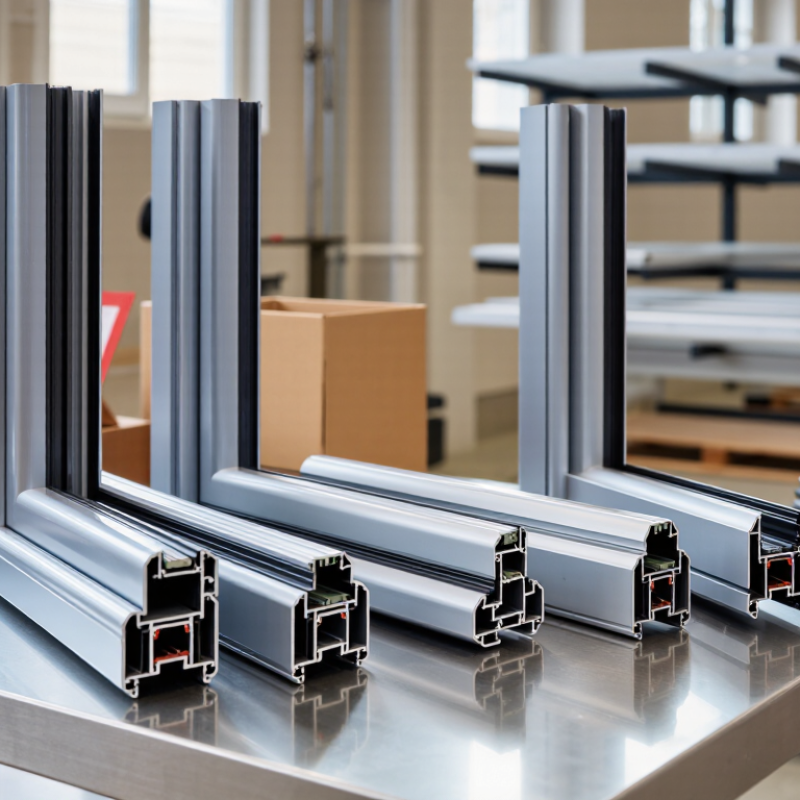
China Best 6063 T6 Aluminum Window Frames Supplier?

China’s 6063-T6 Aluminum Window Frame Industry Overview

China’s 6063-T6 Aluminum Window Frame Industry Overview

China remains a major force in aluminum manufacturing. The USGS Mineral Commodity Summaries 2024 estimated China produced about 41 million metric tons of primary aluminum in 2023. That represented roughly 59% of global output. This supply depth supports competitive extrusion, machining, anodizing, and powder coating capacity.

6063 aluminum is widely selected for window frames because it offers clean extrusion surfaces and useful corrosion resistance. The T6 temper improves strength through solution heat treatment and artificial aging.

In practical production, profile design matters as much as alloy selection. A narrow mullion may look elegant, but it can flex under wind pressure if wall thickness is reduced excessively. Small details matter.

Reliable suppliers should provide mill certificates, temper records, dimensional inspection reports, and coating test results. The International Aluminium Institute identifies buildings and construction as a major aluminum-use sector, reinforcing demand for durable architectural profiles.

Still, industry data can hide uneven quality between factories. That assumption needs checking. Buyers should inspect corner joints, drainage channels, gasket grooves, and surface consistency before approving mass production.

A sample that looks perfect under showroom lighting may reveal poor aging or coating defects after cutting. Supplier evaluation should combine documents, factory experience, and independent testing, rather than price comparisons alone.

Key Properties of 6063-T6 Aluminum for Window Frames

6063-T6 aluminum is widely used for window frames because it combines clean extrusion surfaces with dependable structural performance. ASTM B221 and The Aluminum Association’s Aluminum Standards and Data list common minimum values near 207 MPa tensile strength and 172 MPa yield strength for many 6063-T6 extrusions. Actual limits vary with profile thickness and testing conditions.

Its density is about 2.70 g/cm³, according to ASM International material data. That keeps frames lighter than steel while preserving useful stiffness. Thermal conductivity is approximately 200 W/m·K.

However, this does not mean an aluminum window performs thermally well by itself. A continuous thermal break, suitable seals, and accurate corner joints remain essential. This is where many specifications become too optimistic.

In practical production, T6 temper also improves resistance to deformation after solution heat treatment and artificial aging. Surface quality matters. Scratches, die lines, and uneven anodizing can become obvious around large glass panels. The International Aluminium Institute reports that recycled aluminum uses roughly 5% of the energy required for primary production, but recycled content must still meet chemistry and strength controls.

Buyers should request mill certificates, temper records, dimensional reports, and coating-test results. I would not approve a supplier from a catalog alone. Small profile samples often reveal more than impressive claims.

How to Evaluate Chinese Aluminum Window Frame Suppliers

China Best 6063 T6 Aluminum Window Frames Supplier?

Choosing the best Chinese aluminum window frame supplier requires more than comparing prices. The real task is evaluating technical control, communication, and production evidence. Ask for the 6063 alloy composition, T6 heat-treatment records, and extrusion tolerance data. A serious supplier should explain wall thickness, profile design, and expected load performance clearly. Request physical samples, not only polished photographs. Check each corner, drainage path, gasket channel, and powder-coated surface. Small details reveal large differences.

Review the factory’s equipment and quality process through a live video inspection or an independent audit. Ask how operators measure dimensions during production. Verify coating thickness, color consistency, and adhesion through documented tests. Also examine packing methods, especially corner protection and moisture control. A factory may produce attractive samples but still struggle with repeat orders. Do not overlook this risk. Production consistency matters more than one excellent prototype.

Communication is another practical test. Request a detailed quotation with material grade, finish, hardware options, tolerances, packaging, and delivery terms. One missed specification can create expensive installation problems. No supplier is perfect, and my own reviews sometimes focus too heavily on factory size. Smaller manufacturers may offer careful service, while larger facilities may provide stronger capacity. The better choice depends on evidence, transparent records, and your project’s actual requirements. Be willing to question impressive claims.

Manufacturing Standards, Quality Control, and Customization Options

Selecting a 6063-T6 aluminum window frame supplier in China requires more than a low quotation. Reliable production begins with controlled billet chemistry, correct extrusion temperature, and documented aging treatment. The profile should meet relevant GB/T 5237 requirements, while project specifications may require additional ASTM or EN testing. Inspectors should review mill certificates, profile dimensions, wall thickness, and T6 hardness. Small deviations matter. They can affect drainage, glass fit, and long-term sash movement.

Quality control should continue after extrusion. A practical factory checks surface defects, straightness, cut length, corner joints, and machining accuracy. Powder coating requires controlled pretreatment, film thickness records, color comparison, and adhesion testing. Anodized finishes need consistent thickness and visual inspection under agreed lighting. Trial assemblies can reveal loose corners or difficult hardware installation before shipment. Not every inspection is perfect. Human checks can miss a scratch, especially on crowded production lines. Barcode records, calibrated tools, and third-party sampling improve traceability.

Customization should be technical, not merely cosmetic. Suppliers may adapt frame depth, mullion design, thermal-break width, glazing pockets, drainage paths, screens, and hardware positions. Shop drawings must show tolerances, opening direction, glass weight, and installation interfaces. Samples should be tested for air leakage, water penetration, wind resistance, and operating force when required. An experienced supplier explains trade-offs clearly. Wider glass often improves daylight, but it can increase sash weight. That detail is easy to overlook. Discussing these limits early prevents expensive revisions and makes quality claims more credible.

China Best 6063 T6 Aluminum Window Frames Supplier? — Manufacturing Standards, Quality Control, and Customization Options
Evaluation Dimension Recommended Requirement or Specification Typical Data or Acceptance Target Quality-Control Method Customization Options
Base Alloy 6063 aluminum alloy in T6 temper, suitable for architectural extrusions and window-frame applications. Verify chemical composition and mechanical properties against ASTM B221, EN 573, or an equivalent project specification. Review the material test certificate and perform chemical analysis and tensile testing when required. Alternative architectural alloys may be specified when higher strength, improved corrosion resistance, or different extrusion performance is required.
Mechanical Properties Use the applicable standard and profile wall thickness to define tensile strength, yield strength, and elongation. For 6063-T6 extrusions, a commonly referenced minimum tensile strength is approximately 172 MPa, with the exact requirement depending on the governing standard and section thickness. Test representative samples by an accredited laboratory or an in-house laboratory using calibrated equipment. Wall thickness, reinforcement chambers, and profile geometry can be adjusted to meet structural and installation requirements.
Extrusion Standard Manufacture profiles in accordance with ASTM B221, EN 755, EN 12020, or the standard stated in the purchase contract. Profile dimensions, straightness, twist, surface condition, and dimensional tolerances must comply with the selected standard. Use calibrated vernier calipers, micrometers, profile gauges, and coordinate-measuring equipment for dimensional inspection. Custom profile dies can be developed for casement, sliding, tilt-and-turn, lift-and-slide, or fixed-window systems.
Profile Wall Thickness Define wall thickness according to span, wind load, hardware system, glazing weight, and local building regulations. Many architectural window profiles use approximately 1.2–2.0 mm walls, but the final value must be confirmed by engineering calculations. Measure multiple points on each production lot and check critical load-bearing sections separately. Thickness can be increased for large openings, high wind zones, heavy glazing, or improved screw retention.
Surface Preparation Clean, etch, rinse, and pretreat the aluminum before powder coating or anodizing. Surface should be free from oil, extrusion residue, visible corrosion, scratches, and contamination before finishing. Inspect the pretreatment process, chemical concentration, bath temperature, rinse quality, and surface appearance. Finishing preparation can be adapted for powder coating, anodizing, wood-effect finishes, or mill-finish delivery.
Powder-Coating Finish Specify an architectural powder-coating class such as AAMA 2603, AAMA 2604, or AAMA 2605 according to exposure conditions. Typical checks include coating thickness, color difference, adhesion, impact resistance, and resistance to accelerated weathering. Use dry-film thickness gauges, cross-hatch adhesion testing, color instruments, and batch sample inspection. Common choices include matte, satin, gloss, textured, metallic, and custom color finishes. Color references should be approved by sample.
Anodized Finish Specify anodizing thickness and appearance requirements according to ISO 7599 or the applicable regional standard. Typical architectural anodizing thickness classes range from approximately 10 to 25 micrometers, depending on the environment and specification. Measure coating thickness, inspect color uniformity, and check for streaks, burns, pits, and handling marks. Clear, bronze, champagne, black, and other anodized appearances may be selected subject to sample approval.
Dimensional Accuracy Control profile dimensions, cut length, mitre angles, hole positions, machining locations, and frame squareness. Use the tolerance limits stated in the approved technical drawing and the relevant extrusion or fabrication standard. Inspect first-off samples, in-process pieces, and final assembled frames using calibrated measuring tools and templates. Cutting lengths, drainage slots, screw holes, corner details, mullion locations, and assembly methods can be customized.
Frame Assembly Use controlled corner joints, mechanical fasteners, seals, gaskets, drainage paths, and compatible accessories. Frames should be square, flush, stable, and free from visible gaps, sharp edges, deformation, or damaged finishes. Check diagonal difference, joint alignment, hardware operation, seal continuity, and drainage performance. Available configurations may include screw-fixed, crimped, mechanically joined, thermally broken, or non-thermal systems.
Thermal Performance For improved energy efficiency, specify a thermally broken frame with polyamide insulating strips and suitable gaskets. U-value performance depends on the complete window assembly, including frame geometry, glass, spacer, seals, and installation. Confirm thermal calculations or laboratory test reports for the complete window rather than relying only on the alloy designation. Thermal-break width, glazing pocket depth, gasket type, and glass thickness can be selected for the project climate and energy code.
Glazing Compatibility Design the glazing rebate and pressure system for the specified glass thickness and glazing method. Typical systems may accommodate single, double, or triple insulating glass units; the actual range is profile-specific. Verify rebate dimensions, setting-block positions, gasket compression, drainage, and glass retention. Options can include different glazing bead sizes, external or internal glazing, laminated glass, low-emissivity glass, and safety glass.
Air, Water, and Wind Performance Test the complete window system to the applicable project standard, such as ASTM, EN, or local building-code requirements. Performance classifications are system-specific and depend on frame design, hardware, gaskets, glass, size, and installation. Use laboratory or project-site testing for air leakage, water penetration, and structural wind resistance where required. Gasket layouts, drainage chambers, mullion reinforcement, opening size, and hardware selection can be engineered for the design pressure.
Corrosion Resistance Select the surface treatment and hardware grade according to coastal, industrial, humid, or inland exposure. Coating durability depends on pretreatment, film thickness, finish class, edge coverage, maintenance, and environmental exposure. Review accelerated corrosion or weathering test results when specified and inspect coating continuity on edges and corners. Options include enhanced pretreatment, higher-performance architectural coating, anodizing, stainless-steel fasteners, and protective packaging.
Factory Quality System Prefer documented production procedures, inspection records, traceability, corrective actions, and calibration control. ISO 9001 certification can provide evidence of a quality-management framework, but it does not replace product testing. Audit process controls, review nonconformance records, verify calibration certificates, and inspect production samples. Inspection plans, approval samples, third-party inspections, and customer-specific quality documents can be included in the contract.
Traceability Maintain links between aluminum billets, extrusion batches, finishing lots, fabrication orders, and shipping documents. Each production lot should be identifiable through batch numbers, inspection records, and material certificates. Conduct document review and random sampling to confirm that labels and records correspond to the shipped profiles. Packaging labels, barcodes, lot numbering, inspection reports, and project-specific documentation may be customized.
Packaging and Delivery Protect finished profiles and assembled frames from abrasion, moisture, impact, and contamination during handling and transport. Use separators, protective film where appropriate, moisture-resistant wrapping, reinforced cartons, or export pallets. Check packaging condition, quantity, labels, profile identification, and loading stability before dispatch. Packaging can be adapted for container loading, long-length extrusions, assembled frames, retail distribution, or job-site delivery.
Specification note: The stated values are commonly used reference points for architectural aluminum window projects. Final acceptance criteria should be confirmed through approved drawings, the applicable national standard, engineering calculations, finish samples, and complete-window test requirements.

Choosing the Right Supplier for Your Window Project

Choosing the Right Supplier for Your Window Project

Selecting a 6063 T6 aluminum window frame supplier requires more than comparing prices. The supplier should understand extrusion design, alloy performance, surface treatment, and installation conditions. Ask for material certificates, dimensional tolerances, coating reports, and recent project references. These documents reveal whether the factory controls quality consistently or simply promises it.

Request a physical sample before approving production. Check the frame corners, wall thickness, drainage paths, and surface finish under natural light. A reliable supplier should explain how it manages cutting, machining, packing, and delivery. Clear drawings matter too. Small errors in opening sizes can create expensive delays on site. Communication should remain direct, especially when specifications change.

In practical projects, polished samples can hide weak production control. No supplier is perfect. That deserves honest discussion. Ask how the team handles rejected profiles, damaged cartons, and missed deadlines. Visit the facility when possible, or arrange a documented remote inspection. Review inspection records, response times, and packaging photos before placing a large order. The best choice is not always the cheapest offer. It is the supplier that provides traceable materials, realistic lead times, and dependable technical support throughout your window project.

Choosing the Right 6063-T6 Aluminum Window Frame Supplier

6063-T6 is commonly selected for architectural window and door frames because it combines good extrudability, corrosion resistance, and strength. The chart compares minimum yield-strength values for common aluminum tempers used in extrusion applications. When evaluating a supplier, request material certificates confirming the alloy and temper, dimensional inspection records, surface-finish specifications, and production lead times.

FAQS

Why is 6063-T6 aluminum used for window frames?

It offers smooth extrusion surfaces, useful strength, and lower weight than steel. The frame stays practical and relatively easy to handle.

What strength can 6063-T6 aluminum provide?

Common minimum values are about 207 MPa tensile strength and 172 MPa yield strength. Actual results depend on profile thickness and testing conditions.

Is aluminum naturally a good thermal insulator?

No. Aluminum conducts heat at approximately 200 W/m·K. A continuous thermal break, reliable seals, and accurate corner joints remain essential.

What details can reveal poor production quality?

Look for scratches, die lines, uneven coating, bent profiles, and inconsistent wall thickness. Large glass panels make surface defects especially visible.

Which quality documents should a buyer request?

Request mill certificates, temper records, dimensional reports, coating results, and inspection records. A catalog alone is not enough.

How should a factory control powder-coated or anodized finishes?

Powder coating needs pretreatment checks, film measurements, color comparison, and adhesion testing. Anodizing needs thickness control and consistent visual inspection.

What can small samples reveal before mass production?

Samples can expose loose corners, drainage problems, poor glass fit, and difficult hardware installation. Small tests often reveal more than impressive claims.

Which technical options can be customized?

Suppliers may adjust frame depth, mullions, thermal-break width, glazing pockets, drainage paths, screens, and hardware positions. Cosmetic changes alone are not enough.

What performance tests may be needed for a customized frame?

Required tests may include air leakage, water penetration, wind resistance, and operating force. Wider glass improves daylight but can increase sash weight.

Can recycled aluminum be used reliably?

Recycled aluminum can reduce production energy greatly, but its chemistry and strength still require verification. I would not assume recycled content guarantees quality.

Conclusion

China has become a major manufacturing hub for 6063-T6 Aluminum Window Frames, offering a wide range of profiles, finishes, and fabrication capabilities for residential, commercial, and industrial projects. The 6063-T6 alloy is valued for its strong balance of durability, corrosion resistance, lightweight performance, smooth surface quality, and suitability for extrusion. Its heat-treated condition also provides reliable strength for long-term window applications.

When evaluating Chinese suppliers, buyers should review production experience, material traceability, testing procedures, dimensional accuracy, coating performance, and quality-control systems. It is also important to confirm compliance with project specifications and applicable international standards. Reliable manufacturers should offer customization options such as profile dimensions, thermal-break designs, glass configurations, colors, hardware compatibility, and packaging solutions. By comparing technical capabilities, communication quality, lead times, sample approval processes, and after-sales support, project owners can select a dependable supplier that delivers consistent quality and cost-effective 6063-T6 Aluminum Window Frames.


Amelia

Amelia

Amelia is a professional marketing specialist dedicated to helping customers better understand innovative products, practical solutions, and evolving industry trends. With extensive knowledge of the company’s offerings, she combines market insight, product expertise, and clear communication to......