Heavy Duty Aluminum Sliding Doors are increasingly chosen for wide openings, busy entrances, and modern homes where slim frames meet demanding daily use. But “heavy duty” is not a universal rating. Buyers need to compare frame design, panel weight capacity, track construction, weather seals, hardware, and tested performance—not just the appearance of a thick aluminum profile.
Energy performance deserves equal attention. The U.S. Department of Energy’s Energy Saver guidance estimates that windows account for about 25–30% of residential heating and cooling energy use. That figure is not a sliding-door test result, but it shows why glazing, air leakage, and installation details matter. The National Fenestration Rating Council (NFRC) provides standardized ratings, including U-factor and Solar Heat Gain Coefficient, to help compare products on a consistent basis. Check the label. Then check the test conditions.
This guide examines leading door types and product features for 2026, from multi-panel systems to thermally broken frames and low-maintenance tracks. We’ll explain which specifications matter for coastal exposure, large glass panels, and frequent operation, while separating verified ratings from broad marketing claims. A strong door should glide smoothly, seal reliably, and suit the opening it serves. Simple, but not always easy. Even a well-rated product can disappoint when its frame, glass, or installation is poorly matched to the building.
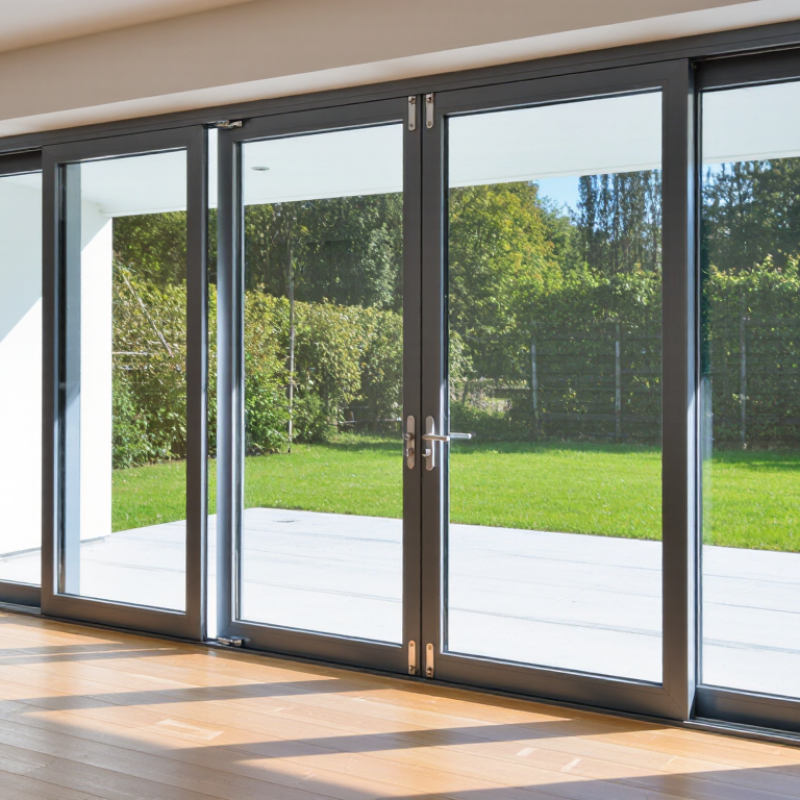
A heavy-duty aluminum sliding door is defined by tested performance, not frame thickness alone. Its reinforced stiles, corner joints, track, rollers, and locking points must work as one assembly. The North American Fenestration Standard, AAMA/WDMA/CSA 101/I.S.2/A440, assigns performance grades based on tested air, water, and structural performance. ASTM E330 evaluates resistance to structural loads; ASTM E547 tests water penetration. Ask for results for the complete door size and configuration you plan to install. A large glass panel can behave differently from a smaller tested sample.
Thermal performance matters, too. The U.S. Department of Energy’s Buildings Energy Data Book reports that buildings account for roughly 40% of U.S. energy use. That makes a door’s documented U-factor and air-leakage rating worth checking, especially in conditioned rooms. Look for a thermal break, continuous weather seals, and drainage paths that keep water from pooling in the sill. Thick aluminum alone proves little. I admit, specifications can look reassuring while hiding important installation details.
Tips: Check the published test report, roller load capacity, and replacement access. Slide the sample panel repeatedly; rough movement is a warning. Verify the wall opening and sill support before ordering.
A heavy-duty sliding door is best defined by its tested capacity and suitability for its intended opening—not by a universal label. Compare complete door-system specifications, including the frame, panels, rollers, track, glazing, and hardware.
| Evaluation Dimension | What Defines Heavy-Duty Performance | What to Check When Comparing Systems | Why It Matters |
|---|---|---|---|
| Panel load capacity | The manufacturer specifies a maximum panel mass for the complete sliding assembly. | Check the rated mass per panel and confirm that it covers the selected frame size, glass build-up, and hardware configuration. | Oversized or heavy glazed panels place greater loads on rollers, tracks, and frame connections. |
| Frame and sash construction | Aluminum profiles are designed to resist bending and maintain alignment under the expected panel weight and site conditions. | Review profile drawings, reinforcement details, corner construction, and the system’s tested size limits. | Profile dimensions alone do not establish strength; the complete assembly and its installation also affect performance. |
| Rollers and bearings | Roller assemblies are rated for the panel load and designed for repeated operation. | Ask for the load rating, roller material, bearing type, adjustment range, and maintenance instructions. | Well-matched rollers help a loaded panel move smoothly and stay properly aligned. |
| Track and threshold | The track supports the specified panel load and is compatible with the chosen roller assembly. | Check track material, drainage provisions, threshold height, and whether the configuration is suitable for the project’s accessibility needs. | Track design influences operation, water management, wear, and ease of entry. |
| Wind-load performance | The assembled door has documented performance for the project’s design pressures and opening dimensions. | Request test or engineering documentation for the relevant configuration; confirm local code requirements with the project professional. | Wind resistance depends on the complete door, its size, its fixing method, and site exposure. |
| Glazing compatibility | The sash accepts glazing that is appropriate for the design, safety requirements, and rated panel capacity. | Confirm permitted glass thickness and weight, safety-glazing requirements, and compatibility with insulated or laminated glass where specified. | Glass choice affects panel mass, safety, sound reduction, and thermal performance. |
| Weather and air sealing | Seals, interlocks, and drainage details are designed to manage air and water at the intended exposure level. | Compare documented air-infiltration and water-penetration test results for the relevant configuration. | Performance can vary with door dimensions, installation quality, and exposure to wind-driven rain. |
| Thermal performance | The frame and glazing options are evaluated as a complete assembly for the project’s climate and energy goals. | Look for a tested whole-door U-factor or equivalent local rating; check whether the frame includes a thermal break. | Frame design, glass, spacers, seals, and overall size all influence heat transfer. |
| Security and locking | Locks, keepers, interlocks, and glazing work together as part of the door’s security design. | Check the number and placement of locking points and look for test evidence or certification required by local standards. | A lock’s presence alone does not establish the security performance of the complete door. |
| Corrosion resistance | Aluminum finish and hardware are suitable for the installation environment. | Specify an appropriate finish and corrosion-resistant hardware for coastal, humid, or otherwise demanding locations. | Environmental exposure can affect finishes, fasteners, rollers, and long-term operation. |
| Serviceability | Rollers and other wear components can be inspected, adjusted, or replaced as the system permits. | Ask how the panel is adjusted, how components are accessed, and which parts require periodic maintenance. | Practical servicing can help preserve smooth operation over the door’s service life. |
| Installation requirements | The opening, sill, drainage, and fixing details meet the system’s installation instructions. | Check substrate requirements, allowable tolerances, anchoring details, and sill waterproofing before ordering. | Even a well-engineered door can underperform if the opening or installation does not meet its requirements. |
Selection note: “Heavy duty” does not have one universally applicable definition. Verify current product documentation, applicable building codes, and project-specific engineering requirements before specifying a door.
Strength depends on frame depth, reinforced joints, meeting stiles, interlocks, and roller capacity. A thick frame alone proves little. Ask for tested performance data.
Look for documented structural, air-leakage, and water-penetration results. The rating should suit your opening size and weather exposure. Test conditions matter.
Larger panels place more demand on rollers, tracks, and frame stiffness. Heavier glass may improve impact resistance, but it also increases hardware load. Trade-offs are real.
The panel should glide without scraping or a hard shove. Ask whether rollers are adjustable, replaceable, and rated for the panel’s weight. Grit can wear them down.
Thermal breaks, tight weather seals, and suitable glazing help limit heat transfer. Check the threshold and meeting rail for small gaps. They are easy to miss.
Measure the opening at several points because older walls may be out of square. Confirm the header can carry the load and the sill is level. Measure twice.
Consider compatible laminated or tempered glass, a multipoint lock, and anti-lift features. Ask how the lock engages when the panels close. Alignment matters too.
Vacuum track grit, then wipe the track with a damp cloth. Check drainage openings, seals, handles, and lock alignment every few months. Avoid unapproved heavy grease.
Do not force it. Roller adjustment may be needed, and repeated strain can worsen the problem. Seasonal settling can change the fit, so check it again later.
Heavy Duty Aluminum Sliding Doors are designed to handle frequent use, larger openings, and demanding conditions while maintaining smooth operation. Their strength depends on more than the aluminum frame: profile thickness, internal reinforcement, panel size, glass selection, rollers, tracks, and locking components all contribute to durability and performance. Comparing doors in 2026 means looking at these details alongside practical features such as thermal and weather sealing, ease of operation, security, and suitability for the intended opening.
The right door should match the building’s layout, exposure, and climate. Consider wind, rain, temperature changes, indoor-outdoor transitions, and how much natural light or ventilation is wanted. Accurate measurements and professional installation help panels align and seal correctly, while suitable hardware supports reliable operation. Regular cleaning of tracks, inspection of seals, and timely attention to worn components can help preserve performance over time.