Choosing the best China Thermally Broken Aluminum Windows requires more than comparing frame prices or glossy catalog images. A reliable decision begins with thermal performance, tested materials, manufacturing consistency, and after-sales support. These windows use a polyamide or similar insulating barrier between aluminum profiles. That barrier reduces heat transfer through the frame. It can also help limit interior condensation during cold mornings.
The strongest suppliers usually provide detailed section drawings, glass specifications, hardware brands, and verified test reports. Look for U-value data, air infiltration results, water resistance, and wind-load performance. Factory experience matters. A supplier producing large residential projects may understand tolerance control better than a trader with attractive samples. Ask how profiles are finished, how corners are joined, and how each unit is inspected before shipping. Small details matter.
Climate changes the answer. A coastal home needs durable coatings and corrosion-resistant hardware. A northern building may require low-E double or triple glazing. Warm regions may benefit from solar-control glass and careful ventilation planning. No window is perfect. A low quoted U-value can hide weak spacers, poor seals, or unrealistic laboratory conditions. This guide compares leading Chinese manufacturers through practical, evidence-based criteria. It considers design flexibility, thermal efficiency, structural reliability, certification, installation guidance, and long-term service. Some information may still require direct factory verification. That is an important limitation, not a reason to ignore the product. Careful questioning often reveals more than marketing language. With the right evidence, Thermally Broken Aluminum Windows can provide quiet rooms, stable indoor temperatures, and durable performance across many building types.
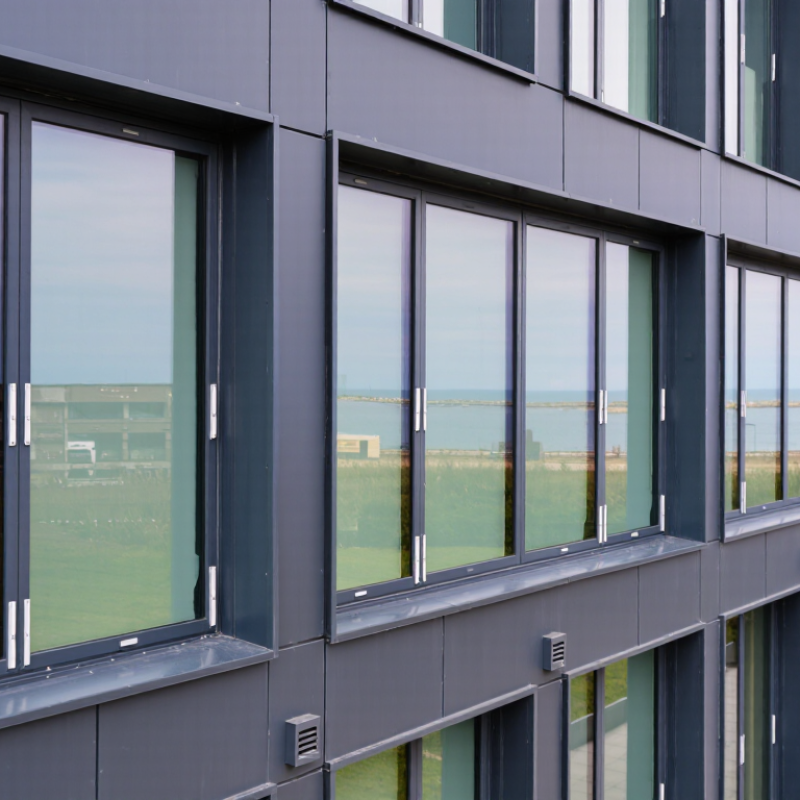
What Are the Best China Thermally Broken Aluminum Windows?
Thermally broken aluminum windows use an insulating strip between the interior and exterior aluminum frames. This separation reduces heat transfer through the metal. Polyamide is commonly used because it handles temperature changes and provides stable insulation. The frame may feel less cold in winter and less hot in summer.
In practical installations, the frame is only part of the system. Low-E glass, warm-edge spacers, quality gaskets, and accurate sealing also affect comfort. A strong window should provide clear U-value, air-tightness, water-tightness, and wind-load data. These details are more useful than a polished product photo. China has many capable window manufacturers, but quality can vary between factories and production batches. I have seen attractive frames perform poorly when drainage paths were too small or corner joints were rushed. That is worth remembering.
Tips: Match the thermal break depth to your local climate. Ask for test reports from the exact window series. Check corner welding, gasket contact, drainage holes, and hardware movement. Request a sample corner before placing a large order. Condensation can still appear if indoor humidity is high or installation gaps remain unsealed. A thermally broken frame helps, but it cannot correct every design mistake.
| Window Configuration | Thermal Break Design | Typical Frame Depth | Recommended Glazing | Typical Whole-Window U-Factor | Typical Air Leakage Target | Best-Suited Applications | Key Selection Considerations |
|---|---|---|---|---|---|---|---|
| Basic Thermally Broken Aluminum Window | Polyamide insulating strips separating the interior and exterior aluminum chambers | 55–65 mm | Double insulating glass, approximately 5 mm + 12A + 5 mm | Approximately 2.0–2.8 W/m²·K | ≤ 1.5 m³/(m²·h) at 100 Pa | Moderate climates, apartments, interior renovations, and cost-sensitive projects | Verify the polyamide strip width, corner connections, gasket quality, and drainage design |
| Energy-Efficient Double-Glazed Window | Multi-chamber thermally broken frame with reinforced polyamide barriers | 65–75 mm | Low-emissivity double glazing, commonly 5 mm + 16A + 5 mm, with argon filling | Approximately 1.4–2.0 W/m²·K | ≤ 0.8 m³/(m²·h) at 100 Pa | Cold and mixed climates, residential buildings, offices, and energy-conscious renovations | Low-e coating position, warm-edge spacer, argon retention, and verified window-level testing are important |
| High-Performance Triple-Glazed Window | Deep thermally broken frame with multiple isolated chambers and insulated glazing rebate | 75–90 mm | Triple low-e insulating glass, often 4 mm + 12A + 4 mm + 12A + 4 mm, with argon filling | Approximately 0.8–1.4 W/m²·K | ≤ 0.6 m³/(m²·h) at 100 Pa | Cold climates, passive-house-oriented projects, high-rise façades, and premium residential buildings | Check sash weight limits, hardware capacity, glass edge temperature, and condensation performance |
| Thermally Broken Tilt-and-Turn Window | Insulated aluminum frame combined with a compression-sealing opening system | 65–85 mm | Double or triple low-e insulating glass | Approximately 1.0–2.0 W/m²·K | ≤ 0.6–1.0 m³/(m²·h) at 100 Pa | Residential façades requiring ventilation, security, weather resistance, and easy cleaning | Compression gasket continuity, hardware adjustment, sash alignment, and water drainage should be checked |
| Thermally Broken Sliding Window | Insulated aluminum frame with polyamide barriers and interlocking meeting stiles | 70–120 mm | Double or triple insulating glass, depending on sash size and hardware capacity | Approximately 1.6–2.8 W/m²·K | ≤ 1.0–2.0 m³/(m²·h) at 100 Pa | Balconies, large openings, compact rooms, and projects where outward sash clearance is limited | Sliding systems generally require more attention to interlock seals, track drainage, roller durability, and air tightness |
| Thermally Broken Lift-and-Slide Door | Large insulated aluminum profiles with reinforced thermal barriers and load-bearing rollers | 100–180 mm | Large-format double or triple low-e insulating glass | Approximately 1.2–2.2 W/m²·K | ≤ 1.0 m³/(m²·h) at 100 Pa | Patios, terraces, balcony connections, luxury residences, and wide architectural openings | Confirm maximum glass weight, panel dimensions, sill drainage, threshold height, and structural deflection limits |
| Acoustic Thermally Broken Window | Insulated aluminum frame with enhanced gaskets and acoustically optimized glazing rebate | 65–90 mm | Asymmetric laminated double glazing, such as 6 mm + 16A + 44.2 laminated glass | Approximately 1.4–2.3 W/m²·K | ≤ 0.8 m³/(m²·h) at 100 Pa | Urban housing, hotels, schools, hospitals, and buildings near roads or railways | Sound insulation depends on the complete window assembly, installation joints, frame size, and surrounding wall construction |
| High-Wind Thermally Broken Curtain-Wall Window | Reinforced thermally broken aluminum framing with pressure-equalized drainage paths | 100–160 mm | Double or triple insulating glass selected for wind load and panel dimensions | Approximately 1.3–2.4 W/m²·K | Project-specific; tested air leakage is normally required | High-rise buildings, coastal areas, exposed façades, commercial towers, and large glazed elevations | Structural calculations, mullion and transom strength, water penetration testing, and site installation quality are essential |
| Recommended Specification for General Energy-Efficient Projects | Thermally broken multi-chamber frame with continuous polyamide insulation and quality corner crimping | 65–80 mm | Low-e double glazing with argon, warm-edge spacer, and insulated glass unit edge seal | Target approximately 1.4–1.8 W/m²·K | Target ≤ 0.8 m³/(m²·h) at 100 Pa | Most residential and light-commercial projects in mixed or cold climates | Choose based on whole-window test results rather than frame U-factor alone; installation and perimeter sealing strongly affect performance |
A reinforced polyamide strip separates the exterior and interior aluminum sections. This interrupts heat transfer and reduces cold zones near the frame.
Request tested U-factor, air leakage, water resistance, and wind resistance. Reports should describe the complete window configuration, including glass and frame.
Not always. Its value depends on material quality, assembly accuracy, glazing, seals, and installation.
Double or triple glazing can improve insulation. Warm-edge spacers and compression seals help limit heat loss around the glass.
A poorly sealed corner may defeat an excellent thermal profile. Continuous perimeter sealing and clear drainage paths are essential.
Check hidden corners, crimped joints, gaskets, drainage openings, and glass edges. A polished front view can hide weak construction.
Compare profiles, thermal barriers, gaskets, corner joints, coating quality, hardware, packaging, and support. Itemized quotations reveal missing costs.
Production photos show cutting, crimping, sealing, and inspection methods. Laboratory reports confirm whether the tested product matches the proposed design.
No. In hot regions, solar control may matter more than maximum frame insulation. The wrong specification can waste money.
Ask for inspection records, maintenance instructions, replacement procedures, and a written warranty. Response times may still be slower than expected.
Thermally Broken Aluminum Windows are designed with a nonconductive material between the interior and exterior aluminum sections, reducing heat transfer through the frame. This thermal barrier helps improve insulation, limit condensation, and support more stable indoor temperatures, making these windows a practical choice for energy-conscious buildings. Their performance depends on factors such as frame design, glass configuration, weather seals, drainage, hardware quality, and overall manufacturing precision.
When comparing China-made aluminum window manufacturers, buyers should evaluate thermal-break materials, profile strength, air and water resistance, energy performance, customization options, quality-control procedures, testing documentation, lead times, and after-sales support. High-quality systems can be adapted for residential buildings, offices, hotels, schools, commercial developments, and other projects where durability, comfort, and appearance are important. Selecting the right system requires matching window specifications to the local climate, building design, installation conditions, and project budget.